

Israel cooperation puts Palestinian forces in tough spot
PA police say they feel humiliated when IDF tells them to step aside; Israeli officials: We’d prefer it if they caught the fugitives we seek
 Add ToI as a Preferred Source on Google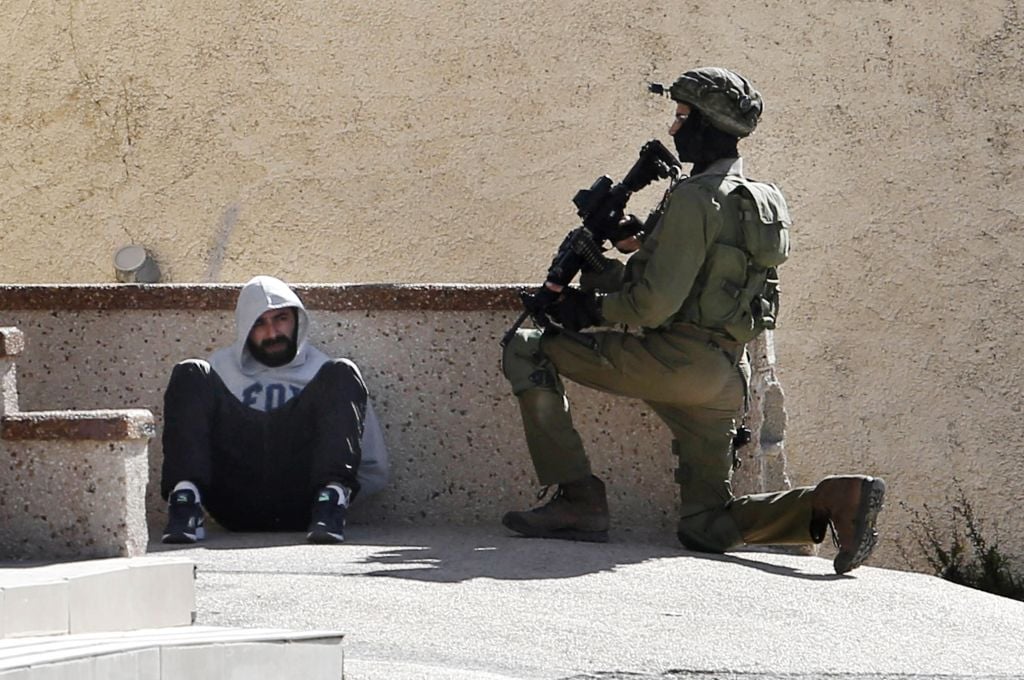
RAMALLAH, West Bank (AP) — It was nearly 2 a.m. when Amjad Sallaj heard a loud explosion outside his home. In a matter of seconds, Israeli troops burst into the building, ransacking apartments in a door-to-door search for wanted Palestinian fugitives.
When the raid was over, the apartments had been trashed, furniture destroyed and Sallaj’s 30-year-old son, Ahmad, had been taken into custody.
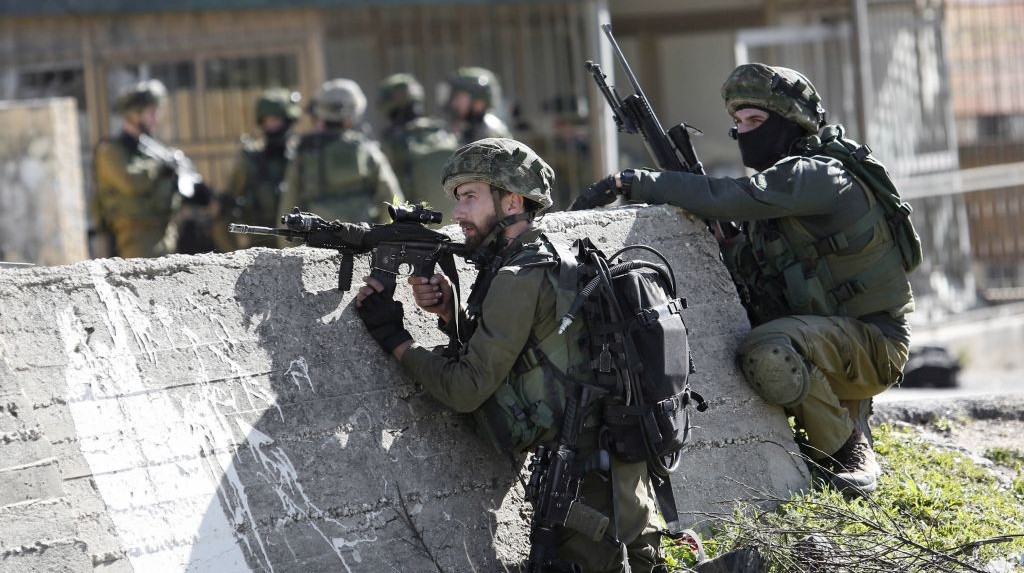
Palestinian Authority officials say that such raids, carried out in PA-controlled territory, have become a daily occurrence since a wave of violence erupted five months ago — undermining the public’s trust in their own security forces and jeopardizing one of the last areas of official contact between Israel and the Palestinians.
“The Israeli forces enter our territory every night, since the beginning of the current uprising, and this has a significant impact on the morale of our forces and on the image of these forces in the eyes of the public,” said Adnan Dameri, the spokesman for the Palestinian security forces.
“In every joint meeting, we tell the Israeli side that the daily incursions embarrass the Palestinian forces,” he added.
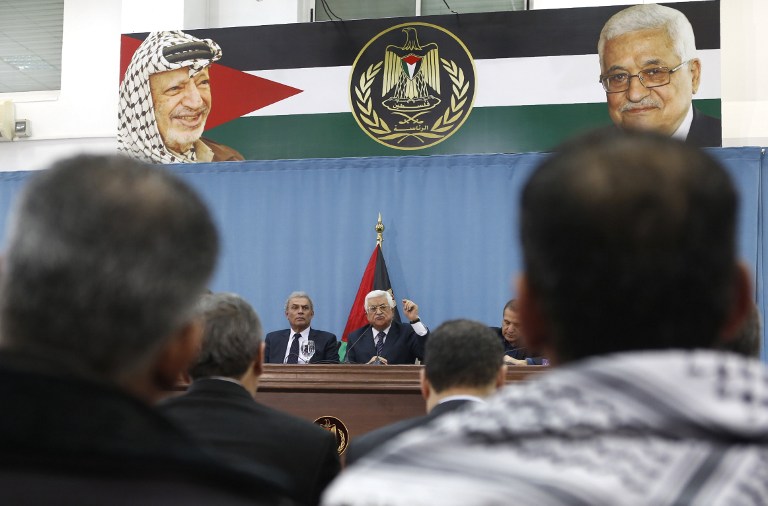
Security cooperation between the Israeli military and Palestinian security forces began following interim peace accords reached in the 1990s that granted the Palestinians limited autonomy in 40 percent of the West Bank.
Although those agreements gave Israel overall security control in the West Bank, it yielded significant day-to-day responsibilities to Palestinian forces in a joint effort to control Islamic militants and to prevent friction between Israeli troops and Palestinian civilians.
The system broke down during the second Palestinian uprising in the early 2000s, but resumed once the fighting subsided and has continued to function for the better part of a decade.
Today, at a time when peace efforts are at a standstill and tensions are high, security is one of the last areas of coordination, playing a critical role in preventing near-daily violence from spinning out of control.
The security coordination has also benefited PA President Mahmoud Abbas. A clampdown by his forces and Israeli troops has kept the rival Hamas terror group, which controls Gaza, in check.
But the Palestinians say Israel’s recent stepped-up activity is putting them in a difficult situation. With the coordination still in place, the public widely sees the forces — and Palestinian political leaders — as essentially helping perpetuate Israel’s half-century occupation of the West Bank. Israel captured the area, along with East Jerusalem and the Gaza Strip — all claimed by the Palestinians for a future independent state — in the 1967 Six Day War.
The cooperation also has hurt morale. Under procedures in place, Israeli forces inform the Palestinians they are going in, ordering them to retreat to their barracks until they complete their operation.
“It’s very depressing to leave your position and our missions just because the occupation forces have an operation that you know is against your people,” said Saleh Naser, a police officer in Ramallah.
Sallaj said that during Tuesday’s night-time raid on his home, which is located in Askar refugee camp near the northern West Bank city of Nablus, troops detonated the main entrance to the building, and then pried open the doors of the four apartment units where his sons and their families live.
He described seeing hundreds of soldiers in the camp, including dozens throughout his building.
Sallaj, 55, said the families were each confined to one room of their apartment as soldiers moved through, leaving behind a trail of destruction. When troops found photos of children holding plastic guns, he said they interrogated two of his grandsons, a 9-year-old and a 5-year-old, about the pictures. Sallaj said he does not know why his son was arrested. He said it is the first time he has been sent to jail.
“This is the occupation,” he said. “We expect nothing but the destroying of our life and our properties.”
In a statement, the military said it confiscated guns, ammunition and grenades during the raid on a number of locations in Nablus and arrested nine Palestinians. It said soldiers were attacked by a stone-throwing mob, and that it shot one man “in light of the continued assault.”
The current wave of violence erupted last fall, with clashes between Palestinian protesters and Israeli security forces at the Al-Aqsa Mosque in Jerusalem quickly spreading across Israel and into the West Bank. Some 30 Israelis have been killed in Palestinian stabbings, shootings and car ramming attacks, while at least 166 Palestinians have been killed, 119 of them in the course of attacking Israelis, according to the Israeli army.
IDF spokesman Lt. Col. Peter Lerner confirmed there has been “increased activity” by the army in the West Bank due to the rising violence. The breadth of operations is based on the “threat assessment,” he said.
Lerner said Hamas has been trying to take advantage of the unrest, and that Israel has uncovered bomb labs and foiled planned suicide bombings, kidnappings and shootings of Israelis. He said the raids took place in “order to prevent those attacks before they put innocent lives at risk.”
Amani Sarahneh, a spokeswoman for the Palestinian Prisoners’ Club, said she monitors new raids daily.
“Each day, I collect the names of the detainees arrested overnight. Usually, I have up to 30 people arrested every night in various places in the West Bank,” she said.
Israeli officials say they are aware of the Palestinian concerns and keep them in mind as they set security policy, but ultimately they do whatever security conditions dictate.
Alon Eviatar, a former high-ranking official with COGAT, the Israeli military body that oversees Palestinian civilian affairs, said the Palestinian complaints are not a “new phenomenon,” and Israeli officials are aware of this constraint.
“As long as the Palestinian security apparatus can do the job, Israel wants to let them do it,” he said. “If they can do it, do it. Better for Israel.”
Copyright 2016 The Associated Press.








The Times of Israel Community.