

Israeli composer’s new double concerto is a gift to Zukerman — and the world
3 world-renowned Israeli expats meet at Boston Symphony Orchestra’s summer home Tanglewood to celebrate violinist Pinchas Zukerman’s birth with fresh addition to Classical canon
 Add ToI as a Preferred Source on Google
BOSTON — For renowned violinist Pinchas Zukerman’s 70th birthday, the world has been gifted a new piece of music.
“The Double Concerto for Violin and Cello and Orchestra,” composed by fellow Israeli Avner Dorman, will have its US debut on Saturday, August 3, at Tanglewood. It will be performed by the Boston Symphony Orchestra (BSO) under the baton of Israeli conductor Asher Fisch.
Zukerman and Canadian cellist Amanda Forsyth are the soloists for the performance at the BSO’s summer home, nestled in the rolling hills of the Berkshires.
The richly vibrant work was co-commissioned in honor of Zukerman’s 70th birthday by the BSO, Canada’s National Arts Centre Orchestra, and the Adelaide Symphony Orchestra, where Zukerman and Forsyth performed its world premiere at the end of June, conducted by Benjamin Northey. Zukerman serves as the ASO’s artist-in-association.
Zukerman, a two-time Grammy winner who actually turned 71 on July 16, is the principal guest conductor of the Royal Philharmonic Orchestra in London and the chair of the Pinchas Zukerman performance program at the Manhattan School of Music.
“It’s an honor to be celebrating through this commission written for me, with Amanda in mind, as well,” Zukerman said in a recent phone conversation with The Times of Israel, together with Forsyth.
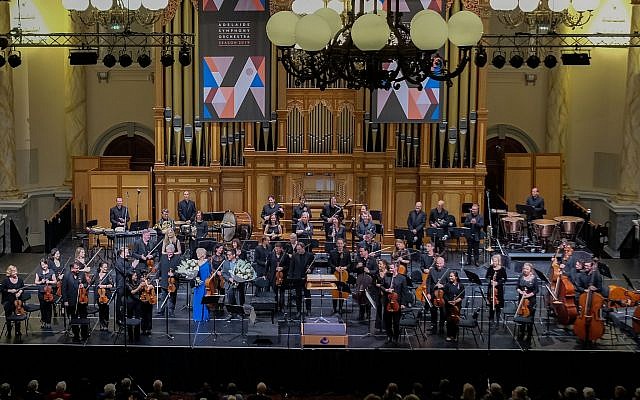
The musical partners, who additionally play together with the Zukerman Trio, are also a married couple. The Dorman concerto was written with this in mind.
It was their dream to have a new piece of music to add to the limited repertoire of double concertos that they can play together, they said.
“We do play the Brahms [“Double Concerto”] a lot,” Forsyth pointed out.
“It exceeds our expectations,” Zukerman said of the Dorman concerto.
“He’s a very agreeable musician to work with,” Zukerman said of Dorman, whom he first met when Dorman was a student. For years he’s known Dorman’s father, Zeev Dorman, the now retired acclaimed bassoonist for the Israel Philharmonic and a respected music educator.
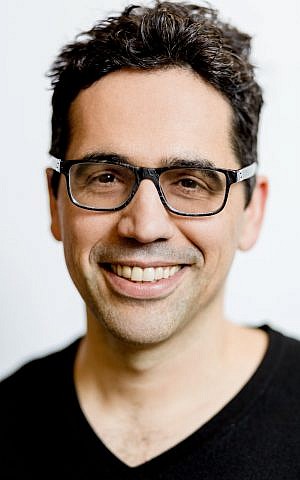
The couple and the composer spent the better part of a year working to get the concerto just right.
“It’s hard, tedious work on both sides. It’s been like this through history. When you have a good composer and a good player, you are definitely on the right road,” Zukerman reflected.
Dorman, who embraces a diversity of music across cultures and styles from classical to jazz to rock, is currently an associate professor at the Sunderman Conservatory of Music at Gettysburg College in Pennsylvania.
“It’s every composer’s dream,” to have a piece commissioned for and performed by such renowned virtuosos, said the 44 year old. Dorman is the recent winner of the 2018 Azrieli Prize for Jewish Music and the youngest composer to win Israel’s prestigious Prime Minister’s award.
Meeting of the minds
A decade younger than celebrity violinist Zukerman, Israeli conductor Fisch recalled that as he was growing up as a musician in Israel, the fiddler was already world famous.
“He was always an idol and one of the big stars,” said the 61-year-old Fisch.
The first time he conducted Zukerman was a little intimidating, he admitted. “You feel very honored. Then you realize that someone like Pinky, he’s very easy going.”
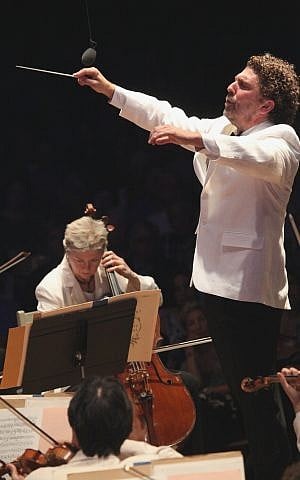
Nowadays, they have performed together on stages around the world, including ambitious programs Fisch conducted with both Zukerman and Forsyth with the West Australia Symphony Orchestra, where Fisch, widely acclaimed for his expertise in both the symphonic and opera worlds, recently renewed his contract as principal conductor and artistic advisor through 2023.
Dedicated to championing the music of contemporary composers, Fisch has featured Dorman’s work in many performances, including “Astrolatory,” in January, 2015, at Symphony Hall, as part of the conductor’s BSO subscription series debut. While Dorman said it was inspired by the vast skies of his rural Pennsylvania home, Fisch said he hears the Israeli Negev.
Having the trio of Israeli musicians share a spotlight, as they will at Tanglewood, is unusual, Fisch observed.
“It happens sometimes, not very often,” said Fisch, who served for a decade as music director of the New Israeli Opera. “It’s good for Israel that we perform together in Tanglewood.” (The BSO also boasts Israeli cellist Mickey Katz.)
During rehearsals at Adelaide, Dorman said he and Zukerman easily fell into Hebrew.
“You feel like you’re back in Israel, at the shuk,” he said, referring to the country’s homegrown open-air markets.
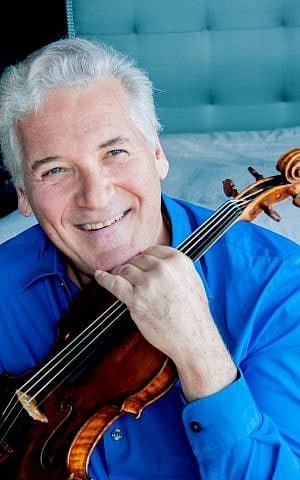
While the fact that Fisch and Dorman are Israeli may be a coincidence, Zukerman observed, there is good reason to be proud of the accomplishments of their native country’s classical musicians who have been nurtured by Israel’s tradition of cultural curiosity.
The three do share memorable firsts at Tanglewood, each revealed.
For Zukerman, that moment came 50 years ago, on Sunday afternoon, July 20, 1969, when the then 20-year-old violinist debuted in his first solo performance at Tanglewood on the day of the Apollo 11 moon landing.
“I felt like I landed on the moon,” Zukerman vividly recalled all these decades later.
Fisch made his debut there in 2012, during Tanglewood’s 75th anniversary when he was invited to recreate a historic all-Wagner program originally conducted by Serge Koussevitzky in 1937, during the early years of Tanglewood.
Dorman’s first exposure to Tanglewood was in 2002, as a composing fellow, a summer that immersed him in the wider professional music world outside the borders of Israel, where he was already becoming well established.
“It was feeling, wow. Suddenly, I was engaged with such talented people from all over the world,” Dorman recalled.
Conversation between a musical couple
The concerto opens with the violin, capturing Zukerman’s unique tone and expression, a sound Dorman described as “irreplaceable.”
Over the next 25 minutes, the two instruments take off in a dazzling, energetic journey.
According to Forsyth, the piece is “a conversation between violin and cello.” Forsyth appreciates that Dorman is musically bold, while also remaining playful. The score reflects the fact that the soloists are a married couple, she said.
At times, “It’s like an argument,” Forsyth said with an easy laugh. “I’m breaking out and going a little wild,” she said of her cello challenging Zukerman’s more classical sound.
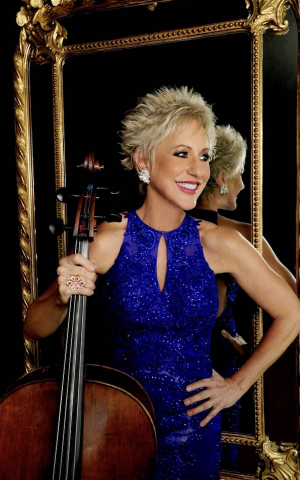
“But then, we come back together,” she said.
Dorman hoped to capture that relationship, like characters in a novel, he said. He’s eager to hear the interpretative powers Fisch will bring to the BSO’s Tanglewood performance, and has benefited in the past from Fisch’s mastery at fine tuning an orchestra’s playing in a way that realizes his vision as a composer, Dorman said.
Following Tanglewood and the Canadian premiere, the double concerto is scheduled for the Israel Philharmonic in April 2020.
Zukerman and Forsyth hope that after introducing Dorman’s double concerto through their first three or four performances, that the work will enter the regular repertoire of other performers.
“It is really for everyone,” Zukerman said.






The Times of Israel Community.