

Israeli experts: Trump won’t kill nuke deal, but expect the unexpected with Iran
Ahead of US president’s speech on upholding or imperiling the JCPOA, PM’s ex-security adviser Uzi Arad questions sincerity of both sides
 Add ToI as a Preferred Source on Google
Judah Ari Gross is The Times of Israel's religions and Diaspora affairs correspondent.
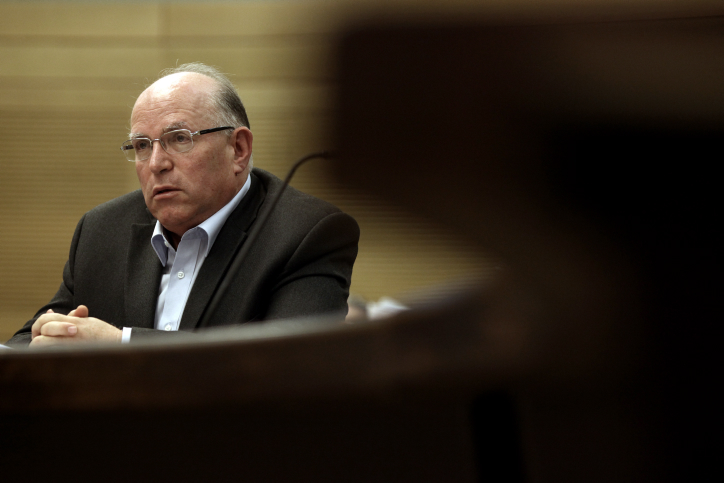
On Friday, US President Donald Trump is expected to announce if he will, as expected, refuse to recertify the Iran nuclear deal, a move that will not immediately dissolve the agreement, but will put it in a decidedly more precarious situation.
The US government’s antagonistic stance toward the accord — a position vocally supported by Prime Minister Benjamin Netanyahu’s government — has baffled many other world leaders and analysts who seem incapable of understanding why America would look to back out of a deal that by all accounts appears to be holding.
Uzi Arad, who served as Netanyahu’s national security adviser from 2009 to 2011, described the current battle over the Joint Comprehensive Plan of Action, the deal’s official name, as not only being between two legitimately opposing ideologies on how to handle Iran, but also as being between two groups who, out of stubbornness or political necessity, refuse to back down from their respective positions, regardless of their validity.
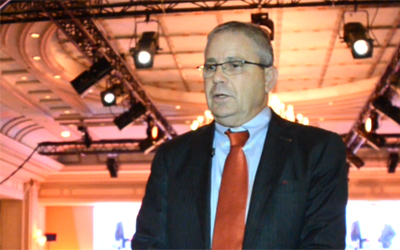
According to Ariel Levite, a former deputy national security adviser, should Trump not recertify the deal, it will likely nevertheless remain intact, though perched on the precipice of dismantlement.
The “US will not bring down the [Iran nuclear deal] — at least not for now,” said Levite, a nonresident senior fellow at the Carnegie Endowment for International Peace.
Arad agreed with Levite that the deal will likely survive, albeit in a less secure form. He said people need to “expect the unexpected,” regarding Iran.
“As they say, it ain’t over until the fat lady sings,” said Arad, now a faculty member at the Interdisciplinary Center in Herzliya.
The two former Israeli officials made their comments on the sidelines of the Luxembourg Forum on Preventing Nuclear Catastrophe’s 10th annual conference that was held in Paris this week, where the issue of the Iran deal and the American threat to pull out of it were topics of considerable concern.
Sunk costs and scripts
In general, supporters of the JCPOA seem incapable of fathoming what could drive the US, Israel and some Sunni Arab states to support its dissolution. They describe it as, if not the best agreement, then the best possible one, which will prevent Iran from developing nuclear weapons for an extended period of time.
Arad marveled at the fact that while there is international discussion and disagreement on countless controversial topics, on the issue of the Iran deal, nearly all world leaders are in utter agreement: The deal must be upheld.
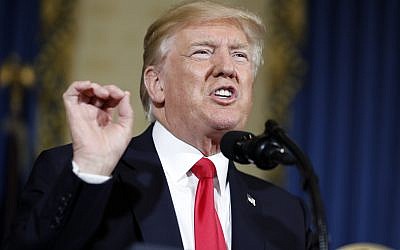
Meanwhile, Trump has described the JCPOA as “the worst deal,” and Netanyahu, along with prominent members of his cabinet, have similarly decried it, calling for the US to “nix it or fix it.” However, neither the US president nor the Israeli prime minister have indicated specific ways they plan to go about getting a better deal with Iran.
Arad, who has publicly criticized both the deal and the prime minister, described both sides as being disingenuous — knowingly or not.
The supporters, he said, seem to be falling prey to what is known in economics as the “sunk cost” fallacy, the concept that people will stick to a bad idea if they’re heavily invested in it.
The years of intense and difficult negotiations, and the fact that throughout the process it seemed as though the entire endeavor would fall apart, makes the notion of abandoning it unimaginable, Arad said.
Though the desire to not give up on a hard-won agreement is understandable, he said, the “sunk cost” fallacy is precisely supposed to be avoided.
Arad acknowledged that there are those connected to the Trump administration who do see actual value in scrapping the deal.
John Bolton, for instance, who does not have a position in the US government, but has been close to the president, is a vocal advocate of abandoning the JCPOA on the grounds that it is fundamentally flawed and so the quicker the US can leave it and adopt a “no compromises” approach to Iran, the better.
That is not necessarily the view of Netanyahu, who unlike Bolton hasn’t called for the US to simply “nix it,” but also encourages the possibility to “fix it,” Arad said.
Besides, [Netanyahu] appears to be tough, and that pleases his constituency
According to Arad, Netanyahu backed himself into a corner with his vocal opposition to the deal over the past five years, which means that now he has to continue to “follow the script” and criticize the JCPOA, regardless of its virtues.
“He cannot now change his colors,” Arad said. “And besides, [Netanyahu] appears to be tough, and that pleases his constituency.”
Netanyahu’s former national security adviser said that the prime minister might not actually be as opposed to the Iran deal as he makes himself out to be. “Maybe, maybe it’s just posturing,” he said.
For his part, Arad is in favor of keeping the agreement, but expanding on it with more diplomatic and financial pressures to address other problematic aspects of Iran’s behavior, which are not explicitly dealt with in the accord.
What we talk about when we talk about the Iran deal
The Iran deal has taken on meaning beyond its actual scope, becoming a stand-in for the world’s overall efforts to contain the Islamic regime.
The agreement itself is highly specific, aimed at curbing Tehran’s immediate nuclear ambitions — and only its immediate nuclear ambitions. Yet critics often bring in aspects of the Iranian regime’s behavior that are not directly connected to the JCPOA, namely its ballistic missile program and funding of terror groups.
According to Arad, when Netanyahu asks the US to “fix it or nix it” he is not only referring to the deal, but to the general approach toward Iran and its aggression in the region.
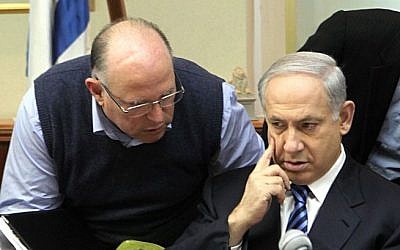
The former national security adviser and senior Mossad officer said there are two main issues with the deal itself: its duration and its “ambiguity” regarding the rights of the International Atomic Energy Agency (IAEA) to inspect Iranian military sites.
The JCPOA is not a permanent agreement. Some provisions last a decade, others 13 years and some 15 years.
Critics decry these “sunset clauses,” as simply setting the time at which Iran will be able to restart its nuclear weapons program with impunity, while defenders of the accord say that leaving the agreement open-ended would not have been feasible and, besides, a new agreement can be reached sometime in the future.
The second issue deals with the ability of the IAEA to visit Iranian military sites. IAEA Director-General Yukia Amano has said that, under the agreement, army bases can be inspected if necessary. Iranian officials, however, have disputed that interpretation of the JCPOA and claimed those sites to be off-limits.
Yet in general, the criticism of the Iran deal is not over what it addresses, but over what it doesn’t.
And especially for Israel, what isn’t addressed is of great concern.
Iran’s development of accurate ballistic missiles “makes the window of opportunity to intervene smaller,” said Levite, who served as deputy director general for policy at the Israeli Atomic Energy Commission from 2002 to 2007.
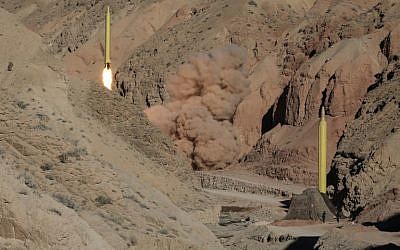
Therefore, he said, the nuclear threat becomes that much more pressing, as with ballistic missiles the Islamic Republic could rapidly use an atomic weapon should it develop one in the future.
Meanwhile, the country’s support of the Hezbollah terrorist group in Lebanon, as well as other Shiite militias near the Syrian Golan border, also represents a significant challenge to Israeli security interests, as senior defense officials have described war with Hezbollah as a matter of when, not if.
‘A lot of tension’
On Thursday, the White House announced that at 12:45 p.m. on Friday (7:45 p.m. in Israel) the president would deliver an address on his administration’s plan for confronting Iran. Many suspect — based on comments made by administration officials — that during this speech Trump will announce that he won’t be recertifying the JCPOA, but will not scrap it outright.
By law, every 90 days the president has to inform Congress if Iran is adhering to the terms of the agreement, which by all accounts it is. The deadline for the current round of recertification is Sunday, October 15.
If the president does not officially confirm that Iran is abiding by the deal, the American legislature is then allowed to impose new sanctions on the Islamic Republic, which would effectively nullify the JCPOA, at least as far as the US is concerned. The other five countries that signed the deal — China, France, Russia, the United Kingdom and Germany — would still be able to continue with the deal and have made every indication that they intend to do just that.
However, while the US Congress is legally permitted to impose sanctions should the president not recertify, it is by no means required to do so. This leaves open the very real possibility that even if Trump does not recertify the JCPOA, the agreement will not actually be dissolved, but will instead only have one of its safeguards removed.
This option would put the Iran deal one congressional vote away from American abandonment, which Iranian officials have said could lead the Islamic Republic to also abandon the deal.
But according to Levite, that probably won’t happen.
“I think the US will decertify and then trigger some kind of an effort to renegotiate. We’re in for a long period of suspended animation,” he said.
“There’ll be a lot of tension, but there won’t be a complete crisis,” he said, quickly adding “at least not how I see it.”
Editor’s note: The Luxembourg Forum provided travel expenses for the writer.




The Times of Israel Community.