

Israelis are feeling economic anxiety. Why aren’t politicians talking about it?
Voters say they care about kitchen-table issues at a time of rising costs. But in the wake of Israel’s worst catastrophe, and amid political polarization, experts say the path to victory, as always, runs through matters of war and peace

 Add ToI as a Preferred Source on Google
Last week, as 38 parties officially registered for next month’s election, the country got a piece of grim news: Last year, Israeli students received their worst scores ever on international tests in math, science and English.
Days earlier came the news that 1,370 doctors left the country between 2023 and 2025, the equivalent of a hospital and double the figure from a decade earlier. That’s part of a larger tidal wave of emigration that has, according to an analysis, seen nearly 50,000 people depart Israel in each of the past three years.
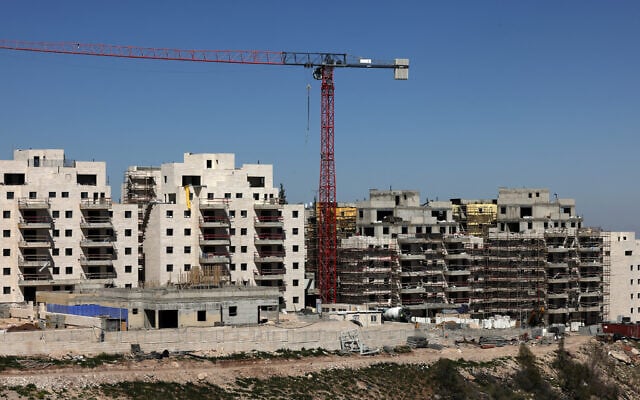
For those who stay, meanwhile, life is getting more expensive. The consumer price index is up a slight 1.5 percent over the past year — but food prices have jumped 8% since 2024, according to Globes. In 2011, rising home prices drew hundreds of thousands into the streets and dominated the Israeli conversation. Since then, housing prices have more than doubled.
So it’s no surprise that when Israelis were polled recently on their top issues when they head to the ballot box, economics and cost of living topped the list, scoring slightly above the topics of security and diplomacy.
And yet, a cursory look at the candidates’ heated rhetoric makes it seem like the economy barely exists. Record-low test scores in science, math, and English — crucial, one would think, to the success of the “Start-up Nation” — aren’t a topic of discussion. Why not?
For anyone living in Israel or, indeed, anyone paying attention to it, the answer feels obvious: Just like most public discourse and policy over the past three years, this election is being dominated by one overarching issue: the October 7, 2023, onslaught, the wars that followed, and the seismic changes they have wrought in Israeli society.
That has led people to debate Israel’s security doctrine, its increasing diplomatic isolation, whether the ultra-Orthodox must serve in its military and, more than anything, how much responsibility Prime Minister Benjamin Netanyahu bears for the attack and what has followed. The attack has also impacted Israel’s economy, but in ways that are less apparent to the average voter.
Even though Israelis say they care about other things, experts say, this is the first election after October 7, and that will define the stakes.
“This election is under the long shadow and the cloud of October 7, and everything that has happened since,” said Manuel Trajtenberg, an economist and former Knesset member who chairs Tel Aviv University’s Institute for National Security Studies. “What’s most important are security and diplomatic issues, not the economic issue itself.”

Security forces keep watch as anti-government protesters demonstrate against Prime Minister Benjamin Netanyahu’s visit at the entrance to Kibbutz Nir Oz, near the border with the Gaza Strip in southern Israel, on July 3, 2025. Netanyahu entered via a side entrance. (Menahem Kahana / AFP)
Still, Israel has always confronted existential security threats, but has managed to debate its cost of living and schools at the same time. Previous election cycles have seen several parties gallop into the Knesset on the back of an agenda focused primarily on kitchen table issues. Those issues still exist, but hardly any politician is talking about them. The one party that spotlighted economics was at the bottom of polls, and despite merging into another faction with a larger public profile, might still fall short of winning a seat.
One reason for this, scholars and former politicians say, is that it’s difficult for candidates to differentiate themselves on lowering the high cost of living. There are clear differences between the parties on, say, whether to draft the ultra-Orthodox, or who bears responsibility for October 7. But because the two blocs are divided primarily over whether Netanyahu should remain prime minister, both are ideologically diverse, making it hard to spotlight complex policy issues like economics.
In addition, previous parties that have placed the economy at the center of their platforms no longer exist, and the reforms they ran on have fizzled, deflating Israelis’ expectations that government can make a difference. While Israel’s military policy and approach to ultra-Orthodox integration impact the country’s economic outlook, the conventional wisdom, especially now, is that parties win elections by talking about security, not the daily struggle of Israelis to make ends meet.
“I don’t think that people don’t realize how expensive everything is,” said Rachel Azaria, a former lawmaker for Kulanu, one of the now-defunct parties that focused on bread-and-butter issues. “I think everyone does, and I think it’s very, very difficult for everyone. But I think that politics has detached from Israeli society.”
She added, “I think that the expectation that they’ll do something for us, that kind of disappeared.”
It’s the security, stupid
It wasn’t always this way. Six decades ago, Menachem Begin made (relatively) small government part of his pitch. In the 2013 election, the first after the passive 2011 tent protests over housing, the three leading parties placed economics at or near the center of their campaigns. That year, the recently founded Yesh Atid won 19 seats under a leader, Yair Lapid, with the catchphrase “Where’s the money?” The next election, in 2015, saw a similar story, as Kulanu won 10 seats.
In a series of elections, the Sephardi ultra-Orthodox Shas party openly waged class warfare, famously posting billboards in 2015 in Tel Aviv’s tony Ramat Aviv neighborhood appealing for the votes of domestic laborers who worked there — but rejecting support from the neighborhood’s residents who employ the cleaners, caretakers and other workers.
As recently as the last election, in 2022, Shas chair Aryeh Deri filmed an ad pledging food security for the country’s low-income children. This year, all of the party’s ads so far appear to be an effort to moderate its image on the question of Haredi military service.
But economic issues have not dominated the conversation in any of Israel’s elections over the last decade-plus, with the possible exception of 2013. Instead, they have all revolved around the same set of issues that are dominating the current one — security and whether Netanyahu should remain prime minister.
And no Israeli has ever become prime minister by talking about economics. Those who want to position themselves for the top job feel a compulsion to talk about the most existential issues. Politicians have come and gone with promises to reform the banking system or the housing market, but, said the Israel Democracy Institute’s Tamar Hermann, “They were not competing over the leadership of the country.”
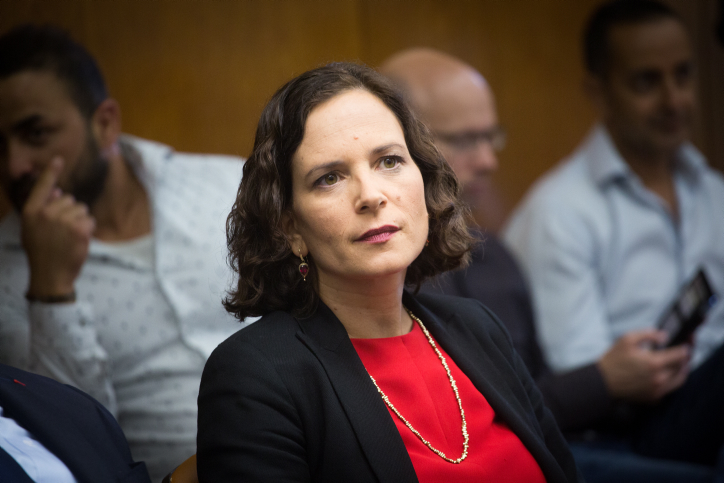
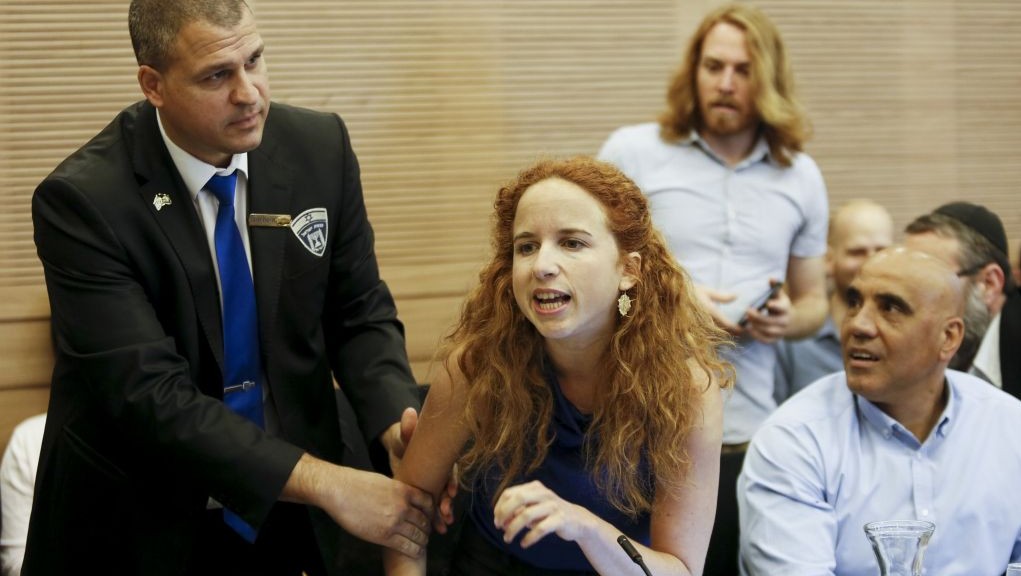
Parties and politicians that have attempted to focus on economics have tended to be short-lived. Kulanu faded out after one term in office. When Labor trumpeted economic issues in 2013 and 2015, it lost both elections by a wide margin. Buzzy candidates who joined the party after leading the 2011 social protests, such as Stav Shaffir and Itzik Shmuli, were out of politics within a decade.
“People kind of stopped believing that politicians can do something about the cost of living,” Ayal Kimhi, vice president of the Shoresh Institution, told the Times of Israel. “Everybody’s been talking about that for years and nobody’s doing much about it.”
In the United States, where pocketbook issues reign supreme, a famous campaign adage says, “It’s the economy, stupid.” But in Israel, regardless of what they tell pollsters, voters end up making their decision based not on the cost of living but, as Netanyahu has put it, based on “life itself.”
A focus on October 7
That’s especially true now, as Israel is perhaps beginning to emerge from a period of prolonged warfare following the deadliest catastrophe in the country’s history, with troops still serving in Gaza, Lebanon, Syria and the West Bank, with thousands of Haredim in the streets vowing to “die rather than enlist” in a beleaguered IDF, with Israel’s allies turning away from it and with accountability for the failures of October 7 still under fierce debate.
It bears noting that the issue that dominated Israeli politics from January to October 2023, the government’s judicial overhaul, has also barely shown up in the campaign.
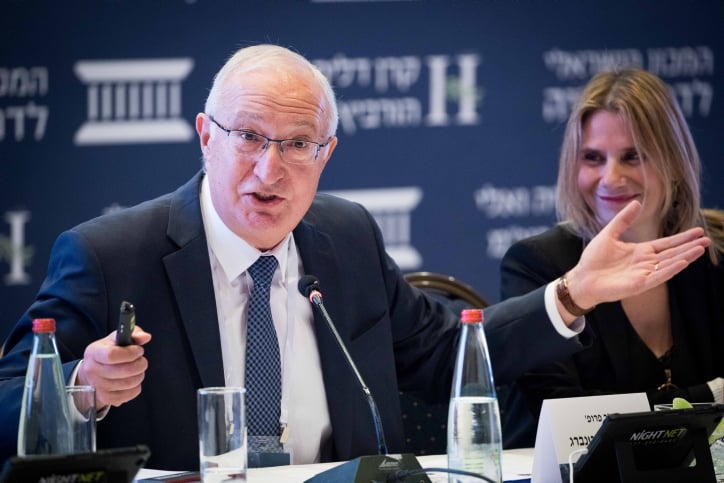
If anyone should be dismayed by the scant talk about affordability, it’s Trajtenberg. The economist is best known for chairing a prominent committee formed in 2011, following mass protests that began over the price of cottage cheese, to tackle Israel’s high cost of living. But he said he isn’t upset by the lack of focus on economic issues.
“It doesn’t disappoint me because I, as a citizen, what’s most important, from my standpoint, is where the country is going after October 7,” he said. “How do we overcome? How do we cope with the challenges?”
Not a wedge issue
Another factor is the logic of political polarization. Parties talk about the issues where it’s easy to draw a contrast with the other side. The average voter, for example, can likely explain the difference between the two blocs when it comes to demanding ultra-Orthodox military service, or who each blames for the debacle of October 7. More than anything, the two camps are divided on whether Netanyahu should remain in office.
But when it comes to many areas of policy, the differences are more muddled. For example, the leading opposition party, Gad Eisenkot’s Yashar, recently signed a vote-sharing agreement with the left-wing Democrats party. But in a recent interview, the party’s number-two candidate said he would be open to a coalition with the far-right Religious Zionism party as well. That muddle extends to lowering the cost of living.

“There is not any difference in the economic agenda of the major parties,” said Hermann, academic director of IDI’s Viterbi Family Center for Public Opinion and Policy Research. “So what can they say?”
She added, “If their economic agenda is similar or pretty close, they cannot make much use of it.”
That doesn’t mean there are no distinctions between the parties’ policy recommendations. Religious Zionism’s chair, Finance Minister Bezalel Smotrich, has made some attempts to ease the cost of living, including an unsuccessful reform to dairy imports, and a recent tax break that lowered gas prices. But despite differing policies, everyone professes to have the same goal: increasing affordability.
“Nobody’s going to be against improving the school system, nobody’s going to be against having more infrastructure,” Avi Weiss, who leads the Taub Center for Social Policy Studies, told The Times of Israel. “The thing is, there are competing needs, and the question is where you put the emphasis.”
High costs in a resilient economy
Voters can also take comfort that, in a period of war, death, spiraling social strife and international boycotts, Israeli macroeconomic trends are a rare bright spot.
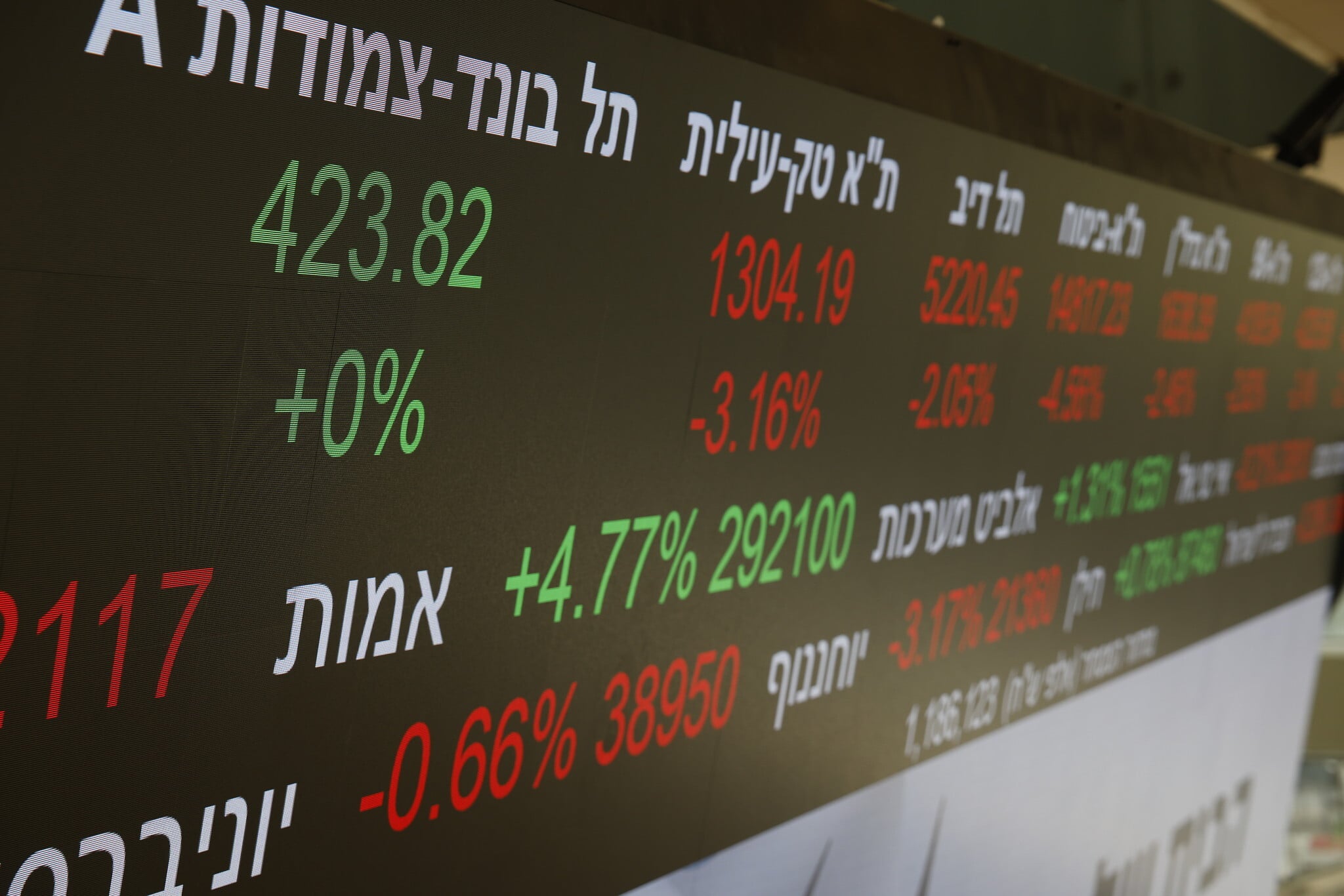
“During the Jewish year ending this week, Israel’s economy managed to grow despite the continuation of the war. GDP grew, foreign investment in the country surged, and inflation declined,” the Finance Ministry reported last week. Unemployment is close to zero, the shekel is strong (maybe even too strong) and Israel is inking huge defense contracts.
“What’s most important, from my standpoint, is where the country is going after October 7. How do we overcome? How do we cope with the challenges?”
A recent poll by the Israel Democracy Institute found that nearly 60% of Israelis feel positive about their personal situation.
“Unemployment is pretty low, inflation is low,” Kimhi said. “We went through difficult years of war that never ended, and the economy looks resilient.”
Kimhi as well as Weiss said that the pain from Israel’s high cost of living isn’t as sharp as it was in 2011. Housing prices have been high for a long time now. So have food prices. It has strained Israelis’ lives, but if there’s another breaking point, voters aren’t there yet.
“I think people have learned to live with what we have,” Weiss told the Times of Israel. “In other words, the cost of living is very, very high. [But] I think that not everybody really understands how high it is compared to other countries.”
Money talks after all
The thing is, politicians are talking about economic issues — they just don’t sound like it. When politicians discuss the toll that endless reserve duty has taken on Israelis, they’re also lamenting the lost months of labor and salary from some of Israel’s most productive workers. A recent study from the Taub Center found that the average reservist in the post-October 7 period could expect a 4.7% decrease in his long-term salary.
A closely related issue with clear economic implications is Haredi military service. Much of the debate has been over whether ultra-Orthodox men must participate in Israel’s mandatory draft, relieving the burden on reservists. But that’s also a proxy for a wider clash over how much Haredim must integrate into Israeli society, not just in uniform but also in school and the workplace.
Opposition parties’ plans to institute math and English studies in Haredi schools will, if implemented, almost certainly lead to a jump in ultra-Orthodox labor force participation.
“After all, the issue on the agenda is conscription,” said Trajtenberg, who is now affiliated with Yashar. “But really, what we’re talking about is integration, the need to integrate the Haredi sector into all aspects of life. So evading military service is part of evading participation in society and the economy.”
Azaria has lately been focused on aiding reservists and their families, founding a group called Haogen (Hebrew for “the anchor”) to support them. The toll on their nest eggs has been clear. But she said that even so, reservists may be reluctant to talk about their struggles in economic terms because it may feel like they’re complaining about day-to-day life in the country they just put their lives on the line to defend, undercutting their months of sacrifice.
“People are upset about economic issues, but I’m not sure people want to get so upset with the country now,” she said of reservists. “If you go time after time after time to war, to protect your home, you’re not going to be very critical about the country.”
It isn’t just reservists. Trajtenberg added that diplomatic issues are also economic issues, citing what could happen to Israel’s economy if US military assistance ends, for example, or if the flow of philanthropy from American Jews dries up as sympathy for Israel cools.

One of the most profound ways the election might impact the Israeli economy is its effect on the mass emigration of the past few years. Under the current government, many of Israel’s most talented workers sought other shores. If that continues, Kimhi said, it could “be a process that leads to a collapse.”
“We’re losing human capital,” he said. “We’re losing the most talented people, we’re losing the most qualified people, we’re losing people who are determining the growth path of the economy.”
He added, “I think many people are still sitting on their suitcases. [They] cannot decide whether they should stay or not, and [are] waiting for the election results to see if there’s hope for a better future. If they think that the election results will predict business as usual, they might pack up and leave.”




The Times of Israel Community.