

Israel’s darling of design dazzles London with four summer shows
While claiming to be ‘lazy,’ Renaissance man Ron Arad doesn’t limit himself to one genre — or one exhibition
 Add ToI as a Preferred Source on Google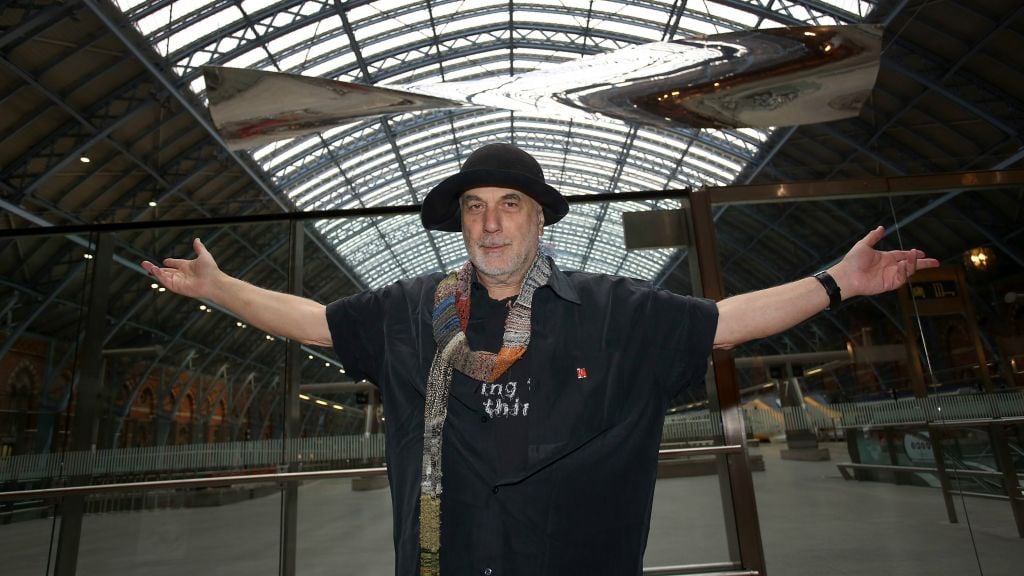
LONDON — Ideas are overrated, says internationally acclaimed artist, architect and designer, Ron Arad.
“Ideas are easy. The thing to know is which ideas you give your time to, which ideas you invest, which idea you do now and which idea you say ‘just wait,’” he says.
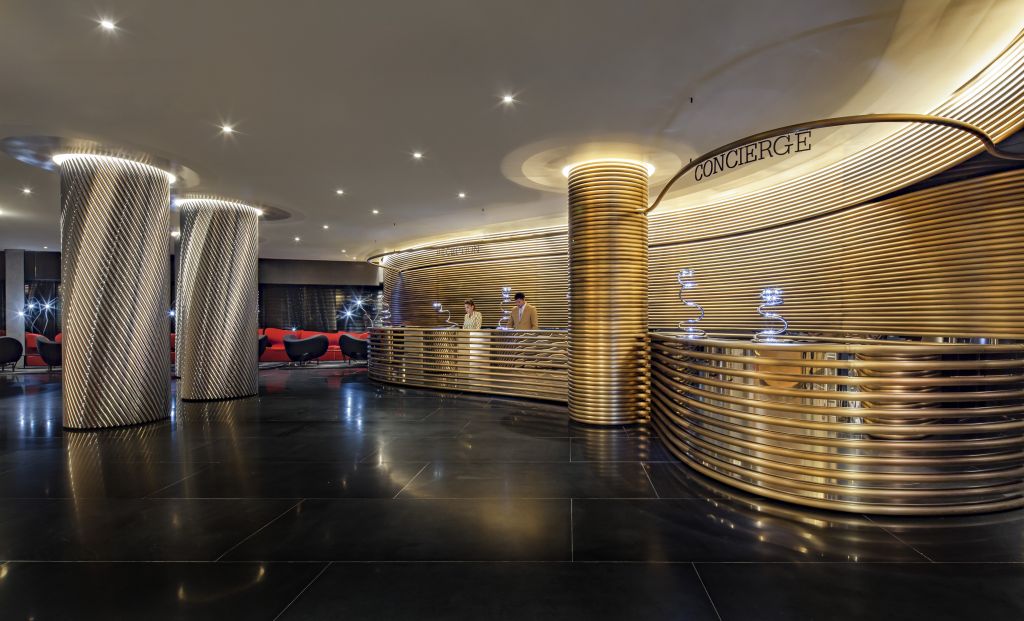
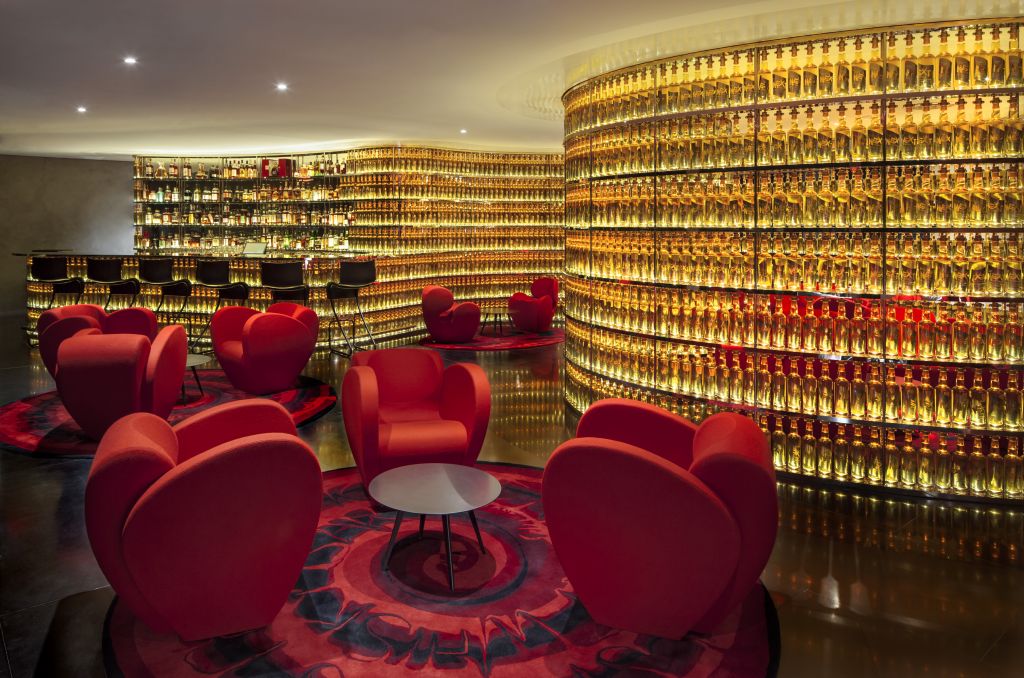
Arad is currently having quite a moment. This summer, in London alone he has three major public artworks on display and a solo exhibition at a Mayfair gallery. He has also been involved in the overhaul of the infamous Watergate Hotel in Washington, DC, which reopened in June after a $125 million refurbishment.
“The attraction [for the project] was the corruption,” Arad admits.
The hotel’s main public areas — its lobby, whisky bar and restaurants — are designed by Arad.
Yet, despite his extensive creative output and renown, the 65-year-old Israeli claims to be lazy.
“I am, I am,” he says. “People don’t understand me when I say that.”
The entrance to Arad’s north London studio is easy to miss. Located on a busy road, access is via an innocuous gate. A walk across a courtyard and a climb up an outdoor metal staircase leads to the ramshackle looking building — but its facade is deceptive. Only the exterior lilac brickwork hints at what lies inside.
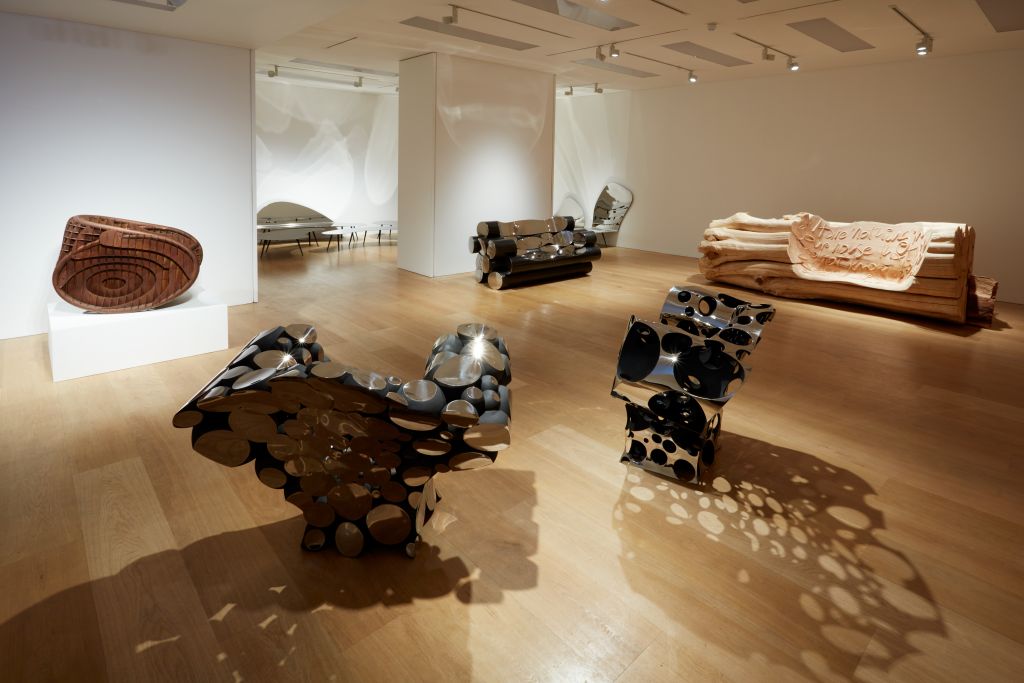
A wooden door opens into a lobby area that also serves as an exhibition space. Polished metal armchairs shimmer and sparkle against the wooden floor next to a rocking chair and a couple of reworked versions of Arad’s Rover Chair — his first piece of furniture design made from an old Rover car seat in 1981. The original sits in the main studio.
Glass screens displaying Arad’s 2013 Venice Biennale installation, Last Train, are fixed to the walls. Inspired by a man etching a message on a train windowpane with a diamond ring, Arad explains that he had invited several artist friends to do the same. He then designed a diamond ring on a prototype fist, linking this to a specially designed iPad app to form a drawing tool. The screens are blank until Arad switches them on and the line-drawn images appear.
Movement is a central theme in Arad’s vast body of work, and his workspace is no exception. A former sweatshop, the building has been Arad’s office and studio since 1989. The interior is a striking mass of curves and color, overflowing with an array of furniture, objects and materials. Even the floor undulates like a wave into the main office. Dining chairs in a range of colors, textures and plastics stand on a raised ledge above bookshelves, which are haphazardly stuffed with files, papers, glass or Perspex objets d’art, fashioned into a variety of shapes and sizes. Just behind where we sit there is a table display of Arad’s range of wrap-around eyewear.
Designers — and Arad — sit upstairs. Architects downstairs. Outside, in another small courtyard, is an Arad-designed curved ping-pong table, a recreational staple for all the staff.
Arad works very closely with his 20-person studio based team.
“I depend on others completely. There are lots of skills that I don’t have… to do with computers. Also, I’m the most irresponsible person here. Sometimes there’s sort of a clash with the architects, between my reckless approach to their ideal approach. We fight but I rely on their [sense of] responsibility to save me from myself,” he says, barely audible above the sound of heavy rain pounding on the roof.
All ideas begin with Arad’s sketches but as with all his work, these quickly become a collaborative process.
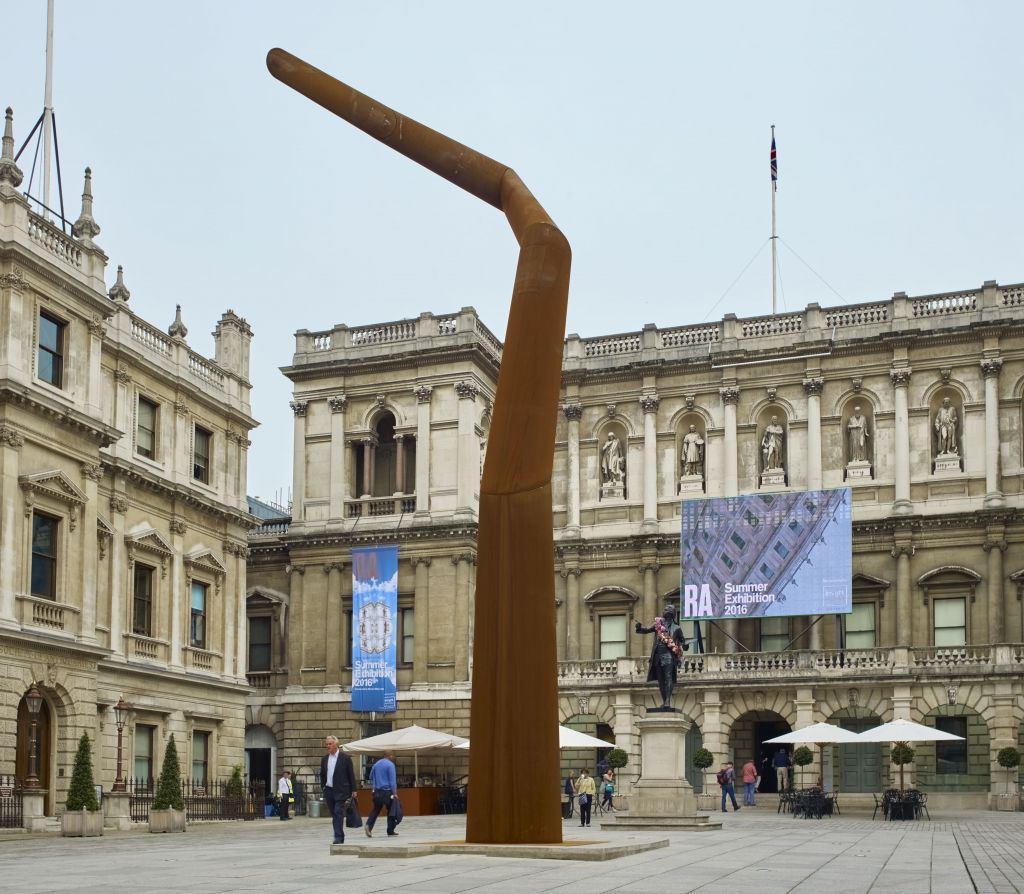
Such is the case with his one-off recent sculptures Spyre — which is installed in the Royal Academy Annenberg Courtyard as part of the Royal Academy’s annual Summer Exhibition — and Thought of Train of Thought, located at St. Pancras railway station.
Arad points to one of his colleagues, telling me that both pieces were looked after by him: “He’s priceless. It feels like [they were] his projects as well, without being the author.”
Spyre is a 16-meter high, constantly moving sculpture made of COR-TEN steel, with a built-in camera that takes live footage of its surroundings. Fixed above the gallery’s main entrance is a screen that shows the images.
“It’s a spire, I just changed the ‘i’ to ‘y’ because it has a camera,” he says.
He explains that “this thing” cost him Google’s support as they had considered sponsoring it but could not because of the name — “it doesn’t suit them because they’re accused of spying on people.” Arad offered to change the name, “but by then it was too late. It’s too Big Brother for them.”
Spyre bends and twists like a giant index finger, but when asked if the piece is intended to be playful, Arad responds that “People can read all sorts of things into it. Some people find it disconcerting. Some people see it as a piece about surveillance cameras.”
He points out that there is a disclaimer in the Annenberg Courtyard in relation to Spyre but not about the hidden security cameras in the area that record footage all the time.
“This doesn’t even record,” he says. “So that is the way the world is. This one isn’t hiding. If you don’t like it you can go around it.”
He agrees that it is mesmerizing.
“The majority of people look up. Hardly anyone walks through [the courtyard] not noticing it,” he says.
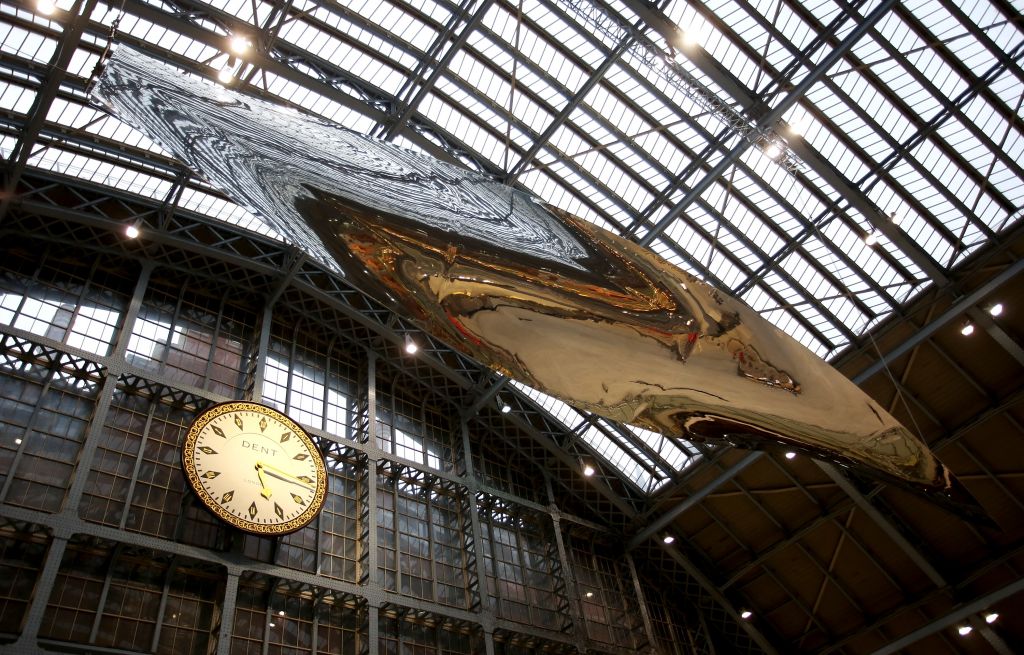
It is also difficult not to notice Arad’s other kinetic sculptural installation — an elegant, suspended, cloud-like swirl of aluminum that hangs above the Eurostar platforms at St. Pancras station. It is part of an annual partnership between HS1 — the station’s owners — and the Royal Academy of Arts. There is contrast, he says, but they also have things in common.
“They move, they change and they make you look up. It is something I was curious to see, although I made it. All the work is about satisfying my own curiosity,” he says.
Interpretations have been numerous.
“I’ve heard everything. From an airplane wing, to a whale, to clouds — yours — to rivers. No bad associations,” Arad says.
But public art, he says, is a difficult subject.
“It’s very easy to erect and install and impossible to get rid of. It needs a revolution or something,” he says.
As to Spyre’s future, “Perhaps one your readers will buy it!” he jokes. “It’ll go somewhere, to someone. It has to. It was a work of love for a long time.”
Arad’s third installation, a reinvention of Curtain Call, will be unveiled on August 6 at the Roundhouse, a performing arts and concert venue located just a few minutes’ walk from Arad’s studio, as part of its 50th anniversary celebrations.
“We own the project together, the Roundhouse and us,” Arad explains. “I think it’s great that it’s coming back.”
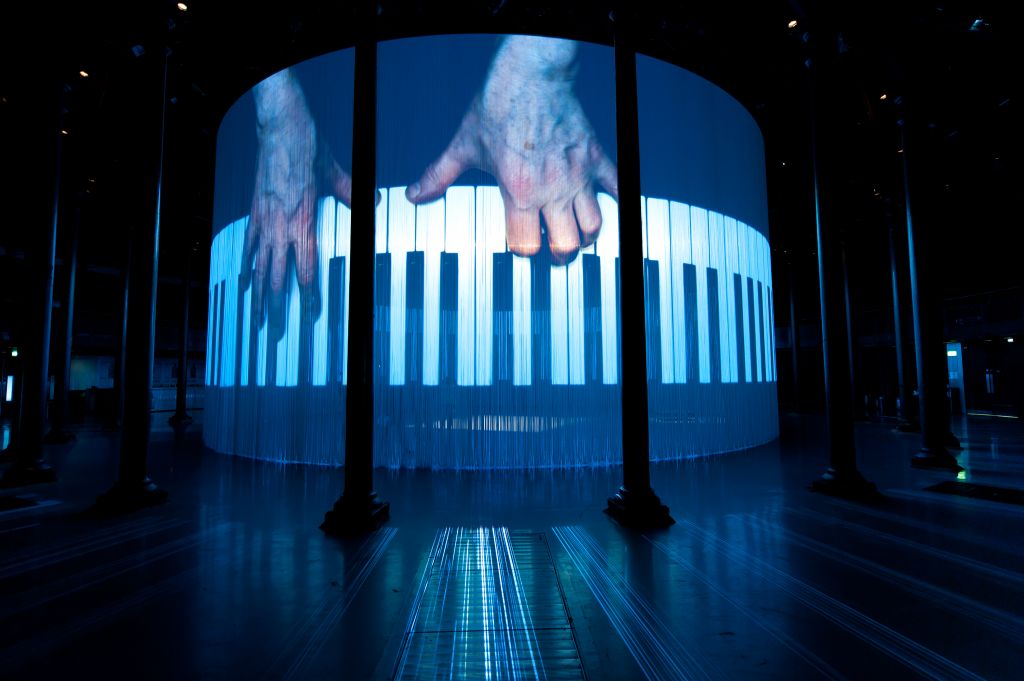
Curtain Call consists of over 5000 silicon rods, suspended from the circular loading beam of the Roundhouse roof. It acts as a canvas for images and film, viewed from both inside and outside of the curtain and can also be walked through and experienced in 360°. It first exhibited at the Roundhouse in 2011, before traveling to Jerusalem a year later. Renamed 720 Degrees, it was situated in garden of the Israel Museum.
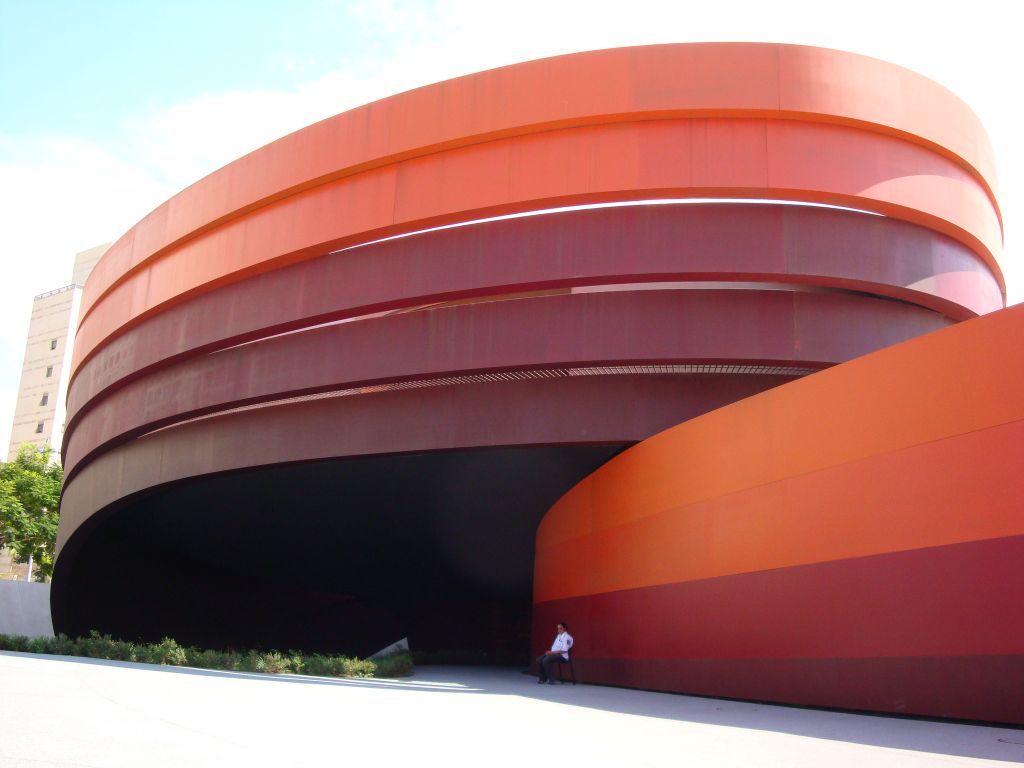
Arad has completed several projects in Israel but he refers to the Design Museum in Holon, as his “luckiest.” It opened in 2010 and was the first museum in Israel to be dedicated to design.
He is proud of the fact that, after the Golden Dome in Haifa, it has been voted as the most loved building in the country — “not by critics, not by professionals but by the public.”
He is currently working on two architectural projects in Israel: an office development near the HaShalom railway station in Tel Aviv and Beit Shulamit, a cancer hospital in the northern city of Afula, which will serve Jewish, Christian, Muslim and Druze communities.
The hospital is named after Shulamit Katzman, a former head of the Board of Trustees of the Design Museum Holon who died of cancer. Her husband wanted to build a cancer facility in her name. He, as donor, chose the location.
“He didn’t want it to be in one of the major cities. He wanted it to serve cities like Jenin,” Arad explains.
In an interview with a design magazine a couple of years ago, Arad said that architects have a duty to do good things.
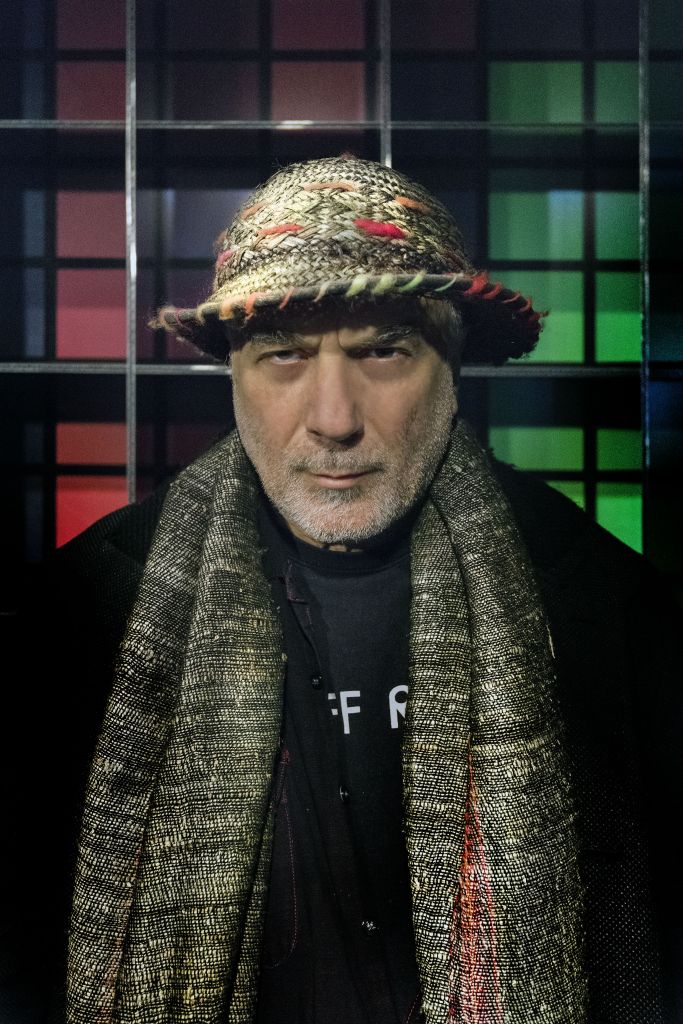
He still holds that opinion — and working on the hospital fulfills part of that view — but he maintains that “I am not an activist. Looking at all the evil that happens in the world, we are so helpless and so when you have a chance to do something that is a good thing, you have to do it.”
Arad was born in Tel Aviv in 1951 to liberal parents who are both artists. He studied at the Bezalel Academy of Arts in Jerusalem before moving to London in 1973 to train at the Architectural Association. He was Professor of Design Products at the Royal College of Art in London between 1998-2009 and he has received major retrospectives of his work in Paris, New York and London. His work is in numerous public collections worldwide.
He says he has a dislike for convention that “probably” applies to every piece of work that he does. There is also fusion between everything that he does, be it as an architect, designer or artist; he does not differentiate.
“But people don’t like the fact that I can do useless sculptures and comfortable chairs,” he says. “[They say] make up your mind! What are you?!”
“Sometimes I think, ‘I’m terrible, what am I doing?’” he muses, semi-serious. “I’ve done this, I’ve done that, and I’m sitting on that. But I didn’t waste my time completely.“










The Times of Israel Community.