

Israel’s exports more vulnerable to virus crisis than its imports
Most incoming goods arrive by sea, but majority of outgoing products, especially to the US, are moved by plane; now, coronavirus is bludgeoning the aviation industry
 Add ToI as a Preferred Source on Google
Luke Tress is The Times of Israel's New York correspondent.
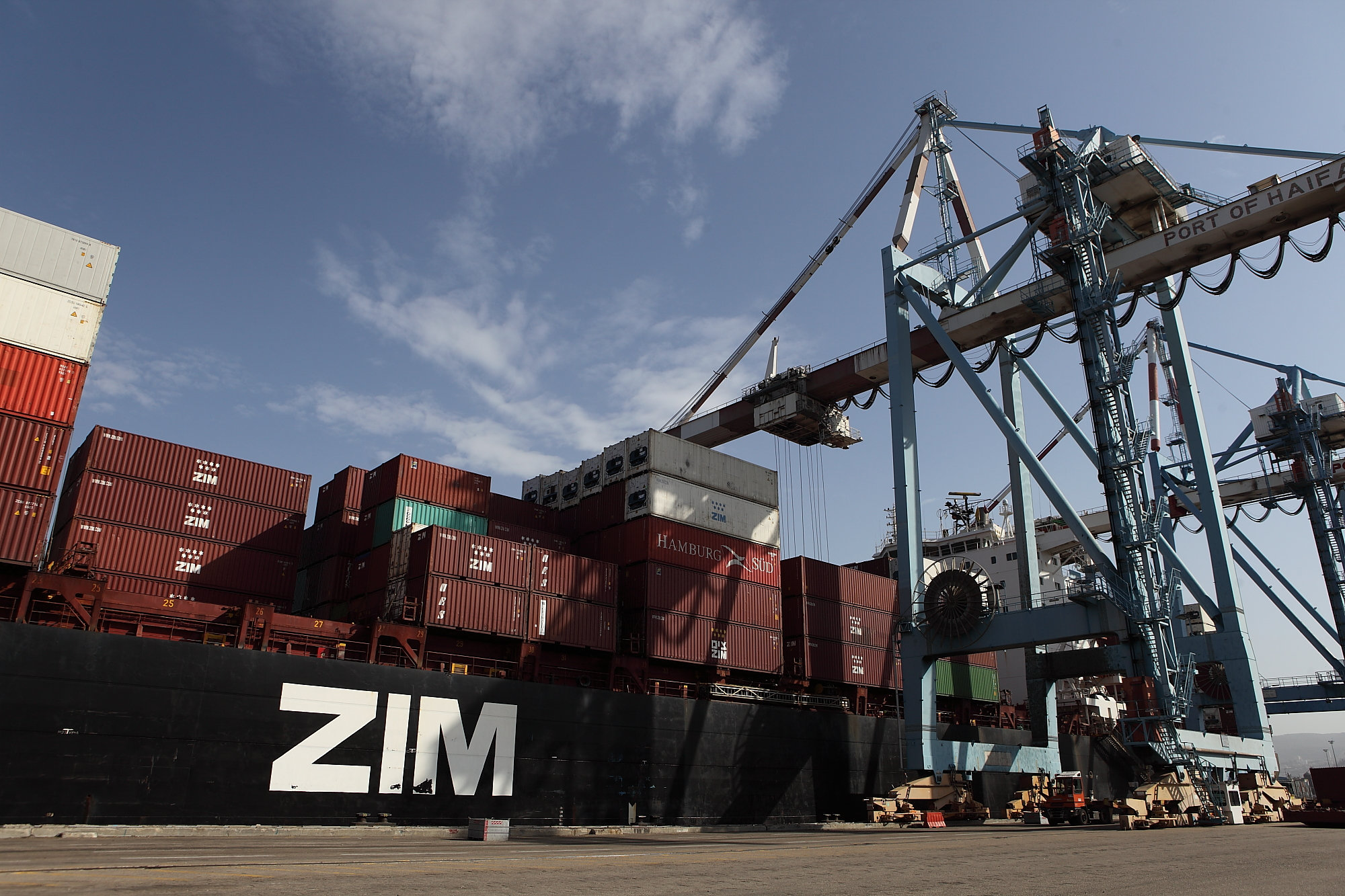
Israel’s exports, which are mostly ferried by plane, are more likely to be affected by the coronavirus crisis than the country’s imports, which mostly arrive by sea.
About 66% of Israeli exports in 2018 were by plane, and the remaining third by sea, Israel’s Manufacturers’ Assocation said Tuesday.
Israeli services exports, which includes tourism, are expected to see losses of NIS 1.9 billion ($535 million). The sector’s 2019 revenue was $55.4 billion, $7.6 billion of which was in tourism, and $30 billion in high tech.
The aviation and tourism industries have been especially hard hit by the virus. A sweeping quarantine directive announced Monday requiring all incoming travelers to self-isolate is expected to essentially shut down tourism to Israel.
Exports of goods are expected to see losses of NIS 1.3 billion ($366 million). Around 30% of Israel’s exports are to the US, 23.6% to Europe and 10% to China.
Cargo planes and ships are not subject to quarantine restrictions, but some 54% of air imports and exports by weight are carried by passenger flights.
Around 36% of total exports by air are from the diamond industry, which has little influence on employment, and around a third is machinery, medicine and optical equipment.
El Al conveys around 35% of all imports and exports by air, the Calcalist business daily reported, which partly explains the government’s vows to keep the company afloat. El Al has axed hundreds of employees, slashed salaries and is reportedly set to request a $700 million government loan to survive the crisis.
For the US, 78% of exports are by air because Israel mostly sends diamonds, pharmaceuticals and electronics, which are almost exclusively carried by air.

Some companies may shift trade to ships, but for firms with contracts requiring trade in a short period of time, the slower sea route may not be an option.
Meanwhile, two-thirds of Israeli imports arrive by sea, which may be why government officials are relatively unconcerned about shortages in food and raw materials.
Around $5 billion dollars in imports are medicines, and $12 billion are electrical equipment, machinery and optical equipment.
Twenty-one percent of imports by air are from the US, around a third from Asia and a third from Europe.
With fewer Israelis traveling abroad, an increase in domestic tourism may offset some losses from foreign tourists, though there are signs some Israelis may be wary of domestic travel and staying at resorts with thousands of others as well.
Businesses and government officials are adjusting to the outbreak on a daily basis; if the outbreak becomes a long-term crisis more significant changes in policy may be required.
On Wednesday the government announced an emergency package of more than NIS 10 billion ($2.8 billion) as it sought to stabilize the economy and offset some damage caused by the coronavirus crisis.
Some NIS 8 billion ($2.2 billion) will be dispersed to businesses, NIS 1 billion ($281 million) to the health system, NIS 1 billion to stem the spread of the virus and an unspecified amount would go to the aviation industry, Prime Minister Benjamin Netanyahu said.
The premier said the package would “allow the economy to continue to function.”
Netanyahu on Sunday pledged NIS 4 billion in aid, which he said had been dispersed already. The remaining NIS 6 billion would be dealt out immediately, he said.
Any business that was hit by the virus could request money from the fund.
Small businesses are also likely vulnerable to temporary disruptions in sales and supply chains.
The Ministry of Finance’s chief economist, Shira Greenberg, said the quarantine orders announced this week would likely cost the economy NIS 4.3 billion per month.

The Bank of Israel on Monday said it expects the outbreak to cause a loss of 0.7 percent to Israel’s growth, shrinking GDP growth in 2020 to some 2%. The bank made the announcement before the sweeping quarantine order.
Israel’s banking system has not been hit hard by the crisis and is prepared for a further downturn, Yaron said, commending the banks’ response thus far.
Yaron gave no indication that the bank would cut interest rates, but recommended that banks make credit more available. Israel’s banks have some NIS 14 billion (some $4 billion) in surplus capital, he said.
The Tel Aviv Stock Exchange plummeted in recent weeks alongside global markets, with the TA-35 index dropping 19.76% since the beginning of the year.
There have so far been 82 confirmed cases of COVID-19 in Israel, most of them contracted by travelers returning from abroad. The government has for weeks ordered measures to clamp down on foreign entries and force home quarantines.
Over 40,000 Israelis have been ordered to quarantine since the crisis began, the Health Ministry said Wednesday.
Unlike other quarantine orders, which were open-ended, Netanyahu said the new restrictions on all foreign entries order would be in place for two weeks, though it is expected to be extended. He added that further decisions were being made by the government to protect the economy, though he did not elaborate.









The Times of Israel Community.