

Jerusalem’s traveling troupe of lockdown DJs turns the tables on disability
The Special DJs take spins around the capital to entertain the elderly and COVID-19 patients who can’t venture out
 Add ToI as a Preferred Source on Google
Jessica Steinberg, The Times of Israel's culture and lifestyles editor, covers the Sabra scene from south to north and back to the center
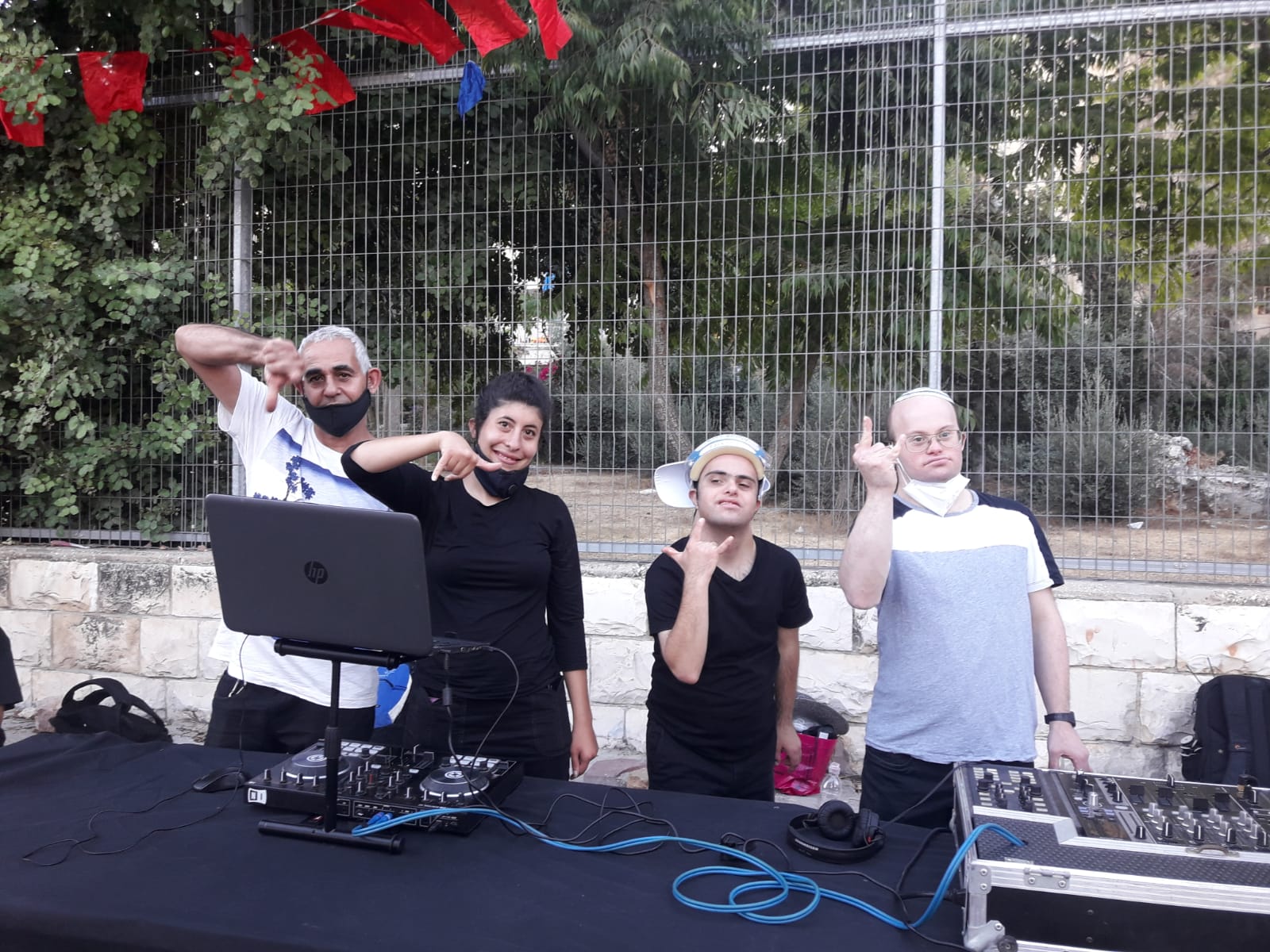
It was a quiet Wednesday afternoon in Jerusalem when a group of DJs on a refitted truck bed rolled up to the Golden Age assisted living facility, slid on their headphones and began to groove.
Their audience was mostly indoors, some standing at their windows or emerging to balconies to be entertained by the Special DJs, a traveling troupe of young adults with disabilities who were riding around Jerusalem to entertain others during the country’s coronavirus lockdown.
“It was amazing,” said Noam Yomtovyan, one of the DJs. “Being a DJ is more than just playing the music, it’s acting and singing and creating energy.”
The idea was to bring some entertainment to assisted living facilities and coronavirus hotels in four Jerusalem neighborhoods — Ramot, Gilo, Arnona and Rehavia. The DJs, who have spent the last year in a course honing their chops spinning tracks, got to show off their skills, while offering some joy and a little fun during another long day of Israel’s ongoing closure.
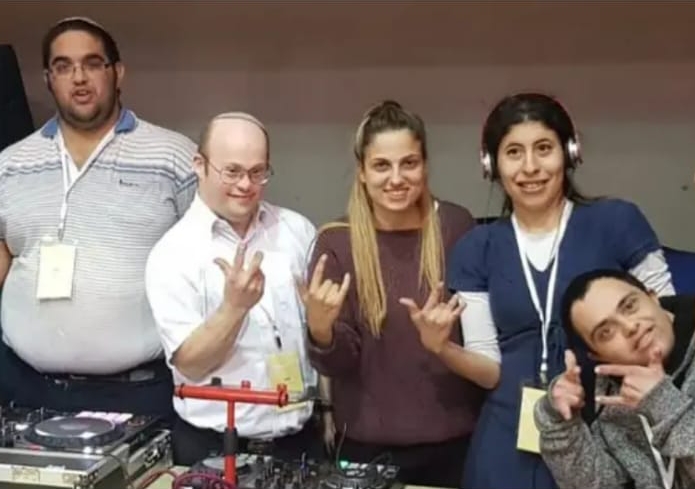
They played the Macarena to get everybody moving, adding some Israeli hits and a little Shlomi Shabat, Yomtovyan’s favorite Israeli musician.
“It was completely quiet outside because of the lockdown, but they put the music on and got the audience out there,” said Asaf Finkelstein, a spokesperson for the project. “They surprised me.”
Emerging from their DJ course to the public was “a huge experience,” said Yomtovyan’s mother, Merav Yomtovyan. “It was so invigorating to suddenly have something like this, to get people to dance. And to be on the giving side.”
The overall project has several different elements, said Talia Schwartz, 27, who initiated the DJ course, as well as a soccer team for people with disabilities, in the last year for Tzamid, the department of special needs in Jerusalem’s municipality.
“An audience sees people with disabilities playing ball or performing and says, ‘Wow, they’re good athletes,’ or ‘They’re good musicians,'” said Schwartz. “We need this generation to make space for people with disabilities and to see they’re able to do whatever they want.”
The experience of being a DJ, onstage in front of an audience, gives those with disabilities the power to believe in themselves, she added.
“They feel different as a result of the experience; they tell me they feel like a king, or that it’s amazing,” said Schwartz, noting that the group includes young adults with varying disabilities, some with cognitive issues who have trouble communicating.
“I love being in front of an audience,” said Yomtovyan, 25, who has Down Syndrome.

The coronavirus has cut off the lives of certain populations, including the elderly and those with disabilities, who are often at greater risk to contract the virus, said Elyasaf Peretz, who directs the Society Division in the municipality, which includes Tzamid.
“Right now, it’s a population that is staying home much of the time,” said Peretz. “With this, they were able to do for others. That’s something very holy.”
Tzamid has 19 clubs around Jerusalem, involving some of the 140,000 people with disabilities in the city, said Peretz.
Schwartz, a musician, thought of forming a DJ course after working with a band of students at the Feuerstein Institute, a Jerusalem school and center for children, youth and young adults with disabilities.
She wanted students in the course to be able to earn money, and thought about the work of a DJ, spinning songs for bar and bat mitzvahs, weddings and other kinds of events.

“I wanted them to learn to DJ,” said Schwartz. “It’s hard, but they can do it; it may just take more time but it doesn’t mean they can’t do it.”
Schwartz tracked down Alik Korpho, an award-winning DJ instructor who has worked with many communities and DJs of different ages, and is known for Smart Music, his model for creating employment in communities through music.
Korpho teaches teens how to DJ, exposing them to the technical aspects of the work, showing them how to choose music that fits the crowd, and looking at how to captivate an audience, he said.
“It worked perfectly with this community as well,” said Korpho. “We use iPads and tools that are very user-friendly, and offer DJs a tool to express their emotions and needs through music.”
It took time to teach the Special DJs, which meant accepting that not everyone was able to accomplish every task, he said.
“We look at level of interest and responsibility and when it comes together, it happens,” said Korpho. “Learning takes time, and we’re all learning all the time.”
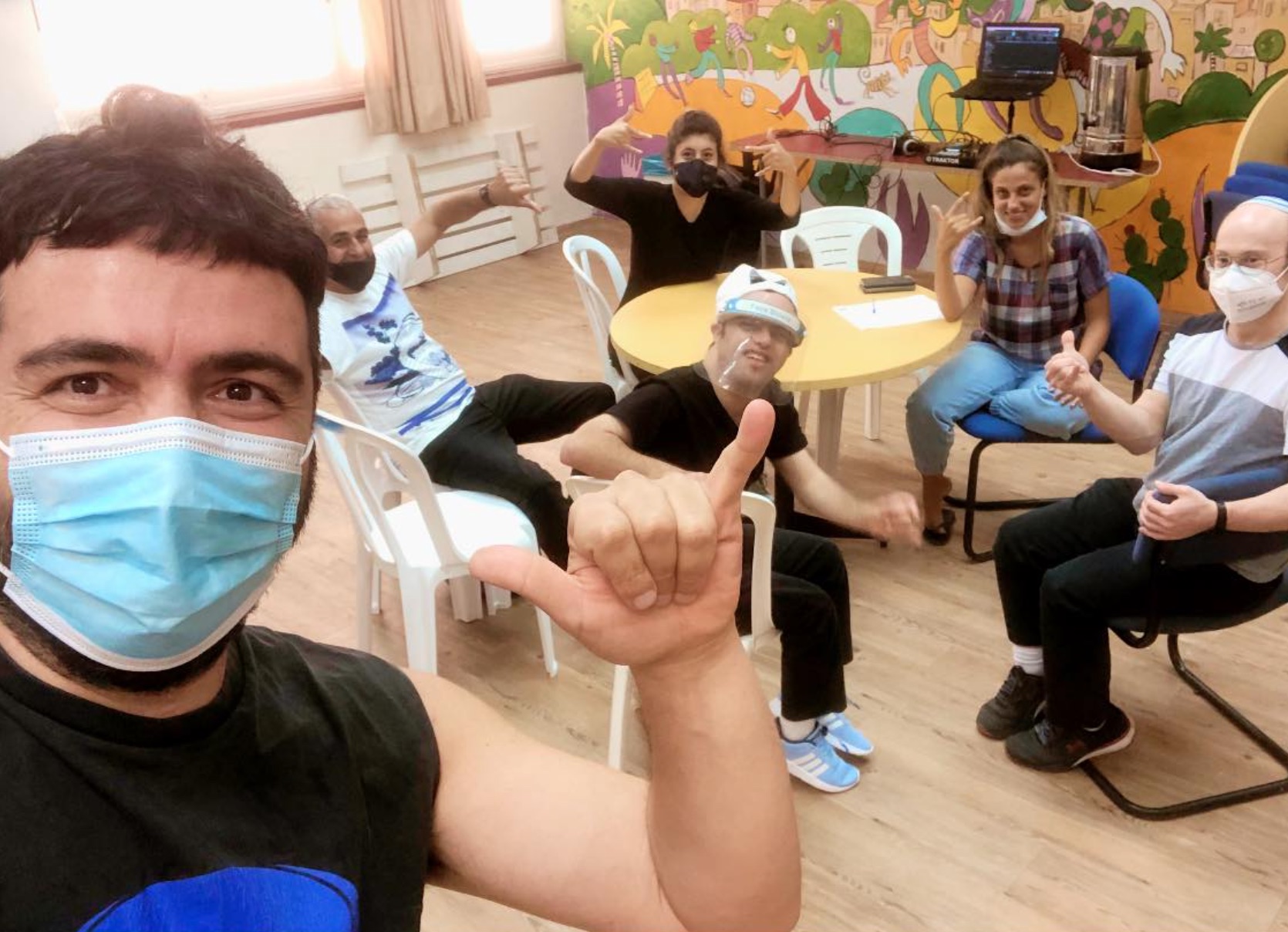
The Special DJs often work together as a group, said Schwartz. Some don’t want to be alone onstage because they have stage fright, and are still searching for their self-confidence. Others have no problem strutting their stuff, and revel in the audience’s attention.
Every aspect of their experience was visible during the Wednesday set of performances, she said.
“It’s amazing to see a person with disabilities leading the crowd as a DJ,” she said. “Music is a kind of bridge, and no one expects it.”










The Times of Israel Community.