

Jordan votes in election tipped to see Islamist return
Political arm of Amman’s Muslim Brotherhood expected to clinch some 20 seats in the 130-member parliament
 Add ToI as a Preferred Source on Google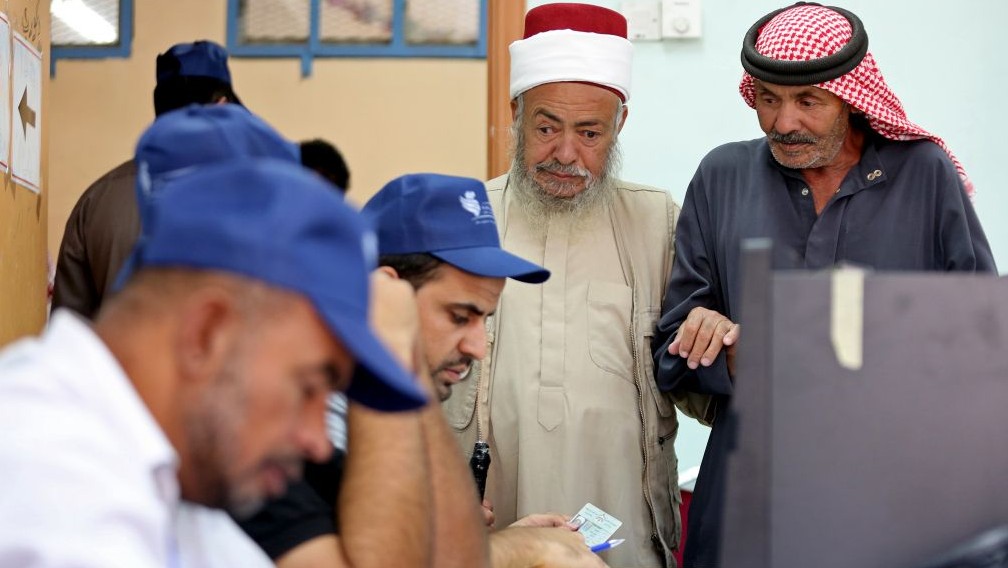
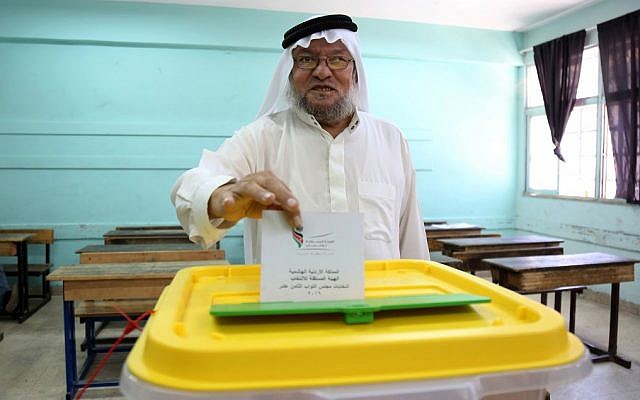
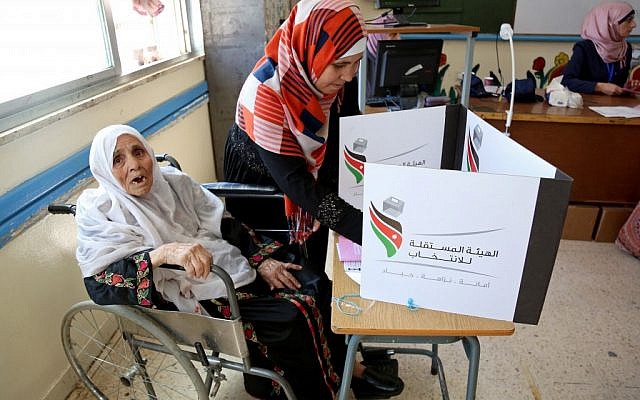
Amman (AFP) — Jordanians voted Tuesday in an election that could see opposition Islamists re-emerge as a major parliamentary force in the key Western ally.
Polling stations closed at 1700 GMT, after the electoral commission extended voting by an hour in major cities including Amman because of the “great crowds” of voters.
The focus will be on turnout and the performance of the Islamic Action Front, the political arm of Jordan’s Muslim Brotherhood.
The IAF is expected to clinch about 20 seats in the 130-member parliament, which would make it the largest opposition force.
The Phenix Center, a local pollster, had said 42 percent of those eligible planned not to vote, reflecting a general lack of enthusiasm for a parliament with limited powers to affect government policy.
The vote comes as Jordan wrestles with the spillover of wars in Syria and Iraq and the burden of hosting hundreds of thousands of refugees.
The kingdom is a member of the US-led coalition battling jihadists in both neighbouring countries and was the target of a June 21 suicide bombing claimed by the Islamic State group that killed seven border guards.
King Abdullah II can appoint and sack the country’s military and intelligence chiefs, senior judges and members of parliament’s upper house without government approval.
After polling stations closed, the electoral commission said 1.49 million people had voted based on preliminary figures, compared with 1.2 million in the last election in 2013.
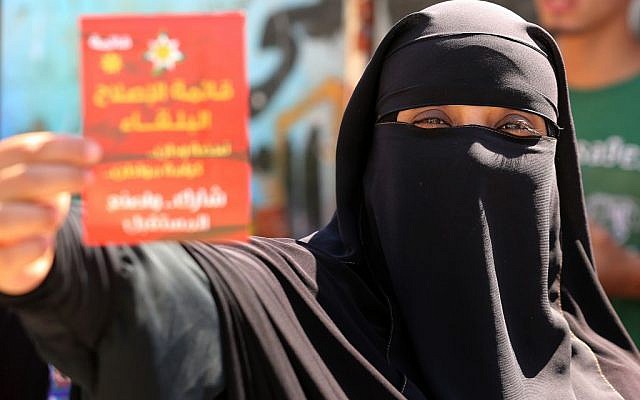
The Islamist-led opposition complained of “several” irregularities, including vote buying, which it said had taken place openly outside polling stations.
The commission said it was investigating the allegation, a common complaint in past elections.
The interior ministry said 50,000 policemen had been mobilized to ensure security.
“Some minor incidents have been reported from some areas, like clashes between supporters of rival candidates and shots in the air outside one polling station,” said national security director General Atef al-Saudi.
The authorities pride themselves on holding elections in a region wracked by conflict since the Arab Spring uprisings of 2011.
Voting was monitored by 14,000 local observers and 676 from abroad, including 66 from the European Union.
“We in Jordan are proud of the fact that we have recourse to the ballot box and dialogue through elections at a time when you hear only the sound of gunfire in several countries in the region,” said government spokesman Mohammad al-Momani.
A total of 1,252 candidates were standing. Seats have been set aside for 15 women, nine Christians and three representatives of the Circassian and Chechen minorities.
Businessmen and tribal officials loyal to the monarchy are expected to be the biggest winners.
The Islamists boycotted polls in 2010 and 2013 in protest at the electoral system and allegations of fraud.
The system gives disproportionate clout to rural districts, which tend to return tribal candidates loyal to the monarchy.
The Islamists — weakened by internal divisions and repression — announced in June they would take part after the electoral law was amended.
The amended law allows political parties to run lists, rather than a “single vote” system that benefited tribal candidates.
Voters questioned by AFP said they were doing so in the hope of change.
“I’ve been voting for decades and just hope it’ll be different this time round,” said Abdessalam Abu al-Haj, 75.
Saja Asaf, a veiled 20-year-old voting for the first time, said she hoped the new parliament would tackle unemployment.
“Most young people can’t find work when they leave university,” she said.
Unemployment has reached 14 percent, according to official figures, while independent analysts estimate the figure at between 22 and 30 percent in a country where 70 percent of the population is under 30.
Electoral commission chief Khaled Kalalda gave no specific time for final results.
An education ministry statement said schools used as polling stations would remain closed on Wednesday and Thursday “to complete the electoral process.”



The Times of Israel Community.