

Keeping the air out, and the bacteria away
A new device being used in Israeli hospitals promises to reduce the amount of time patients need to recuperate – safely – from surgery
 Add ToI as a Preferred Source on Google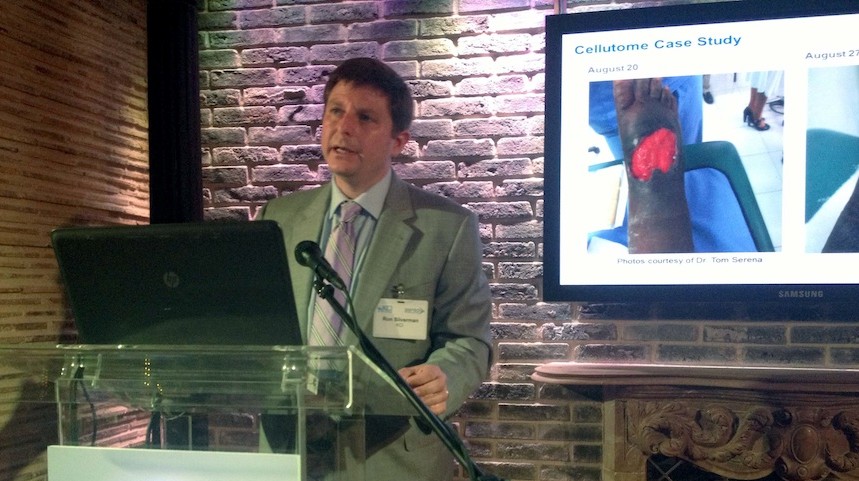
When dealing with open wounds, doctors know that applying airtight suction to the affected area dramatically lessens a patient’s healing time. Thus, doctors employ numerous techniques, and use a plethora of devices, to keep air out of wounds and incisions.
But few are as effective as Prevena, the latest offering from international medical technology giant Kinetic Concepts (KCI, represented in Israel by Chemitec), the company says. With Prevena, according to Ron Silverman, chief medical officer for KCI, the average incision treated with the device will heal in five to seven days, about half the amount of time it would take to heal when compared to older devices.
Prevena, said Silverman, is an “incision management system.” Incisions are necessary when a doctor is conducting a life-saving operation, but if not treated properly, an incision can quickly turn into a pool of bacteria, which, due to easier access to the body and the patient’s weakened state, can create a life-threatening situation.
Prevena is the first powered negative pressure product designed specifically for management of closed surgical incisions that continue to drain following sutured or stapled closure. The battery-powered device uses a special bandage, to which is attached the device itself. The device sucks out air, keeping the incision completely impervious to outside elements – and bacteria – while the body heals itself.
Also being marketed by KCI in Israel is a customizable device called V.A.C. Ulta. Similar to Prevena, it has the added benefit of allowing antibiotic fluid to drip into the wound, killing any bacteria that might exist.
According to Chemitec executives, an estimated $2 million was spent on wound care treatment last year. Two years ago, the government granted reimbursements for wound treatment to Israel’s four major health care providers — including Clalit, which accounts for more than 50 percent of the population’s health care recipients.
Besides being used for operations, the devices can have significant results on a wide range of problems, from abdominal wounds and bedsores to traumatic injuries most commonly seen on the battlefield, like amputations and bullet wounds, KCI said. Since Israeli solders receive treatment at regular hospitals, with government-provided health care, they are already exposed to these technologies, according to KCI’s Silverman.
Erez Kachel, a cardiologist at Sheba Medical Center who uses Prevena on patients with chest wounds after open-heart surgery, said he applies the device to prevent high risk patients from getting deep sternal infections that can oftentimes lead to death. “When we started, I was thinking ‘If we are able to prevent these infections, we can save lives and suffering for our patients,’” Kachel said. “We’ve seen tremendous results.”








The Times of Israel Community.