

Kerry cancels travel plans to clinch Iran deal
Israeli minister says that even if an outline agreement is signed, there’ll still be time to sway the final terms
 Add ToI as a Preferred Source on Google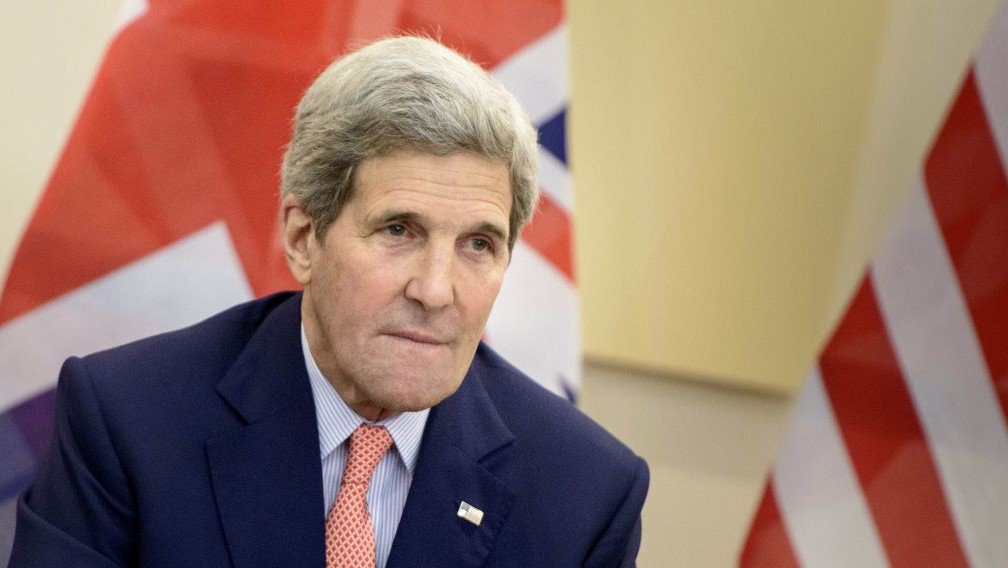
Amid signs of trouble in the Iran nuclear negotiations, US Secretary of State John Kerry canceled plans Sunday to return to the United States for an event honoring his late Senate colleague Edward Kennedy in order to remain at the ongoing talks in Switzerland.
The State Department said Kerry had been looking forward to participating in the dedication of the Kennedy Institute in Boston with the family of the late Massachusetts senator on Sunday and Monday but that “given the ongoing nuclear negotiations in Switzerland, the secretary regrets he will not be able to share this special time with them in person.” Kerry served in the Senate with Kennedy for nearly 25 years and the two were close friends.
Kerry’s decision to stay comes as the talks appear to have hit obstacles ahead of a March 31 target for the outline of a final deal to be negotiated by the end of June. Officials have spoken of the hurdles in general terms, citing Iranian resistance to limits on research and development and demands for more speedy and broad relief from international sanctions.
With just three days to go, negotiators were meeting multiple times in various formats. Kerry has been in discussions with Iranian Foreign Minister Mohammad Javad Zarif in the Swiss town of Lausanne since Thursday. The foreign ministers of France and Germany arrived on Saturday and the foreign ministers of Britain, China and Russia are due to arrive on Sunday.
The State Department said late Saturday that “serious but difficult work” remained for negotiators and that the pace of discussions expected to intensify as “we assess if an understanding is possible.”
Iran says its nuclear ambitions are purely peaceful; other nations fear it is seeking to develop weapons.
Progress has been made on the main issue: The future of Iran’s uranium enrichment program. It can produce material for energy, science and medicine but also for the fissile core of a nuclear weapon.
The sides have tentatively agreed that Iran would run no more than 6,000 centrifuges at its main enrichment site for at least 10 years, with slowly easing restrictions over the next five years on that program and others Tehran could use to make a bomb.
The fate of a fortified underground bunker previously used for uranium enrichment also appears closer to resolution.
Officials have told The Associated Press that the US may allow Iran to run hundreds of centrifuges at the Fordo bunker in exchange for limits on centrifuge work and research and development at other sites. The Iranians would not be allowed to do work that could lead to an atomic bomb and the site would be subject to international inspections.
Instead of uranium, any centrifuges permitted at Fordo would be fed elements used in medicine, industry or science, the officials said.
Even if the centrifuges were converted to enrich uranium, there would not be enough of them to produce the amount needed to make a weapon within a year — the minimum time frame that Washington and its negotiating partners demand.
A nearly finished nuclear reactor would be re-engineered to produce much less plutonium than originally envisaged.
Still problematic is Iran’s research and development program.
Tehran would like fewer constraints on developing advanced centrifuges than the US is willing to grant.
Also in dispute is the fate of economic penalties against Iran.
In addition, questions persist about how Iran’s compliance with an agreement would be monitored.
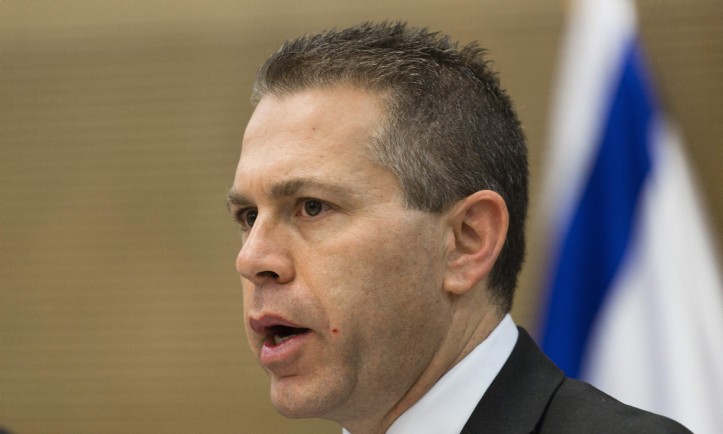
Israeli officials reiterated their concern over the emerging deal on Sunday, warning that the reported terms would not do enough to prevent Iran from developing nuclear weapons.
Interior Minister Gilad Erdan, one of the top members of Prime Minister Benjamin Netanyahu’s Likud party, said that while Western powers and Iran may be about to shake hands on an agreement in the coming days, there could still be time to influence the terms of the final deal, due by the end of June.
“It’s true that a deal is close, and there is a chance that an agreement on basic principles will be reached in the coming days,” Erdan told Army Radio. “But until the final agreement, which is supposed to be signed with Iran by the end of June, there are still a wide range of diplomatic options. If, God forbid, it happens, Israel will also be required to reassess the whole resulting security situation.”
Intelligence Minister Yuval Steinitz, a confidant of Netanyahu, said that the deal was “full of holes,” and that he hoped US President Barack Obama would keep to his word that “no deal is better than a bad deal.”
Steinitz, in an interview with Army Radio, noted that Iran hadn’t provided adequate explanations to the UN’s nuclear watchdog over the nature of its previous nuclear research.






The Times of Israel Community.