

Last ‘Jewish underground’ inmate granted parole
Shlomi Dvir has spent 13 years behind bars for his part in attempted bomb attack on Arab schoolgirls
 Add ToI as a Preferred Source on Google
Stuart Winer is a breaking news editor at The Times of Israel.
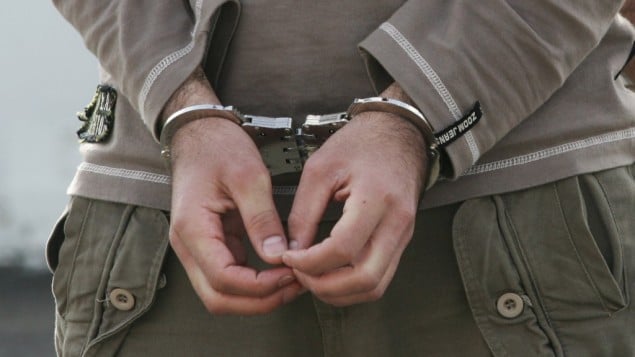
The Israel Prison Service parole board on Tuesday granted early release to Shlomi Dvir, a member of the so-called “Bat Ayin Underground” who spent the past 13 years in prison for the attempted bombing of an Arab school.
Dvir, a father of eight, was serving a 15 year sentence. His release was delayed for a week, however, to give the attorney general time to consider lodging an appeal against the parole decision.
The Shin Bet General Security Services offered objection to the parole in light of the early release granted to Dvir’s accomplice, Ofer Gimlael, who was released in February. Shin Bet and prison authorities also assessed that Dvir was very unlikely to return to his former activities.
Dvir’s attorney Adi Kider, of the Honenu legal aid organization, welcomed the decision but asserted that it came months too late.
“We received the committee’s decision with mixed feelings, and that is because of the fact that the decision for release, in our opinion, should have been much earlier, immediately after the release of Ofer Gamliel,” he said.
“We hope that the Attorney General will respect the decision by the committee and will bring to an end the chapter of abuse of Shlomi Dvir and his companions,” he added.
Gamliel’s release had been blocked in the past by the state after the Shin Bet claimed he still presented a threat to the public.
Dvir and Gamliel were sentenced to 15 years in prison for their part in a 2002 plot to explode a bomb outside an Arab girls’ school in the Abu Tor neighborhood of Jerusalem. The bomb was intercepted and defused by security services before it could explode.
The men were found to be members of the “Bat Ayin Underground,” a group of Jewish men from the Bat Ayin settlement and the Hebron Jewish community who were suspected of carrying out revenge terror attacks on Arabs in response to a wave of Palestinian terror incidents during the Second Intifada.
Gamliel and Dvir applied for early release in 2012 after admitting remorse for their crimes and in light of their good conduct while behind bars, according to a report in the Haaretz daily at the time.









The Times of Israel Community.