

 From the Liveblog of
Monday, August 31, 2026
From the Liveblog of
Monday, August 31, 2026
Nile Delta microalgae to blame for desalination shutdown, official tells ToI
 Add ToI as a Preferred Source on Google
Sue Surkes is The Times of Israel's environment reporter
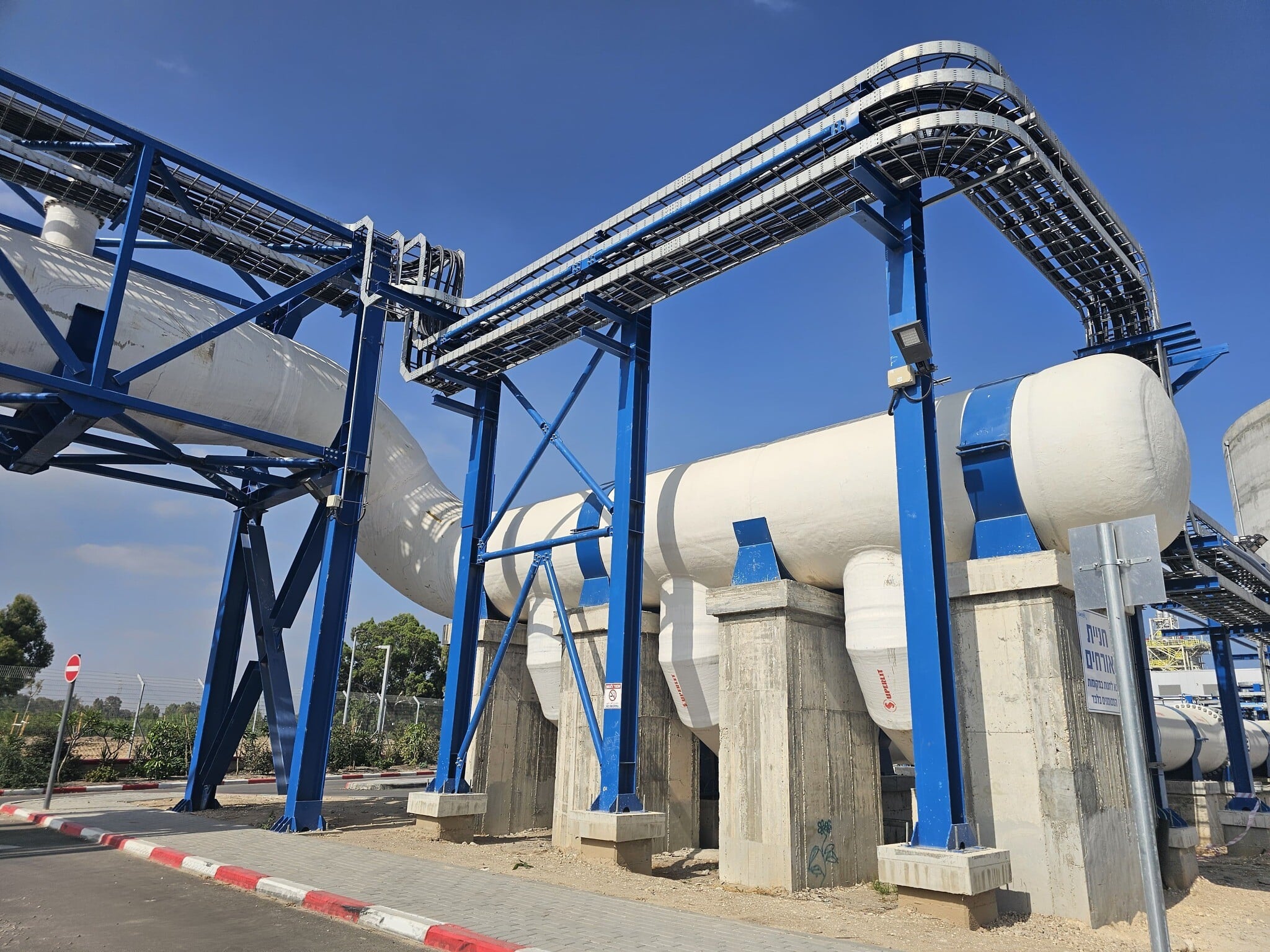
Microalgae from the Nile Delta appear to be the cause of the severe seawater turbidity that prompted officials to close five out of the country’s six desalination plants on Saturday, Alon Zask, director general of the government’s Israel Oceanographic and Limnological Research, tells The Times of Israel.
The microalgae were carried northward to Israel’s coast on the waves, he explains.
Zask notes that algae or pollution from the south are unlikely to affect the Hadera plant in central Israel, which has remained functional, or a new facility planned for the Western Galilee in northern Israel. “There, the movement of the water is a bit different,” he says.
Meanwhile, the environmental advocacy organization Adam Teva V’Din warns about what it calls the state’s “flawed and dangerous policy” of relying almost exclusively on desalination plants for Israel’s supply o drinking water.
“While the state invests billions in physical defense and cyber security around desalination facilities, there is almost complete disregard for critical threats—foremost among them marine pollution, whether natural or man-made, which can paralyze the water supply instantly, as we are witnessing today,” the NGO says in a statement.
It accuses the state of neglecting its most important natural emergency reservoir —groundwater. “Drinking water wells are being shut down one after another due to pollution without remediation efforts, while the Water Authority’s draft master plan for aquifer restoration is still awaiting government approval,” it charges.
Others, such as Gidon Bromberg of Ecopeace Israel, and public health physician and epidemiologist Prof Nadav Davidovitch, note their frequent warnings in the past about the effect that Gaza sewage dumped at sea could have on the desalination plants, whose filter membranes are sensitive.
A statement from Ecopeace says, “Despite the complex situation, full cooperation is required from the Israeli government, the [US-backed] Board of Peace, and Palestinian water authorities to urgently repair Gaza’s wastewater treatment plants, in order to protect—among other things—Israel’s own water security.”









The Times of Israel Community.