

Love is just a four-letter word
Erdogan, the army, the foreign ministry and a former air force chief all pucker up for some loving, only to have their advances rejected by Putin, the cabinet, Abu Dhabi and the Mossad respectively
 Add ToI as a Preferred Source on Google
Joshua Davidovich is The Times of Israel's Deputy Editor
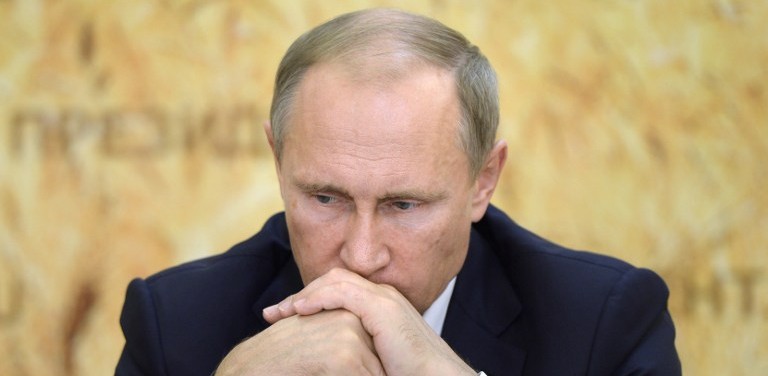
With the tablecloth permanently stained red, leftovers sitting untouched and the fights, bad blood and halfhearted get-togethers of last week still smarting, the question has become whether it’s better to deal with cold Turkey for a while or freeze it until a better time.
If you’re Russian President Vladimir Putin and you’re talking about international relations and not Thanksgiving dinner, the answer is clear: Ankara goes straight into the icebox.
The rising tensions between Turkey and Russia, and Putin’s decision to sanction Ankara, leads most Hebrew media Sunday morning, a sign of a slow weekend domestically that saw only a few terror attacks — which is a sign of the times if there ever was one.
But first, the papers talk Turkey. Much like this writer who never met a pun he didn’t like, tabloid Israel Hayom has a field day with headlines bordering on the droll. “Turkey (almost) apologizes. Russia’s answer: Sanctions,” reads the paper’s front page, and inside is the A deck “From Russia with revenge.”
The cutesiness doesn’t end with the headline, though, as the paper starts off its coverage by previewing the presence of Putin and Turkish President Recep Tayyip Erdogan at the Paris climate conference Monday:
“According to forecasts, the atmosphere is expected to be hot, but not because of greenhouse gases but because of the presence of Putin and Erdogan.”
Zing!
The paper’s Boaz Bismuth paints the tensions as a clash of egos between Erdogan and Putin “the likes of which the world has not seen for some time.” But, he notes, it seems Russia will win both the most stubborn contest and the overall fight.
“Erdogan is trying to lower the flames at any price. He isn’t hesitating to announce that Turkey is dependent on Russia, and that Russia is dependent on Turkey, and how does the ego of Putin respond? He quickly signs on a series of sanctions against Turkey.”
There may not be a magic bullet to get Turkey and Russia to be besties again, just like there isn’t one to fix the persisting attacks on Israeli forces and civilians in Israel proper and the West Bank, though politicians seem to think there is.
Haaretz Columnist Amos Harel notes that the ideas the government is throwing out there, like home demolitions and closures, have been tried and failed before, while providing some background for some army ideas that reached the media on Wednesday night to the consternation of many a minister.
“Most of the steps presented as a wonder drug to stop terror, including house demolitions, closures and deporting families of terrorists, were raised in the previous two intifadas. In contrast to the steps touted by various ministers, Defense Minister Moshe Ya’alon and IDF Chief of Staff Gadi Eisenkot say that what the army is now doing — beefing up forces in the territories by some 40 percent, massive arrests every night, refraining when possible from collective punishment — are the right responses to the violence, which so far has killed 23 Israelis and more than 100 Palestinians,” he writes. “The gaps between the positions of some ministers and that of the IDF were also illustrated in the briefing given by the chief of command, Maj. Gen. Roni Numa. The latter presented a number of possible measures to ease the situation for the Palestinians in the West Bank. He mentioned economic gestures, limited prisoner releases and even providing bulletproof vehicles and light arms to the Palestinian security agencies. But it seemed that what was not made completely clear to the military journalists is that these steps had been discussed but not implemented in June, before the current violence broke out and that Numa supported implementing them partially only after the terror stopped.”
Gaps between politicians and those actually charged with safeguarding Israel’s security aren’t relegated only to the question of how, but also who. Yedioth Ahronoth previews the next high-level controversy, reporting that Prime Minister Benjamin Netanyahu seems to be considering giving the job of Mossad head to former air force chief Ido Nehushtan, who may be great at dropping bombs on things but lacks any intelligence experience.
Should Nehushtan be nominated, the paper predicts, the tantrum by Israel’s legendary spy service will make the average 4-year-old look like an amateur.
“If this is true, it’s ridiculous chutzpah. A slap in our faces,” a senior Mossad official is quoted saying before anything has even happened. “All due respect to Nehushtan, his ability to manage his forces, his successful stint in the air force and his family background, he doesn’t know at least 99 percent of the Mossad’s activities. It’s hard to understand why the prime minister would disqualify candidates that he himself found to be fitting for the post, that came up through the organization, were involved in our activities for dozens of years, knows us inside and out, and would instead choose an outsider who doesn’t know anything of our secret activities.”
On the other side of the love-hate spectrum, Haaretz reports that the news of the opening of an Israeli diplomatic office in the United Arab Emirates is not all kissy-kissy at it seems to be, and Abu Dhabi is denying the move represents any improvement in ties (or lack thereof) between the states.
Instead, the paper reports, the office is solely beholden to the International Renewable Energy Association, or IRENA.
“The functions of missions accredited to IRENA are limited to affairs related to their communications and dealings with the Agency. They do not, under any circumstances, cover any other activities and do not involve any obligation upon the host country with regards to its diplomatic relations or any other relations,” the paper quotes an Abu Dhabi foreign ministry spokesperson saying.
That would all change should the Arab peace plan go into effect, and in Israel Hayom’s op-ed page, former peace negotiator Yossi Beilin opines that with terror ramping up, perhaps it’s time for Netanyahu to take steps unilaterally, peace partner – and coalition partners – or no.
“Netanyahu will be forced to hold talks with his coalition partners on the options Israel is faced with, since there are no practical alternatives in hand that would leave Israel in good standing in the international community. Exactly threats of the type of ‘a bullet between the eyes’ are a good reason not to give in and to work toward the national good, in his version,” he writes, referencing bragging by Jewish Home head Naftali Bennett over how he stopped Netanyahu’s unilateral moves. “The defense community has prepared different options for easing up on the Palestinians. It’s true that the gut says the opposite and desires revenge, but the head says that more pressure will only bring more violence.”







The Times of Israel Community.