

Macron says US-Iran rapprochement ‘fragile’ but possible
French president says he’s hopeful, even as Iran’s Rouhani and Zarif insist no meeting or talks possible until US ends sanctions
 Add ToI as a Preferred Source on Google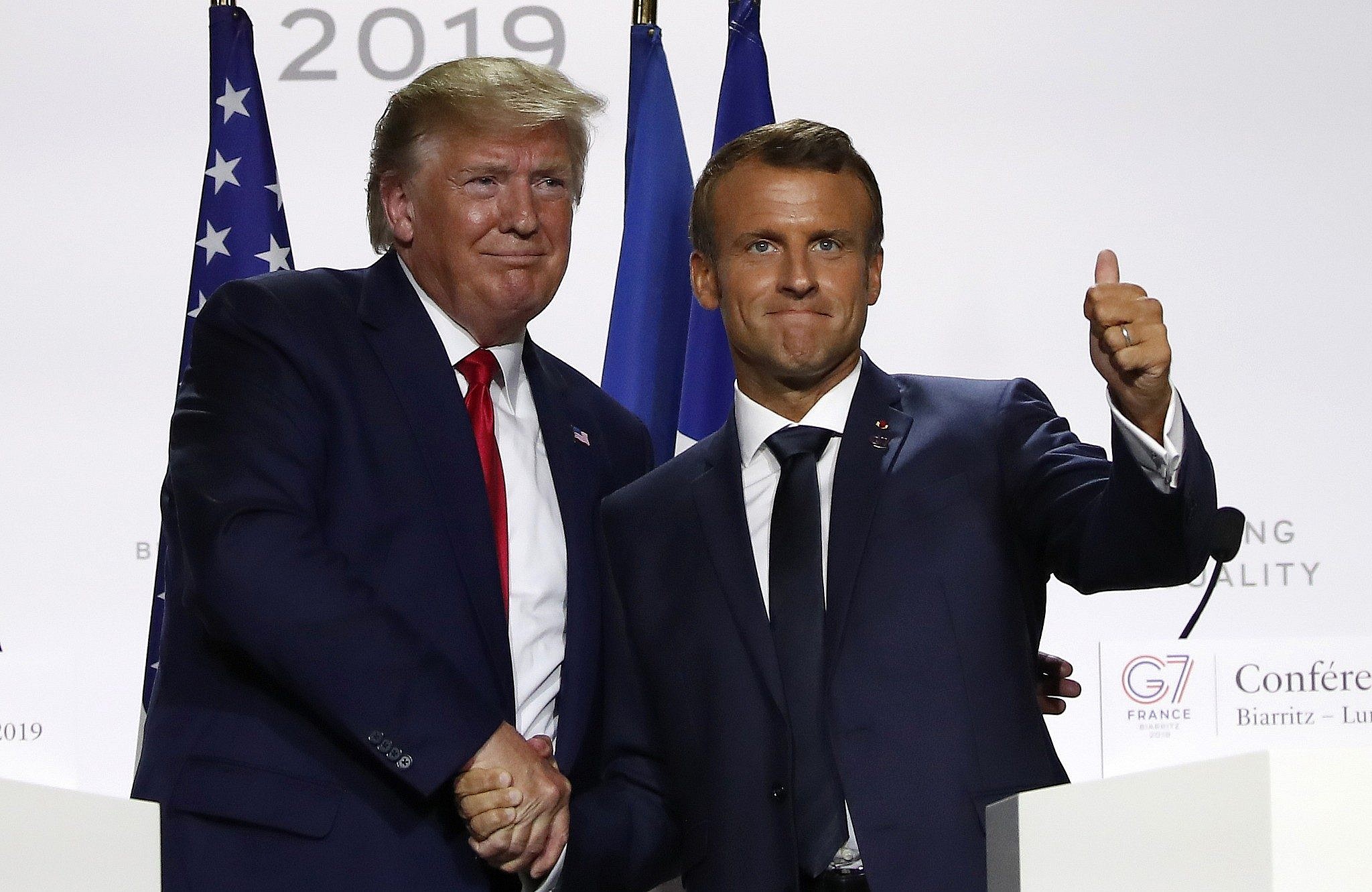
PARIS — French President Emmanuel Macron acknowledged on Tuesday that his efforts to bring Iran and the US together were “fragile,” but said he still sees a “possible path” to rapprochement after decades of conflict.
After inviting the Iranian foreign minister as a surprise guest to the Group of Seven summit in France earlier this week, Macron said in a speech to diplomats Tuesday that his risky diplomatic maneuver helped create “the possible conditions of a useful meeting.”
He expressed hope at the G7 on Monday that US President Donald Trump and Iranian President Hassan Rouhani could meet within weeks. Trump said there was a “really good chance” that could happen, if unspecified “conditions” allowed — but Rouhani said Tuesday that the US president must first lift sanctions imposed on Tehran.
Iranian Foreign Minister Mohammad Javad Zarif on Tuesday also appeared to close the door on talks with Washington.
“I said during the visit to [G7 meeting in Biarritz, France] that no meeting between the Iranian president and Trump could be imagined. We will not have any bilateral talks until the US joins the G5+1 and implements the nuclear deal; even then there won’t be any bilateral talks (with the Americans),” Zarif was quoted as saying by Iran’s Fars News Agency.
Macron said that it was France’s responsibility to play the “role of a balancing power” and that his efforts allowed hope for a “de-escalation” of tensions.
Since the US pullout from the nuclear deal last year, Iran has lost billions of dollars in business deals allowed by the accord as the US re-imposed and escalated sanctions largely blocking Tehran from selling crude abroad, a crucial source of hard currency for the Islamic Republic.
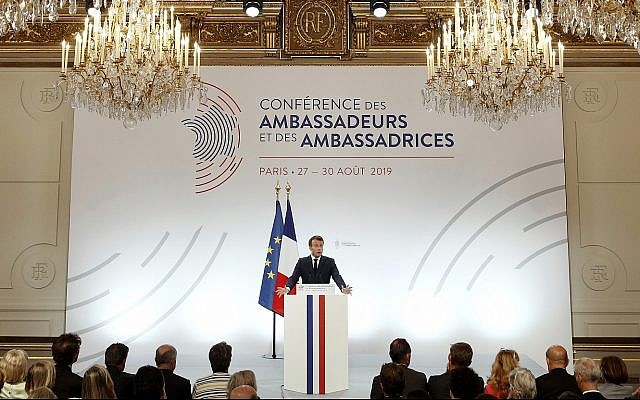
Iran’s president back-pedaled Tuesday on possible talks with Trump, saying the US president must first lift sanctions imposed on Tehran, otherwise a meeting between the two would be a mere photo op.
Rouhani’s change of heart came a day after Trump said Monday that there’s a “really good chance” the two could meet on their nuclear impasse after Macron’s intervention at the G7 summit.
“Without the US’s withdrawal from sanctions, we will not witness any positive development,” Rouhani said in a televised speech on Tuesday, adding that Washington “holds the key” as to what happens next. “If someone intends to make it as just a photo op with Rouhani, that is not possible,” he said.
Earlier on Monday, Rouhani expressed readiness to negotiate a way out of the crisis following America’s pullout from the nuclear deal.
“If I knew that going to a meeting and visiting a person would help my country’s development and resolve the problems of the people, I would not miss it,” he had said. “Even if the odds of success are not 90% but are 20% or 10%, we must move ahead with it. We should not miss opportunities.”
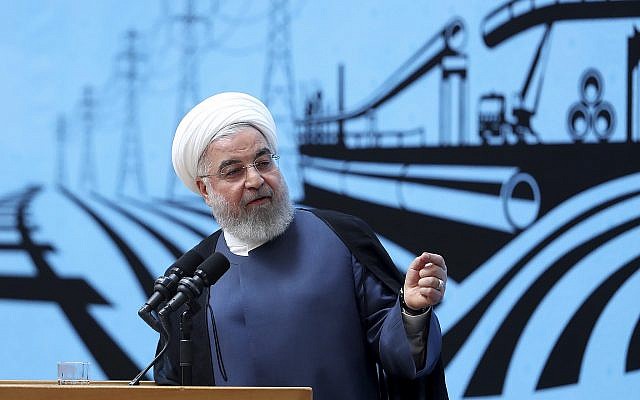
Rouhani’s U-turn can be seen as a result of pressure from hardliners in the Iranian establishment who oppose taking a softer tone toward the West.
But it could also reflect that the paradigm of grand photo op summits in exotic locations — such as Trump’s meetings with North Korean leader Kim Jong Un — while stringent sanctions remain in place, does not necessarily appeal to Rouhani, whose signature accomplishment was the nuclear deal, which started unravelling with Trump’s pullout.
The hard-line Javan daily, which is close to Iran’s powerful Revolutionary Guard, warned Rouhani in large font on its Tuesday front page: “Mr. Rouhani, photo diplomacy will not develop the country.”


The Times of Israel Community.