

Much more work to be done, says Reform Rabbi Miri Gold
The successful conclusion of her 2005 lawsuit this week allows state salaries for non-Orthodox Israeli spiritual leaders, but the US-born rabbi says world Jewry must continue the fight for pluralism
 Add ToI as a Preferred Source on Google
Deputy Editor Amanda Borschel-Dan is the host of The Times of Israel's Daily Briefing, What Matters Now and The Reel Schmooze podcasts, and heads up The Times of Israel's features.
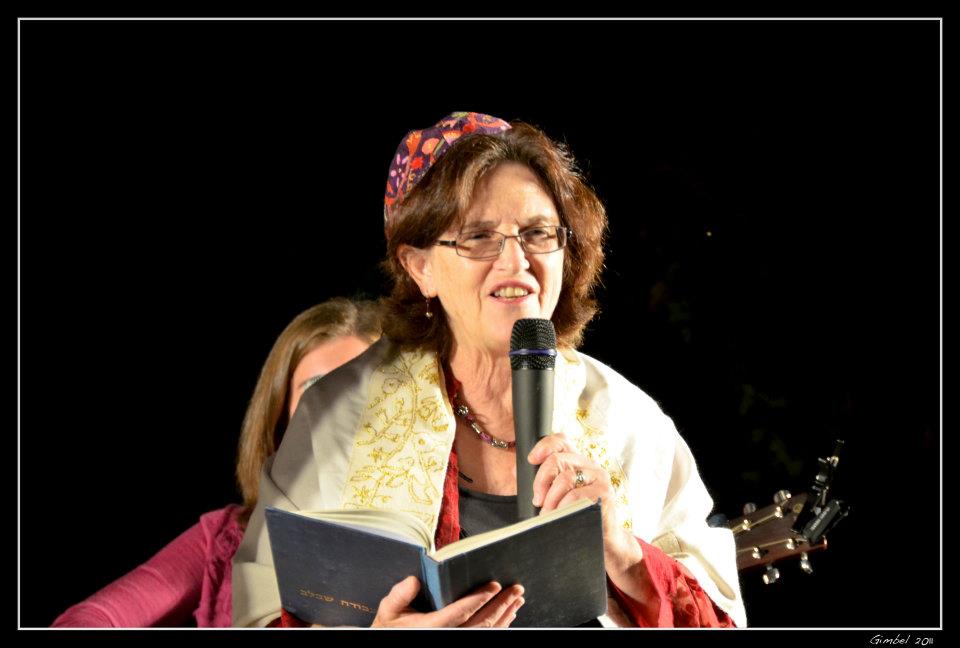
Progressive houses of prayer are slowly becoming the synagogues of choice for non-Orthodox Israel, says Kibbutz Gezer’s Rabbi Miri Gold. And this week, in paying her salary in accordance to a May 2012 ruling, the government of Israel is recognizing this shift, she says.
The salaries of Gold, the rabbi of Kibbutz Gezer’s Kehilat Birkat Shalom, and fellow Reform rabbis in regional communities (as opposed to cities or towns) Stacy Blank of Tzur Hadassah, Benjie Gruver of Yahel and Gadi Raviv of Har Halutz, for the past 18 months were paid this week by the State of Israel in a transfer to the Reform Movement of Israel of NIS 300,000.
In the interim, the Reform movement had been paying their salaries “as they always had,” says Gold, through organizational funds and donations.
Additionally, one Conservative rabbi, Yoav Ende from Kibbutz Hanaton, and one secular rabbi, Chen Bar-Or Tsafoni from Nahalal, met the criteria of the 2012 ruling and also received payment this week from the Israeli government.
Their salaries were paid this week from the 2013 State of Israel budget via the Ministry of Culture and Sport. For 2014, the Reform movement plans to add an additional rabbi’s salary, and by 2017 it hopes to include eight regional Reform rabbis’ salaries. The Conservative movement aims to also increase these positions.
Noa Sattath, the director of IRAC, the legal wing of the Reform movement which represented Gold in this eight-year battle, is pleased the case opened the door to other progressive movements. A rabbinic student in the Israeli program at the Hebrew Union College in Jerusalem, Sattath says, “I think that we are looking at a huge breakthrough in this case with the implementation of it.
“The progressive movements have been struggling with an uneven playing field versus the Orthodox movements, and we hope this will begin to bring the change to Israel that we are hoping for,” says Sattath.
Speaking by phone Thursday morning in her bustling office, Gold is thrilled her 2005 lawsuit has come to a successful conclusion.
“I used to say I’ll retire before it comes through, so that’s not the case,” she laughs.
Unlike those of Orthodox rabbis employed by the State of Israel, the four Reform rabbis’ salaries are paid through the Culture Ministry after the Ministry of Religious Services strongly objected in 2012.
‘I used to say I’ll retire before it comes through, so that’s not the case’
“Am I satisfied? At this point yes. We never made it our goal to change the rabbinate, though we have a longer-term goal of separation of church and state. But as long as that doesn’t happen, the government should participate [in paying non-Orthodox rabbis]. The venue is less important, and the Culture Ministry makes sense — a lot of congregational activities could be called ‘cultural,'” says Gold.
“It’s important that this step was taken,” she says. “In this case, as far as I’ve seen in the media, it’s very obvious the funds are going to non-Orthodox rabbis and it’s very important that Israel is recognizing us.”
As the petitioner in the 2005 lawsuit, the American-born Gold has served as the poster child of a Diaspora-wide campaign for pluralism in Israel. Called a “rock star” by the legal team representing her, her struggle has garnered support from Jews across the denominations.
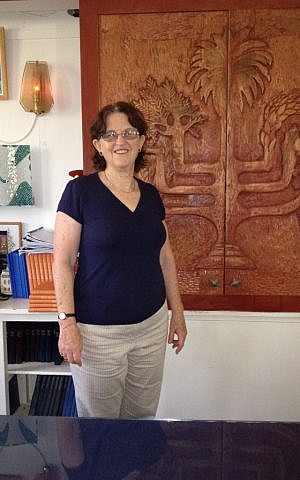
“The transfer of funds from Israel’s Ministry of Culture and Sport to pay the salary of Rabbi Miri Gold and other Reform rabbis serving on regional councils marks a historic step forward for the Reform and Masorti movements in Israel. The Rabbinical Assembly applauds this important victory for religious equality that holds great promise for the unity of the Jewish people around the world,” writes Rabbi Julie Schonfeld, executive VP of the Rabbinical Assembly, the international association of Conservative and Masorti rabbis.
The Conservative movement also has a stake in the ongoing battle for recognition and parity for city and town neighborhood rabbis. This fight is scheduled to have its day in the Israeli Supreme Court later this month and centers around two Reform and two Conservative rabbis in Jerusalem.
“It’s not that the political arena has changed, it’s that the Israeli society has changed. Today in Israel, the political arena is only a reflection of what happens in the field,” says Yizhar Hess, the executive director of the Masorti movement in Israel.
“If half a million Israelis identify with the liberal movement, today, that means this number jumped by 100% in ten years,” Hess says. The victory is not only in having received the funding, but the reason why the funding is available to Reform and Conservative rabbis. “The Israeli society demanded it,” he says.
While emphasizing the Reform movement through IRAC is working toward an end to an Orthodox monopoly and the separation of church and state, head of the Reform Movement in Israel Rabbi Gilad Kariv says, “We will continue to act to insure that in every city and town in Israel there will be a feasible option of utilizing the services of a non-Orthodox rabbi and enjoy the variety of synagogues and communities associated with the different streams of Judaism.”
Gold, the laid-back kibbutz spiritual leader, is philosophical about the struggle for pluralism.
“One of the lessons to be learned is we need tolerance to gain acceptance, that’s what democracy is about. You need sevel [suffering] to get savlanut [patience], they are from the same Hebrew root,” says Gold.
“The worldwide support for these issues is critical, not just for Reform, it is something for Jewry worldwide,” says Gold.
In a late December interview with The Times of Israel, former Israeli ambassador to the United States Michael Oren echoes Gold’s sentiments, saying, “if Israel does not work to make itself the nation-state of all the Jewish people, and be truly pluralistic and open about this, then we risk losing these people.”
‘If Israel does not work to make itself the nation-state of all the Jewish people… then we risk losing these people’ — Michael Oren
Also in the interview, Oren says the one thing the Reform, Conservative and Orthodox rabbis he met with in the US agreed upon was their opposition to the Israeli Rabbinate’s monopoly on life events, including marriages and conversions.
Gold, who spends much of her time trying to increase ties between Israel and North American Jews, says, “We’re moving in the right direction, however slowly. It’s been very heartwarming to see the army of support” for her struggle, but “there’s much more work to be done [for pluralism in Israel].”
“There’s no sitting and resting on our laurels,” says Gold.
Hess agrees and says, “Israel deserves to have more than one way of being Jewish.”








The Times of Israel Community.