

‘Non-Zionist’ Jews call for a united Arab party
With higher electoral threshold, failure to form a joint list could mean Israel’s largest minority won’t be represented
 Add ToI as a Preferred Source on Google
Stuart Winer is a breaking news editor at The Times of Israel.
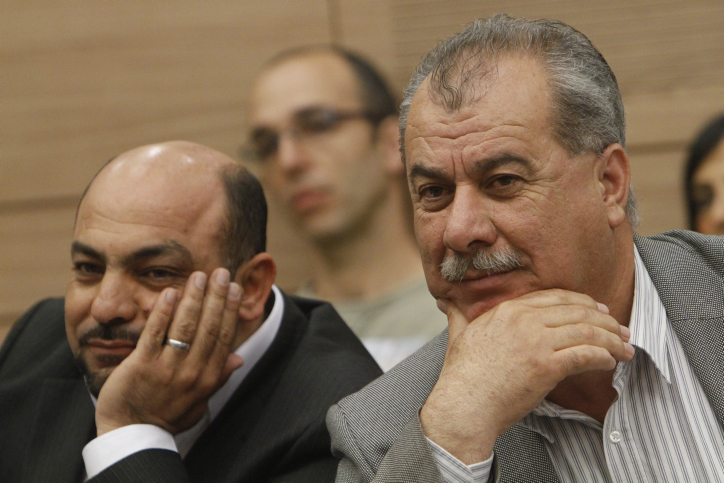
Over 550 Israelis, most of them Jewish, signed a petition calling on the country’s Arab political parties to unite and form a joint list ahead of the coming elections.
A meeting between leaders of the parties to that end on Saturday concluded without agreement.
Of those who signed the petition, more than 400 were Jews who consider themselves “non-Zionist,” the Hebrew news site Walla reported on Sunday.
During the meeting, which was held in Israel’s largest Arab town, Nazareth, representatives of the countries’ four Arab parties — Ra’am, Ta’al, Hadash and Balad — and the Islamic Movement met to try and agree on a joint list.
Despite over a month of negotiations leading up to the summit, according to an unnamed source, serious differences of opinion left the parties further apart than ever.
“The chances of making such a list were 50-50,” the source said. “After the meeting they are lower than before.”
Another meeting has been planned for the coming days; however, the parties only have until January 29 to submit their campaign lists for the March 17 elections. A key point of contention is which names would be on the list and how they would be ranked. According to most assessments, current Hadash party leader Mohammad Barakeh would likely lead the party.
In the petition calling for the parties to unite, signatories declared that they wished “to give expression to the broad support among voters of those parties for the initiative of running jointly, to put into effect the process that offers the best solution for the current needs — a struggle against racism and fascism.”
Activist Orly Noy, who initiated the petition, explained that a joint list was not an ideal choice, but rather a necessity due to the political challenges faced by the Arab parties.
“Uniting the lists isn’t politically ideal but it is the order of the day,” she said. “This is not a matter of blurring the differences or denying the individual voices of the different parties but rather a pragmatic response to the anti-democratic processes that are trying to make the Palestinian voice disappear from the general public, and the Knesset in particular.”
Last March, parliament raised the minimum threshold for a party to enter the Knesset to 3.25 percent of total votes, or four seats, up from 2%.
The move was seen by analysts as having a potentially devastating effect on the Arab parties, none of which would have cleared the 3.25% threshold if it had applied in the last elections.







The Times of Israel Community.