

Ohana lays into justice officials, calls for probe into former state attorney
Justice Minister, set to end his tenure this week, calls for state comptroller to look into claims Shai Nitzan illegally accessed ministry’s computer system after leaving post
 Add ToI as a Preferred Source on Google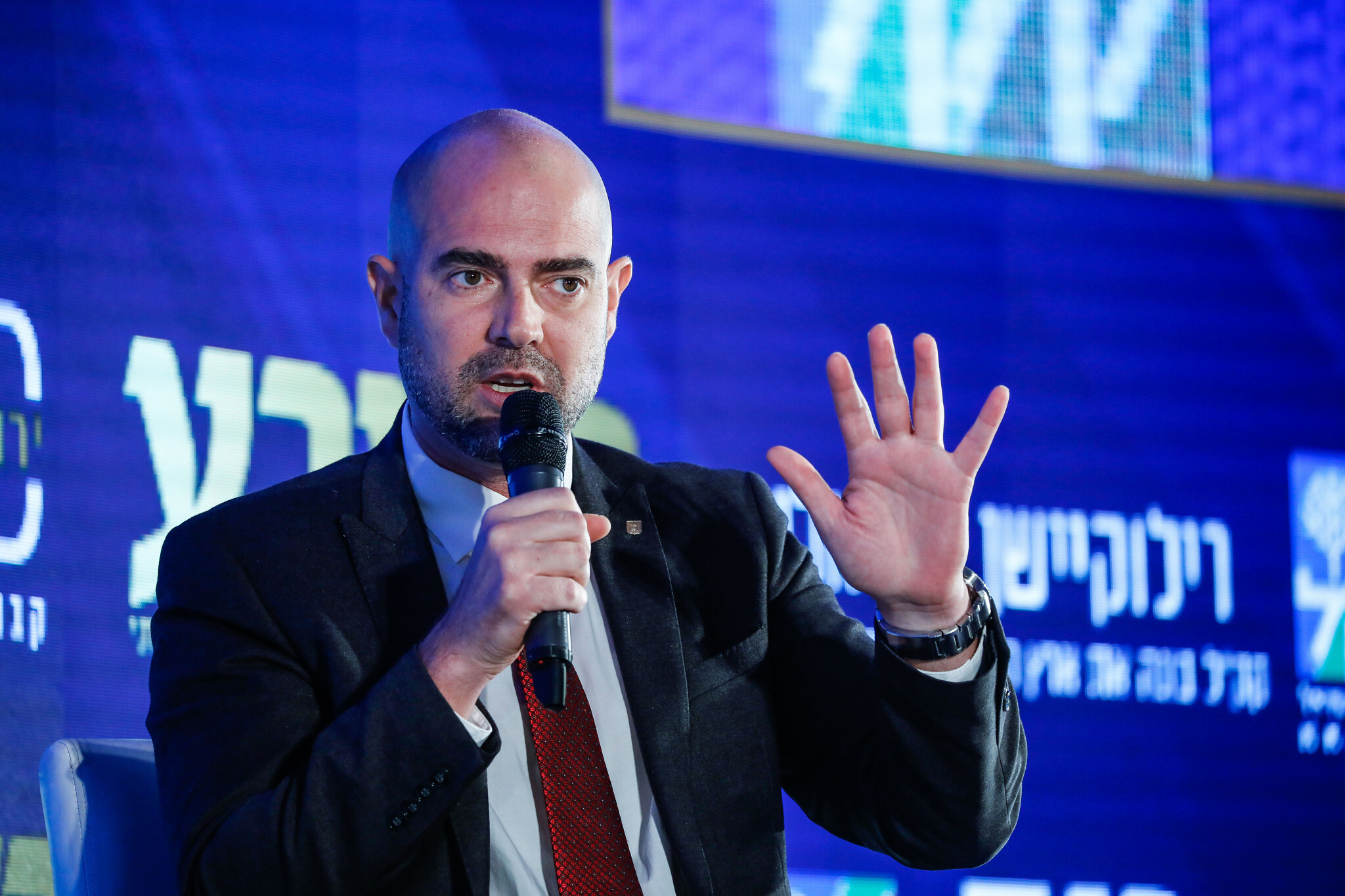
Justice Minister Amir Ohana on Saturday launched a scathing attack against the justice system, Attorney General Avichai Mandelblit, and called for a criminal investigation into former state attorney Shai Nitzan.
Ohana, whose tenure has been marked by outspoken criticism of justice officials, is set to end his term as justice minister this week with the expected swearing in of Israel’s new government on Wednesday.
In a Facebook post, Ohana appeared to accuse Nitzan of illegally accessing the Justice Department’s computer network after leaving his post.
“There is a former state attorney who went into Justice Department systems, ostensibly in violation of the law,” he wrote, without naming Nitzan.
Ohana was referring to a Channel 13 report, included in his post, claiming that Nitzan had accessed the department’s computer system, which contains sensitive information, after ending his five-year tenure in December. The report showed a screenshot that purports to show Nitzan accessing the system on April 28.
Ohana said he would meet with State Comptroller Matanyahu Englman to request that he investigate the charge, and that if Englman didn’t follow through, Ohana threatened to establish a committee to investigate the claim.
“If the State Comptroller fails to carry out the examination, I will weigh establishing a government review committee for a comprehensive check of all these serious allegations,” Ohana wrote.
Engleman, who took over the past last year, has sought to shift his office away from pursuing allegations of criminal wrongdoing and instead focus on softer critiques of internal bureaucratic matters.
Nitzan, who was replaced with Ohana appointee Dan Eldad, responded that Ohana’s charge was “completely unfounded and is part of his ongoing delegitimization of myself and the state attorney’s office.”
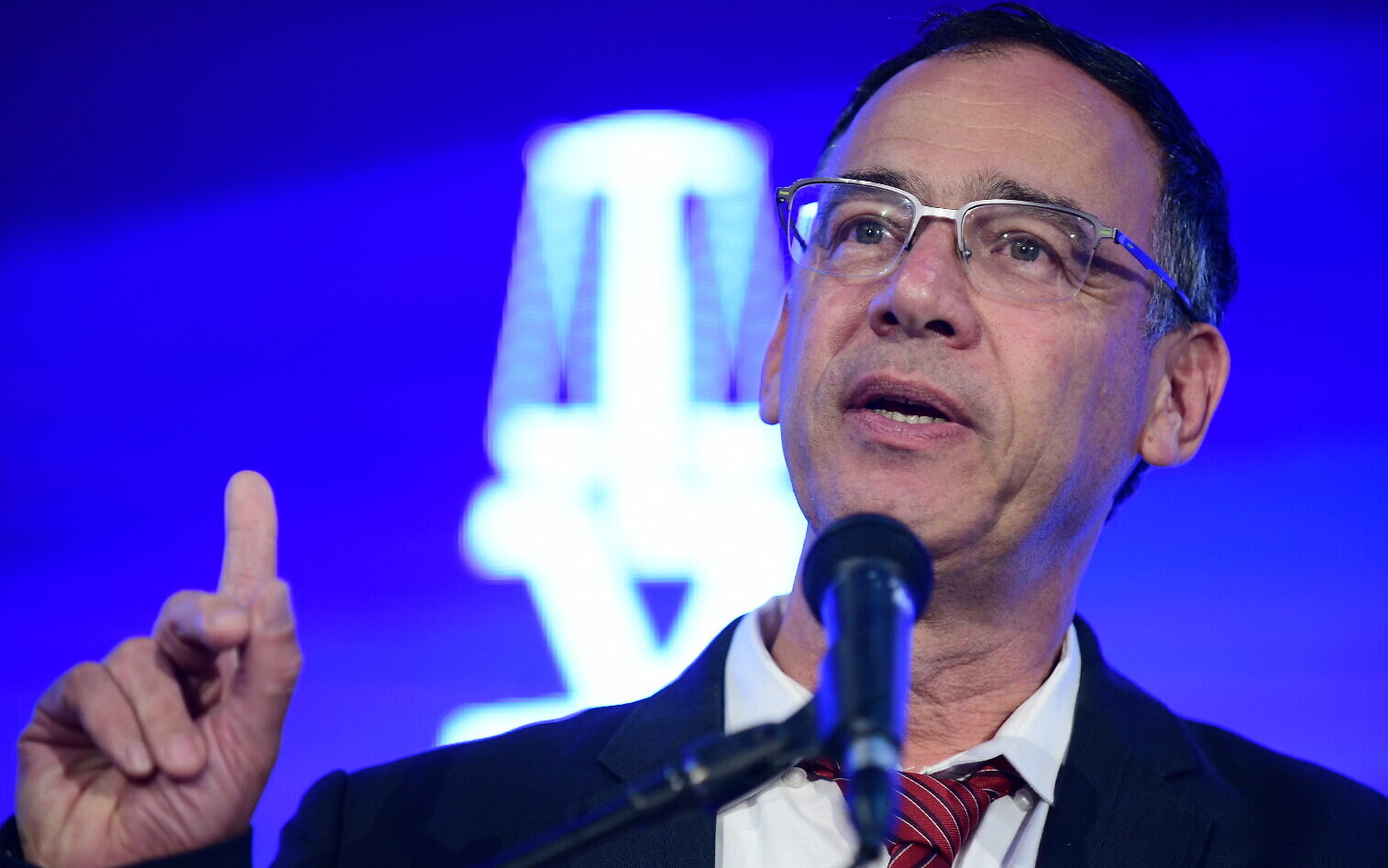
“Needless to say, Minister Ohana did not come to me with the unfounded claims before publicly posting the accusations,” Nitzan said.
He said that in the three months following the end of his term, his personal computer had remained in his possession and that he had continued to use his email, which he said was standard procedure.
Ohana is a confidant of Prime Minister Benjamin Netanyahu and has feuded with Mandelblit continuously since assuming his post as justice minister, sparring over Eldad’s appointment and replacement, and about Ohana’s own authority as an acting justice minister to appoint senior officials.
Eldad was appointed to the post by Ohana in a temporary capacity in February for a three-month period after Nitzan completed his term and after Ohana’s previous candidate was rejected by Mandelblit.
A permanent appointment cannot be made under a transitional government. Though a government bringing together the Likud and Blue and White parties is currently in the works, it has not yet been formed, and may come with an initial freeze on new senior appointments.
Last week Ohana rebuked Mandelblit for writing a letter to officials at the State Attorney’s Office saying he would be assuming the role of acting state attorney for the coming months until a replacement for Eldad is confirmed.
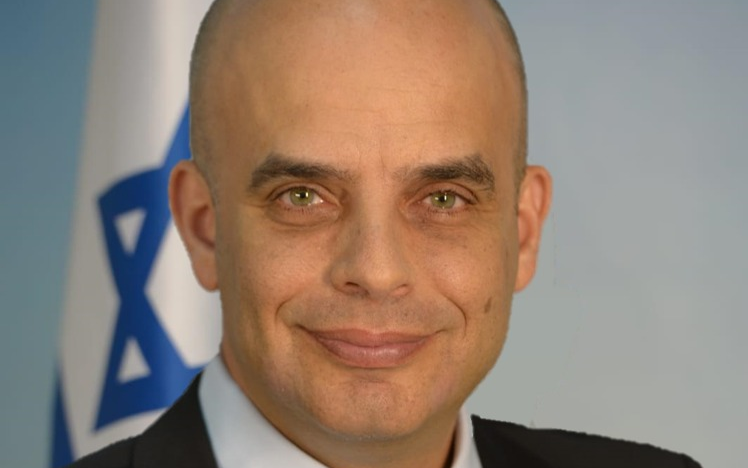
Mandelblit initially opposed Eldad’s appointment, seeing him as unsuited for the post as the head of the prosecution’s economic crimes unit.
But Mandelblit ultimately acquiesced to Ohana’s decision. He has since entered into an unprecedented quarrel with Eldad, reportedly convinced he and Ohana are bent on ousting him from his post, possibly at the behest of Netanyahu.
Netanyahu, who appointed Mandelblit, has brawled with him and Nitzan since being indicted in three criminal graft cases.
In an extraordinary letter to Civil Service Commissioner Daniel Hershkowitz last month, Mandelblit expressed vehement opposition to extending Eldad’s tenure, saying he had exhibited “moral, professional and administrative failings” during his short time in office. He also said there were legal impediments to doing so, due to the fact that Ohana will likely leave the ministry within days.
Further irking Mandelblit were what he deemed to be the uncharacteristically frequent meetings Eldad was having with Ohana. So concerned was the attorney general — who indicted Netanyahu on corruption charges last November — about those sit-downs that he began quizzing the state prosecutor on their content and comparing the answers to the information he had been getting from colleagues briefed on those same conversations, the report said.
In his letter to Hershkowitz, Mandelblit said he believed Eldad had given him only partial and sometimes false reports when explicitly asked about the matters he had discussed with Ohana.
The attorney general’s suspicions intensified earlier this month when Eldad asked his office to reexamine an opinion it gave in support of keeping the so-called Harpaz affair closed. Mandelblit was a suspect in the 2010 case but was cleared of wrongdoing.
Mandelblit told associates that he suspected Eldad leaked a recording to a Channel 13 reporter who subsequently petitioned the Central District Court to release all tapes from the Harpaz affair.
Ohana broadly attacked the justice ministry in Saturday’s post, and brought up the Harpaz Affair, writing that he was “worried” about the legal system, saying “many before me identified in the legal system a sickness, vengeance, lack of transparency, decay.”
“There are people in the system who recognize it, but there is a great fear and dread about making things public,” he said. “Anyone with eyes can see the unprecedented decline in public confidence in the prosecutor’s office and legal counsel.”
He said that Mandelblit had failed to address the issues in the court system.

“Suspicions are growing, but today there is no state attorney to look into them,” he wrote. “The system is too deeply affected by conflicts of interest, personal connections, cliques and outside considerations.”
In the Channel 13 video clip Ohana shared, journalist Ayala Hasson called for a recording of Mandelblit and Blue and White MK Gabi Ashkenazi to be made public. Ohana said the report “should really be an earthquake.”
Several Hebrew media outlets in February reported that Netanyahu would possibly seek to dismiss the Mandelblit or to seriously discredit him after the elections on March 2. Haaretz reported at the time that emissaries for Netanyahu had been working to dig up dirt on Mandelblit — particularly on his part in the Harpaz affair.
Recordings of phone calls relating to the 2010 case surfaced in February, shedding new light on Mandelblit’s uncomfortable position in the case.
In the case, Boaz Harpaz, a former IDF intelligence officer close to then-IDF chief Ashkenazi produced a fake document purporting to be a public relations strategy for then-Southern Command chief Yoav Gallant’s campaign to become the next chief of staff.
The fake document recommended a smear campaign against Gallant’s rivals, including then-deputy chief of staff Benny Gantz, who would go on to be appointed Israel’s 20th IDF chief of staff in 2011 and later become Netanyahu’s chief rival for the premiership, before finally emerging as his political ally.
Mandelblit, who was the top military prosecutor at the time, was questioned under caution in June 2014, when he was already out of uniform and serving as Netanyahu’s cabinet secretary.
Investigators suspected that Mandelblit may have helped Ashkenazi and his aides to hinder investigators by failing to tell them that Ashkenazi possessed the document — or indeed, that Ashkenazi was spreading it within the army and working to have it leaked to the press.
Mandelblit was eventually cleared after investigators concluded that he did not know that Ashkenazi possessed the document when he told state attorneys to seek it elsewhere.
Netanyahu went on to nominate Mandelblit as attorney general, with his appointment approved in January 2016.
The state prosecutor’s office said in response to Ohana’s Saturday post: “the conversation between Ashkenazi and Mandelblit that was discussed on Channel 13 was wiretapped, which became clear during Mandelblit’s interrogation at the time.”
“Everyone concerned believed that there is no legal possibility for the court to use the wiretapping as part of the investigation,” the statement said.










The Times of Israel Community.