

Palestinian protester shot by cop gets NIS 155,000 in damages
Border policeman was previously found guilty of unjustifiably shooting Rateb Abu Rahmeh in Bil’in, lying about incident
 Add ToI as a Preferred Source on Google
Tamar Pileggi is a breaking news editor at The Times of Israel.
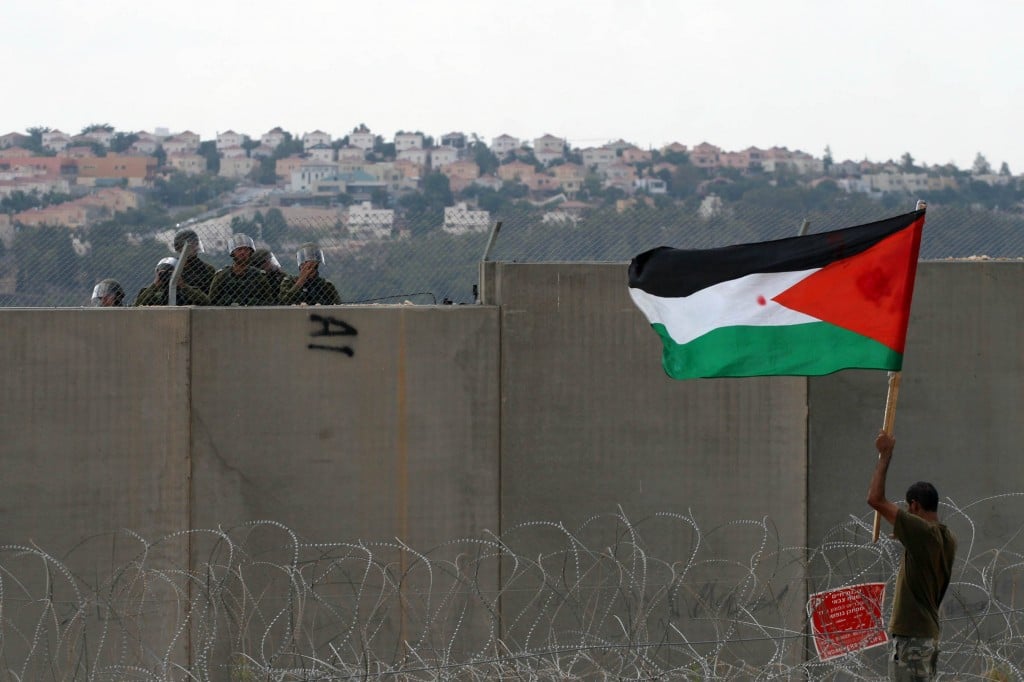
The Jerusalem Magistrate’s Court recently ordered a border policeman to pay damages of NIS 155,000 ($40,200) to a Palestinian protester for shooting him for no reason.
Wael Sabit was found to have shot Rateb Abu Rahmeh without justifiable cause, and to have later falsely claimed that his victim hurled rocks at security forces during clashes in the West Bank village of Bil’in in 2005.
Although Sabit had already been charged by a military court for lying in his account of the incident, Judge Gad Ehrenberg determined that his behavior made him personally liable for compensating Abu Rahmeh for his injuries, Israel’s Haaretz daily reported Sunday.
Abu Rahmeh, a lecturer at Jerusalem’s al-Quds University, had at the time of the incident been leading dozens of village residents in demonstrations against the construction of Israel’s West Bank security fence, which would separate villagers from their nearby farmland.
According to court documents, Sabit fired on Abu Rahmeh and the other protesters as they approached an IDF barbed wire fence outside the village.
Abu Rahmeh was struck in the leg by a sponge tipped-bullet fired by Sabit.
After the incident, Sabit testified to his superiors that on the day in question, Abu Rahmeh and the others had moved the barbed wire fence and hurled rocks at his unit from close range, leaving security forces with no choice but move the protesters using riot dispersal measures.
As a result, Abu Rahmeh was arrested and charged by Israel before video footage of the incident proved Sabit’s account to be false. According to the report, Rahmeh can be seen attempting to calm protesters and soldiers as the protest takes a violent turn.
After being shot, Abu Rahmeh spent 14 days in IDF custody before a military court judge viewed the footage and ordered his immediate release.
Sabit was tried for falsifying his account of the incident, and sentenced to seven months in prison by a civilian court after accepting a plea bargain. Under the terms of the deal, Sabit admitted giving false information and told the court that the day in question was his first operational mission, and he was afraid of his commander.
In 2012, Sabit appealed his sentence and had his punishment reduced to six months of community service.
Abu Rahmeh filed a civil suit against Sabit in 2013, seeking compensation for medical costs, lost wages, and pain and suffering he incurred as a result of the injury.
Ehrenberg rejected Sabit’s defense that he was immune from a civil suit and ruled in favor of Abu Rahmeh.
Abu Rahmeh’s lawyers, Gabi Lasky and Limor Goldstein, welcomed the verdict. “After so many years, the court has finally decided to appropriately compensate him for the suffering he endured.”




The Times of Israel Community.