

Palestinian reconciliation deal dying slow death
Hamas remains firmly in charge in Gaza as it and Fatah miss February 1 deadline for merging civil services
 Add ToI as a Preferred Source on Google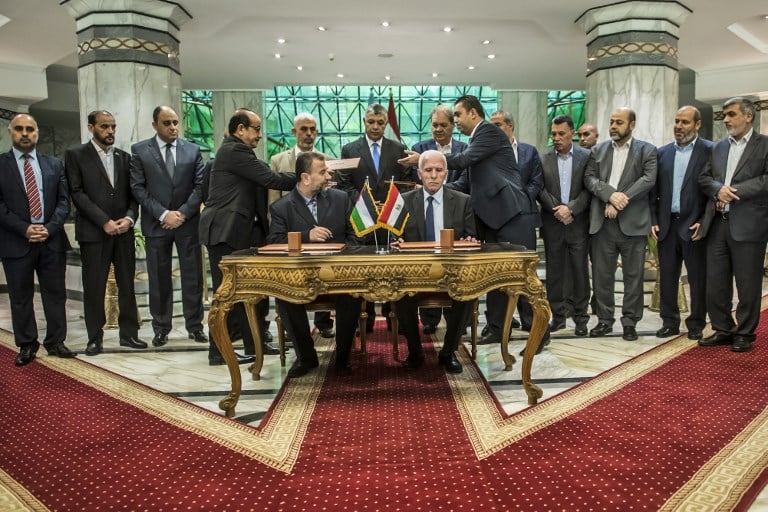
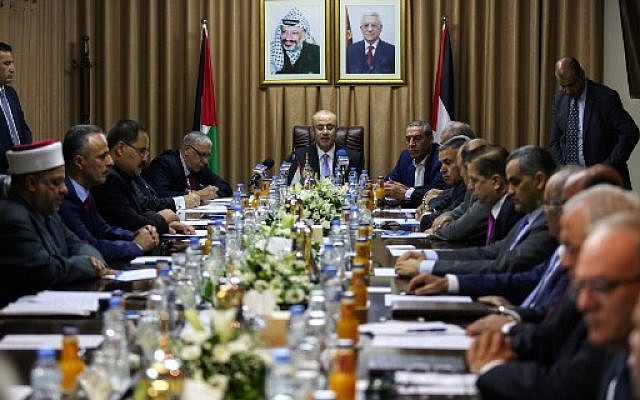
The two leading Palestinian factions missed another deadline Thursday to implement a reconciliation deal, potentially burying the accord aimed at ending their decade-long split.
The Hamas terror group was to hand over power in the Gaza Strip by December to the Palestinian Authority, led by the Fatah movement.
But the handover was missed and a February 1 deadline for solving the issue of two movements’ rival civil services passed Thursday with no progress in sight.
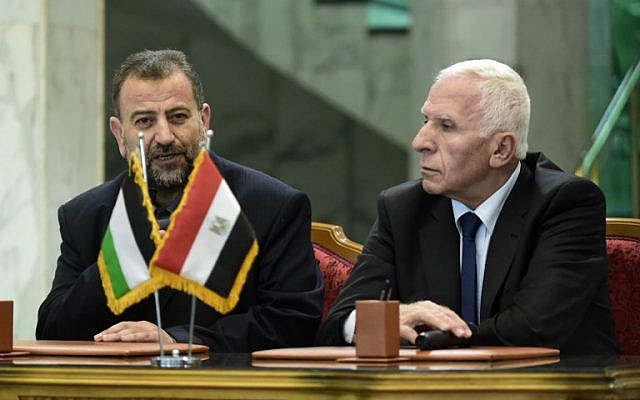
While small changes have occurred since the deal was signed in October — notably the handing over of Gaza’s borders to the PA — Hamas remains firmly in charge in Gaza.
Hamas and Fatah traded blame for what could turn out to be a gradual abandoning of the accord.
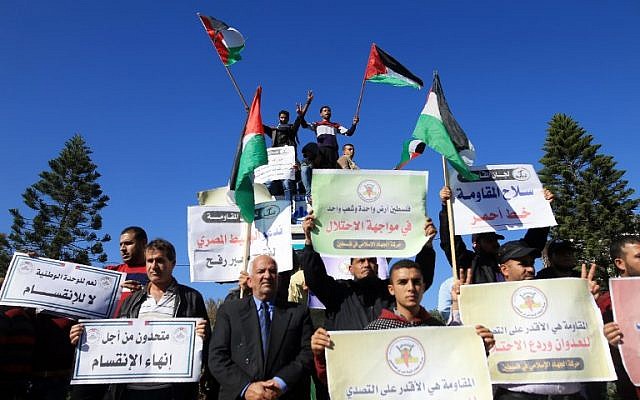
Senior Hamas official Bassem Naim said the Fatah-led PA had backed away from the deal “without clear reasons,” while Fayez Abu Eita, a Fatah official in Gaza, called for Hamas to respect the deal.
Egypt, which brokered the agreement, has elections coming up and the focus of its leaders appears elsewhere.
Egyptian intelligence services chief Khaled Fawzy, the main broker of the deal, was replaced last month.
It was hoped that reconciliation could alleviate humanitarian suffering in Gaza, home to some two million people.
Earlier this week a senior United Nations official warned Gaza was on the verge of “full collapse.”
The reconciliation deal was also seen by some as a strategy for the Palestinians to grapple with a crisis in relations with the US and a right-wing Israeli government.
‘Sense of trust’
US President Donald Trump has suspended tens of millions of dollars in aid and threatened to withhold much more.
On Wednesday his administration added Hamas leader Ismail Haniyeh to a terror blacklist.
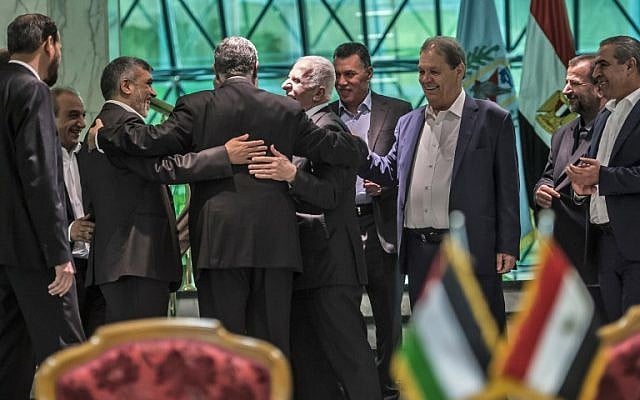
Despite Hamas’s takeover of Gaza in 2007, the PA kept on its payroll tens of thousands of employees, who stayed home but still claimed their salaries, while Hamas employed tens of thousands to replace them.
This and the as-yet-unresolved future of Hamas’s vast armed wing are the two key issues that have derailed previous reconciliation bids.
“They were trying to negotiate the issues over time in order to build a sense of trust, but these issues — the employees and Hamas’s standing army — are the biggest hurdles, and it’s clear they haven’t surpassed them,” said Grant Rumley, who focuses on Palestinian politics at the US think tank the Foundation for Defense of Democracies.
Since October, Hamas has largely stopped paying its staff, saying it is the responsibility of the PA under the agreement, while last year PA staff had their salaries cut by 30 percent.
Bashir Amer, 30, who works at the Hamas-run education ministry, said he was struggling to care for his family.
“They give us 1,000 shekels ($300), and it is not enough to eat and drink,” he said.
‘Backed into a corner’
Hugh Lovatt, Israel and Palestine coordinator at the European Council of Foreign Relations think tank, said Egypt’s Fawzy “had really been driving this process.
“It is unclear whether Egyptian sponsorship of the ongoing reconciliation process — which has been critical — will continue in his absence.”
Meanwhile Hamas — which remains heavily armed and is avowedly committed to destroying Israel — has appointed former military figures to senior roles in the past year, most notably former military leader Yahya Sinwar who became its chief in Gaza.
Fears have grown that Hamas — which has fought three wars with Israel since 2008 — could opt for war again, Rumley said.
“My sense is that Sinwar and the rest of the military faction do not want a war now because they’re focused on ameliorating the situation, primarily through reconciliation talks,” he said.
“When those fail and Hamas is backed into a corner, how will its new leadership respond?”






The Times of Israel Community.