

PM visits Cyprus Thursday to strengthen ties — and discuss airbase use?
Netanyahu’s trip to Nicosia — the first ever by an Israeli prime minister — comes as relations with Turkey are still frail
 Add ToI as a Preferred Source on Google
Raphael Ahren is a former diplomatic correspondent at The Times of Israel.
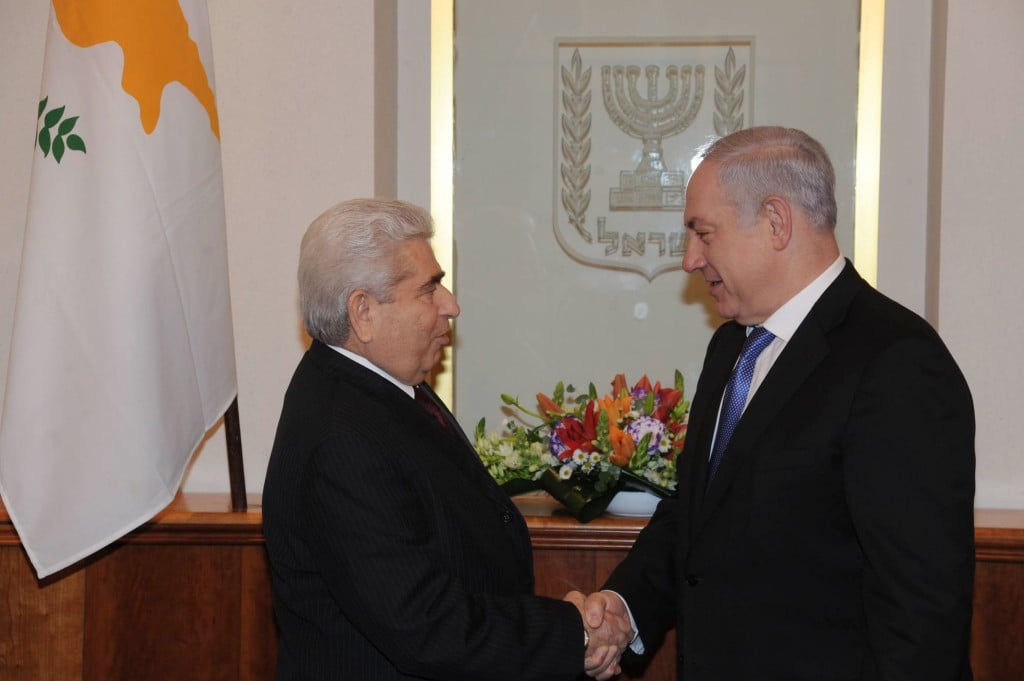
Prime Minister Benjamin Netanyahu will visit Cyprus on Thursday, marking the first time an Israeli head of government visits the island nation. The one-day trip, which comes amid still frosty relations with Turkey, is intended to highlight the increasingly strong bilateral ties, especially in the field of energy cooperation.
According to media reports, Netanyahu is also expected to ask the Cypriot government for permission to station Israeli Air Force jets at an airbase in the country. Israeli officials denied such plans.
“This historic visit symbolizes the dramatic improvement we had with Cyprus over the last few months,” an Israeli official said. “Cyprus and Israel are two Western democracies, we have common interests and both sides have much to gain from improved cooperation.”
On Thursday, Netanyahu is scheduled to meet President Demetris Christofias, Foreign Minister Erato Kozakou-Marcoullis and the head of the opposition, Nicos Anastassiades. Issues on the agenda include the possible cooperation in the development and production of gas fields in the Mediterranean. Recent surveying has revealed major natural gas resources estimated to be worth billions of dollars. While Lebanon disputes the maritime borders claimed by Israel – a possible cause for conflict once Israel starts drilling – Jerusalem and Nicosia in 2010 signed a contract establishing exclusive economic zones.
Some analysts see Jerusalem’s rapprochement with Nicosia as a strategic move in light of still frail relations with Turkey and potential future conflict with Lebanon over offshore gas fields. Others fear Netanyahu’s visit could further inflame the already tense atmosphere in the region and warn of a possible “Mediterranean energy war.”
[mappress mapid=”254″]
Last week, the Chinese news agency Xinhua quoted unnamed Israeli officials saying Netanyahu planned to ask Cyprus to permit Israeli military jets to be stationed at the Andreas Papandreou airbase in Paphos, at the southwestern edge of the country. Observers see such a request as an attempt to protect Israeli natural gas interests in the Mediterranean. But this week, Israeli officials flatly denied any such plans. Officials merely said Israel has for a long time had military cooperation with many ally nations.
Ties between Israel and Cyprus have grown ever stronger since Jerusalem’s relations with Ankara deteriorated after a 2010 Israeli raid on a Gaza-bound flotilla that left nine Turkish citizens dead. Yet Turkey on Monday signaled readiness to improve ties with Israel again, when Israeli defense officials reportedly received a “very warm and friendly” reception at an event in Eastern Turkey. “You are our true friends,” a low-level Turkish official told the Israeli delegation, referring to the emergency assistance Jerusalem offered after an earthquake devastated Turkey’s Van district last October.
Netanyahu’s Cyprus visit might endanger the budding rapprochement with Turkey. But Israeli officials insist that Jerusalem’s friendship with Nicosia exists “in its own right” and should not be seen by Ankara as a provocation.
Jerusalem and Nicosia enjoy strong economic and commercial relations. Cyprus’ trade with Israel is reportedly about six times greater than trade conducted with the country’s half-dozen Arab partners. Earlier this year, Energy and Water Minister Uzi Landau initiated a project to lay an undersea electric cable linking the two countries, calling it “a psychological and diplomatic breakthrough that will affect Israel’s energy redundancy and energy security.”









The Times of Israel Community.