

Poll: 1 in 5 self-employed out of work, 65% suffered income loss due to virus
Average rate of lost income was 44%, survey finds; among salaried employees, 35% took a wage cut; earnings loss most widespread in low income households
 Add ToI as a Preferred Source on Google
Stuart Winer is a breaking news editor at The Times of Israel.
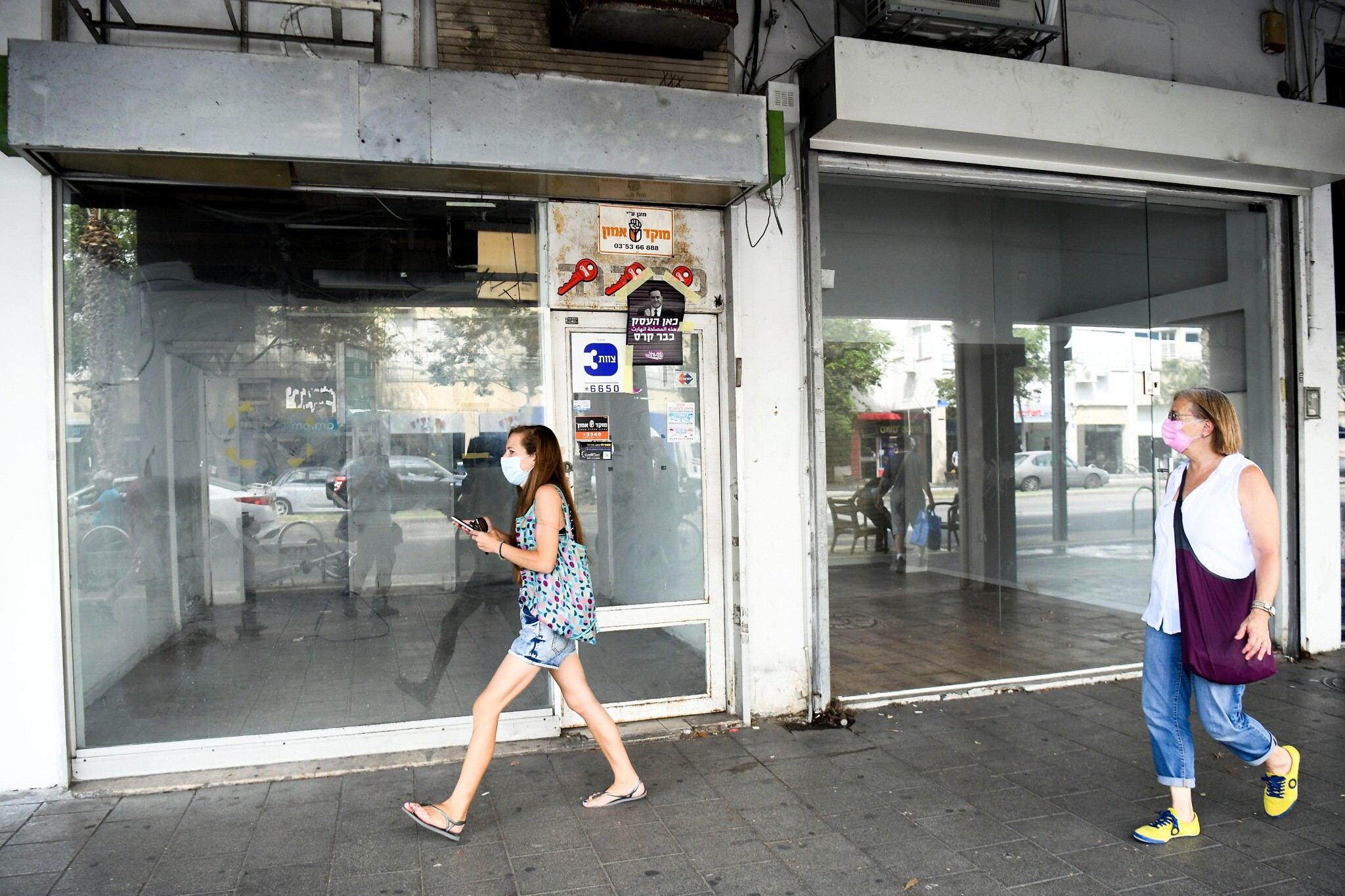
One in five self-employed workers in Israel are out of work and 65 percent suffered a loss of income due to the coronavirus outbreak, according to a survey published Thursday by the Israel Democracy Institute think tank.
The figures also showed that, as of June, 13.5% of salaried employees — some 550,000 people — were unemployed as a direct result of the pandemic.
Overall, lower income households have been most widely affected, with over half reporting a loss of income since the onset of the economic crisis caused by the virus.
“The survey findings bring to light the severe blow which the corona[virus] crisis has dealt to the Israeli economy, and to so many of Israel’s citizens,” the IDI said in a statement.
“Some groups have been hit harder than others; for example, the self-employed as compared with salaried employees, and those with lower levels of education and of income as compared with those with greater resources,” the statement said.
The survey found that 20% of self-employed people were forced to either stop working temporarily (14.4%) or close down completely (5.4%). There were 100,000 self-employed individuals out of work as of June, according to the survey.
Among salaried employees, 5.5% were out of a job and another 8% were on forced unpaid leave, for a total of 550,000 unemployed due to the virus.
Together the figures show 650,000 people who lost their employment due to the virus.
Added to those who were already unemployed before the virus outbreak began, the IDI poll tallied 788,000 unemployed as of June, or 19.3%.
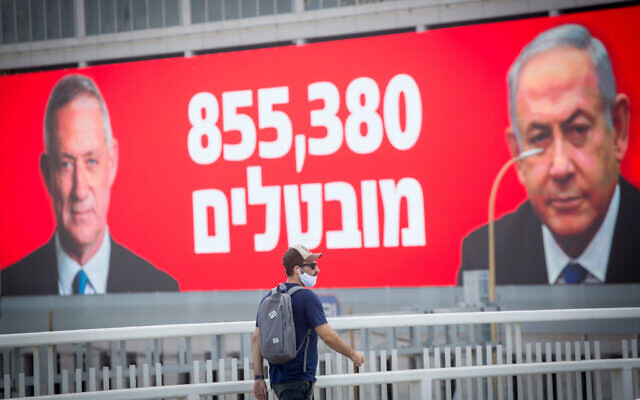
About 82% of self-employed and 80% of salaried employees were working in June, but among the self-employed 42% were working part-time compared to 17% among salaried employees.
Both sectors suffered a loss of income, with the self-employed on average seeing a 44% drop, compared to 26% for salaried employees.
Younger workers fared worse than their elders, with those 18-24 years old reporting a 53% drop in income, while the overall average was 34%.
“Underprivileged households were harder hit,” the IDI said. “The percentage reporting loss of income is higher among lower-income populations, as is the case among groups with lower levels of education.”
Among households with a monthly income of up to NIS 5,000 ($1,467), 54% reported a loss of income. The higher the income, the lower the drop, the figures indicated: NIS 5,000-10,000 (49%), NIS 10,000-15,000 (32%) NIS 15,000-25,000 (24%), and NIS 25,000+ (25%).
When it came to weathering the virus storm, 62% of the respondents said they have enough liquid funds to keep them going for some time, almost the same figure (66%) as in a March-April poll.
Of those that have the means, 40% said they have enough to keep them going for two months, while 60% said they can keep going longer.
But 22% said they have no saved funds to live on, and among the ultra-Orthodox, the figure jumped to 33%.
Overdrawn bank accounts, loans
The poll found that 37% of salaried employees and 45% of the self-employed have overdrafts, most of which were as a result of the virus conditions or were increased due to the outbreak. Arab Israelis appeared to be worse off with 58% having an overdrawn bank account compared to 33% among the Jewish population.
Among those who are not working, over half — 56% — had overdrafts and 47% went into debt or increased their deficit due to the crisis.
Some took out a loan (18%). Among the self-employed 28% needed to borrow money compared to 16% among salaried employees. Of those who went into debt, 42% needed to take out a loan.
The survey was based on data from Israelis who were working prior to the start of the virus crisis, which the IDI considers as beginning when lockdown measures were introduced in late March. Conducted between July 7-11, it was a follow-up to a similar poll conducted in March-April. Of the 757 people who responded, 69% also participated in the earlier survey, the IDI said.
“COVID-19 has dealt and continues to deal a severe blow to the Israeli economy and to so many of Israel’s’ citizens, and is one of the main triggers of the current anti-government protests and demonstrations throughout the country,” the IDI assessed.
The poll was conducted the IDI’s Center for Governance and Economy and the Guttman Center for Public Opinion and Policy Studies.
For the past few weeks there have been twice-weekly protests outside the prime minister’s official residence in Jerusalem calling on Prime Minister Benjamin Netanyahu to resign over his handling of the coronavirus outbreak and due to his ongoing corruption trial.

Israel applied a lockdown in mid-March that brought the economy to an almost total standstill and sent unemployment numbers to over 1,000,000, or some 26%, the highest figure in the country’s history. It gradually rolled back most measures but then saw a sharp rise in virus infections rates.
Israel’s death toll from the coronavirus rose to 674 on Saturday.










The Times of Israel Community.