

Poll: 82% of Jewish Israelis oppose IDF insubordination
74% of Israeli Arabs say troops should be able to refuse on ethical grounds; most Israelis want peace talks
 Add ToI as a Preferred Source on Google
Marissa Newman is The Times of Israel political correspondent.
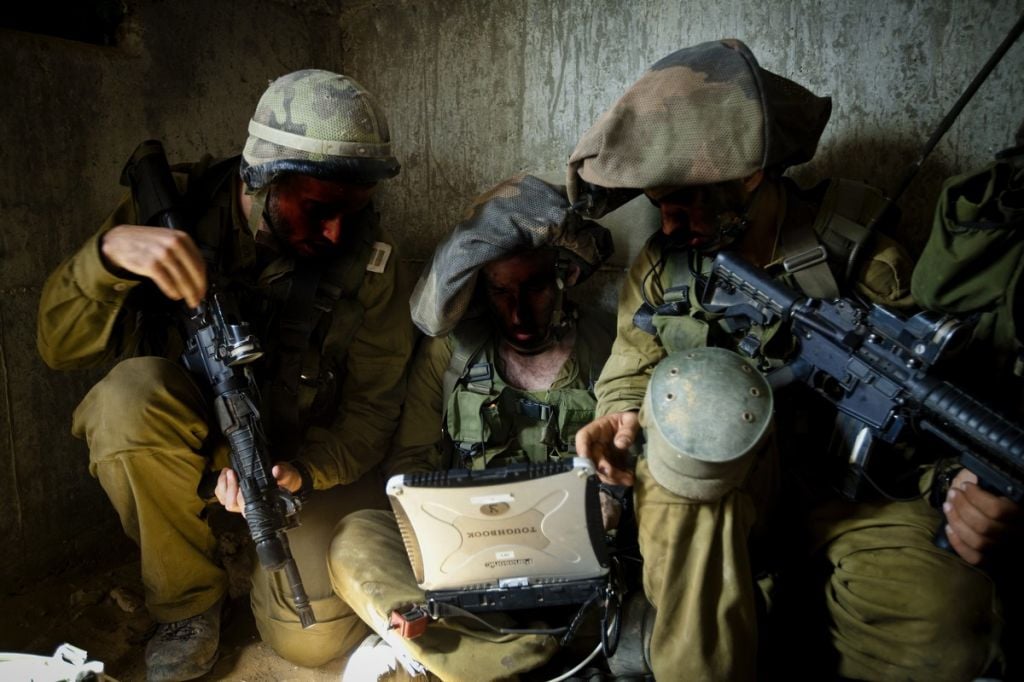
An overwhelming majority of Jewish Israelis (82 percent) believe that displays of insubordination among Israel Defense Forces soldiers on moral grounds, such as the recent protest by 43 reservists in the 8200 intelligence unit, are unacceptable, according to the Israel Democracy Institute’s monthly Peace Index, released Tuesday.
The opposite position was supported by a significant Israeli-Arab majority (74%).
In its analysis of the results, the IDI, an independent think tank, maintained that the results reflected the public perception of the military campaign in Gaza over the summer, arguing that those who opposed the conflict largely did not denounce the IDF’s moral standards, but rather the overarching conduct of the army.
The staunch opposition to any refusal to carry out orders among Israel’s Jewish population in the immediate aftermath of the campaign indicates that much of the criticism voiced against it “does not stem from concerns among the general Jewish public about the commission of immoral acts during the operation,” but rather is likely “more prosaic concerns” on the campaign goals, or the army’s achievement of those objectives.
The poll found that the right is most prone to see insubordination as unacceptable (90% of self-defined right wingers said so), as opposed to 76% among self-proclaimed centrists, and 58% of left-wingers.
The poll, which was conducted amongst 600 participants on September 16-18 (margin of error ±4.1%), also discovered that most Israelis lack trust in the government (62% have no or little trust), want peace talks to be reinstated (52%), are unsatisfied economically (69%), do not think the government is sufficiently “attentive” to its citizens (65% unsatisfied), and deplore the “situation in the country” overall (59% unhappy).
Despite the general sourness, a majority of Israelis are pleased with their personal situation (75%), with the political party they voted for (52%), and with security (61%).
On the subject of peace talks, although 52% said the time is right to restore negotiations, seven in 10 Jewish Israelis said Hamas should not be a party in the talks, while seven in 10 Israeli Arabs said the terror group should be involved in the discussions.
Responding to questions on the results of the 50-day conflict, 46% said Israel was the winner, but the same number also maintained that Israel’s national security was unchanged by the campaign.
Respondents also did not think the Islamic State poses a danger to Israel (55%), but most (60%) doubted that “the US administration and American people are sufficiently resolved to fight the Islamic State until victory is achieved.”
While, overall, most Israeli voters were pleased with the party they voted for, the levels of satisfaction varied significantly among the constituents of the different parties. Voters of the ultra-Orthodox United Torah Judaism party reported the highest level of satisfaction (93%), followed by the left-wing Meretz party (80%). Likud-Beytenu received a 66-percent approval rate, while 47% of Labor voters, and 53% of those who elected the right-wing Jewish Home party, were satisfied.
Yesh Atid voters were the least satisfied, at 40%.








The Times of Israel Community.