

Poll shows better result for Labor and Meretz if they don’t unite; deadlock persists
Survey predicts 5 seats each for left-wing parties, but only 9 if they join forces; neither pro- nor-anti Netanyahu bloc has majority; Arab representation seen slipping to 9 seats
 Add ToI as a Preferred Source on Google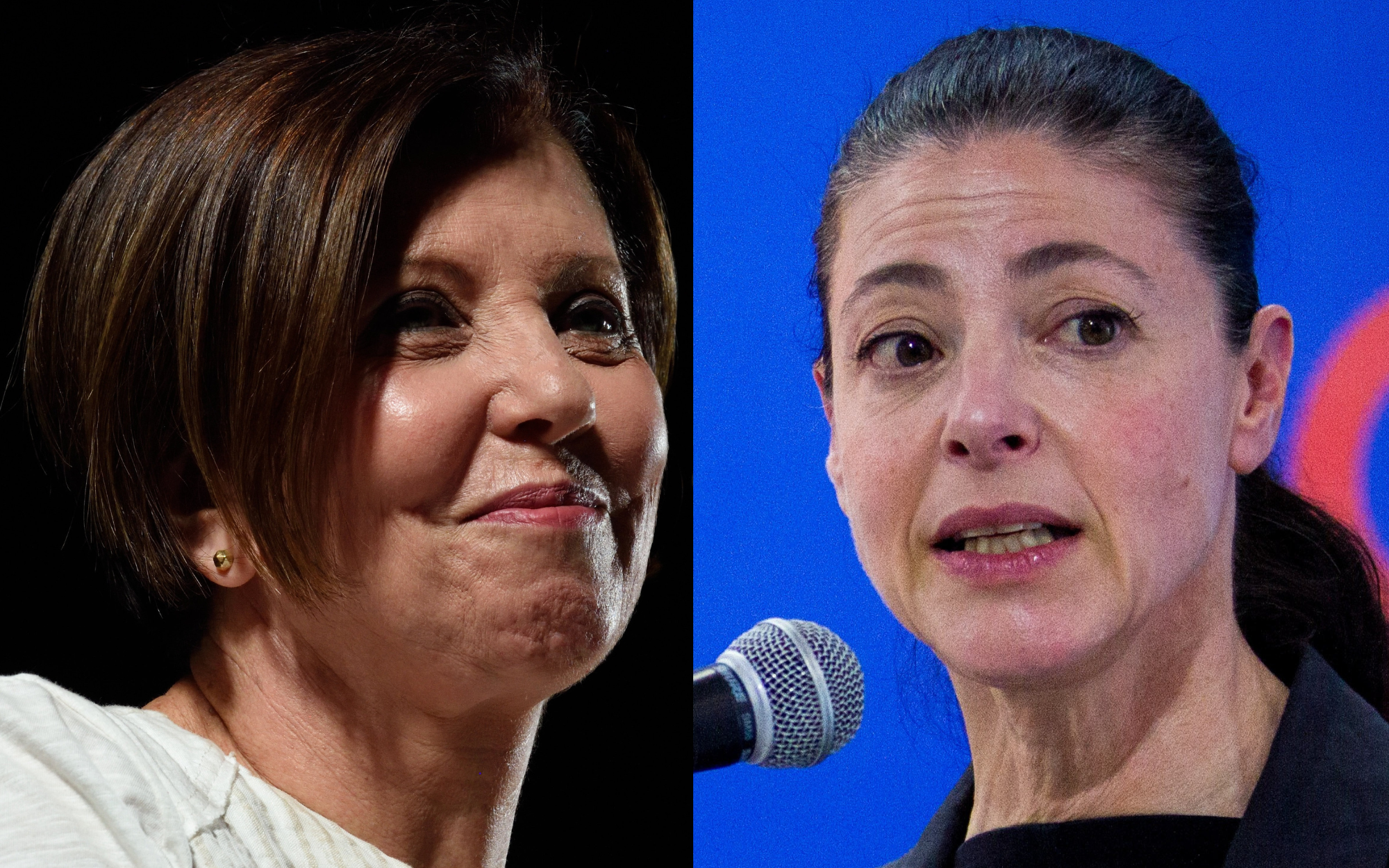
A poll published Wednesday indicated that the left-wing Labor and Meretz parties would fare better in the upcoming elections if they run separately, despite pressure on them to unite.
The Channel 12 poll showed each party getting five seats individually, but only nine if they run together. The parties agreed Wednesday to sign a surplus vote-sharing deal, but Labor has been resisting pressure to run on a combined slate in the November 1 election.
The poll also predicted a continued political deadlock, with the parties aligned with opposition chief Benjamin Netanyahu winning 59 seats in the 120-seat Knesset, the anti-Netanyahu coalition 56 and the non-aligned Joint List getting the remaining five.
The poll indicated that if elections were held today, Netanyahu’s Likud would get 33 seats; Prime Minister Yair Lapid’s Yesh Atid 24, Benny Gantz’s National Unity 12, Bezalel Smotrich and Itamar Ben Gvir’s unified far-right Religious Zionism 11, Shas 8, United Torah Judaism 7, Yisrael Beytenu 6, Labor 5, Meretz 5, Joint List 5, and Ra’am 4.
Ayelet Shaked’s Zionist Spirit would fail to cross the 3.25-percent electoral threshold, as in most surveys, with 2.1%, according to the poll.
The poll also included two economy-oriented parties that would similarly fail to enter the Knesset: Fiery Youth, led by 20-year-old social media activist Hadar Muchtar, with 1.5% of the votes, and economist Yaron Zelekha’s New Economic Party with 1.1%.
Another notable result is Arab representation dwindling further to nine seats, down from the current 10 and significantly fewer than the 15 the four Arab parties had when they all ran together in 2020.
The survey was conducted on Wednesday by phone and online by the Midgam institute among 505 respondents. The margin of error is 4.4%.
Israeli TV polls are often too small to accurately predict election results, with margins of error large enough to sway as many as five seats, but they can offer a general overview of public opinion and often influence jockeying between politicians.





The Times of Israel Community.