

Questions swirl as Russian skater awaits Beijing Olympics doping fate
Moscow is once again caught up in a doping scandal, this time surrounding 15-year-old Kamila Valieva
 Add ToI as a Preferred Source on Google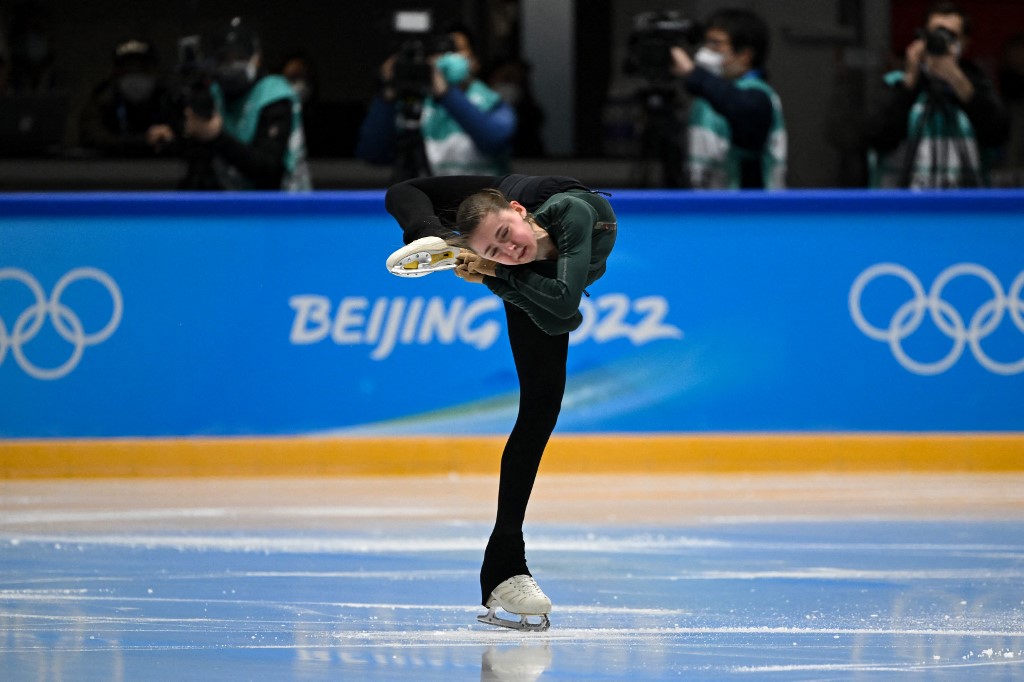
BEIJING, China (AFP) — The 15-year-old Russian figure skater Kamila Valieva will learn on Monday whether she can remain at the Beijing Olympics, the Court of Arbitration for Sport (CAS) said, as questions grew over why it took six weeks for her failed drug test to come to light.
The doping scandal surrounding the prodigious teenager threatens to tarnish the Games after the build-up was overshadowed by concerns about COVID-19 and human rights in China.
Valieva’s Beijing Olympic fate is now in the hands of CAS, which said that it would hold a video hearing on Sunday.
“Following the hearing, the panel will deliberate and prepare the Arbitral Award containing its decision,” the top sports tribunal said in a statement on Saturday.
“It is anticipated that the decision will be notified to the parties in the afternoon of Monday, 14 February.”
That is just one day before Valieva is scheduled to compete in the women’s figure skating singles competition.
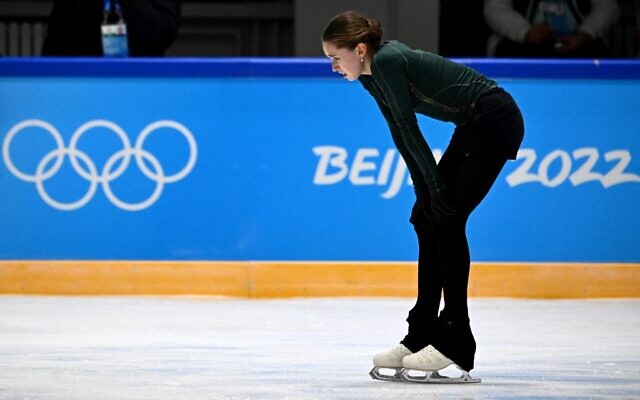
Valieva, who played a starring role in helping Russia win team gold in Beijing on Monday, tested positive for the banned substance trimetazidine after competing at an event in Saint Petersburg on December 25.
However, the International Testing Agency says that the World Anti-Doping Agency-accredited laboratory in Stockholm only reported that Valieva had returned a positive case on February 8 — the day after she won team gold in Beijing.
In an interview with AFP, United States Anti-Doping Agency chief Travis Tygart questioned the delay.
“The failure to report a test taken in December until after the team event in the Games is a catastrophic failure of the system to protect the public, the integrity of the Games and clean athletes who had to compete,” Tygart said.
“It shouldn’t have happened.”
Tygart said US authorities and other nations routinely expedite test results for athletes due to be participating in major championships, precisely to avoid situations like the Valieva case.
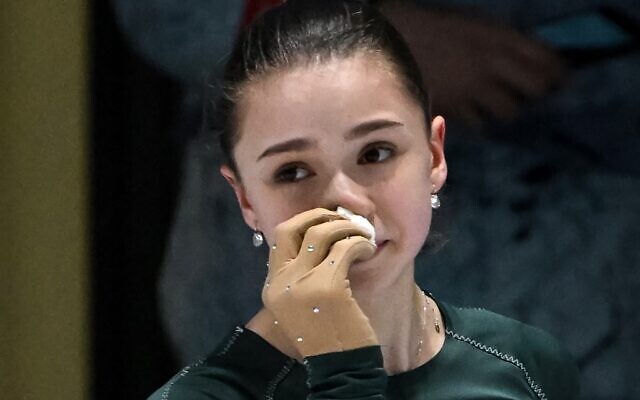
Russia’s anti-doping agency RUSADA said it had been informed that a sharp rise of COVID-19 infections at the start of the year was to blame for the delay.
International Olympic Committee spokesman Mark Adams said he had also heard that the pandemic may have been the reason, but could not give confirmation because the testing in this case was the responsibility of WADA.
“I had understood — but I would like to get this confirmed — that there was some issues around COVID, but I don’t know about the exact delivery of the testing and the delivery of the sample,” he said on Saturday, as the doping scandal simmered.
Valieva practiced in Beijing on Saturday.
The president of the Russian Figure Skating Federation, Alexander Gorchkov, said: “I repeat once again that we have no doubts about the honesty of our athlete. This affair should be carefully thought through because this crazy story raises so many questions.
“We have to find out, on one hand, all the circumstances of what happened and on the other, what happened to the December 25 doping sample almost a month and a half after it was sent to a foreign laboratory.”
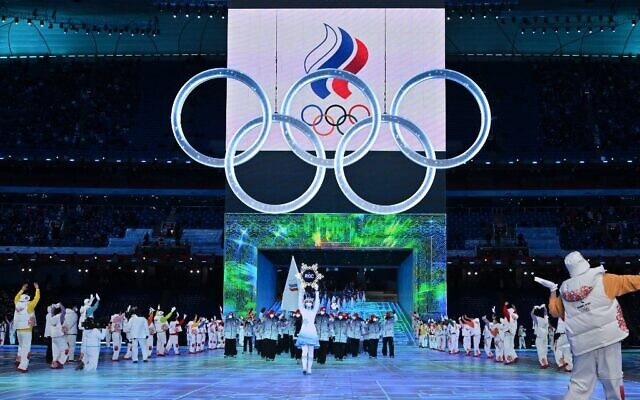
It is just the latest doping scandal surrounding Russian athletes in recent years at Olympic Games, which led to Russia as a country being banned for two years.
Russian competitors are allowed to take part in Beijing under the flag of the Russian Olympic Committee (ROC) if they have been able to prove they were not tainted by the massive state-sponsored doping program that targeted a range of summer and winter Olympic sports over a four-year period.
The scheme included manipulating doping tests at its home 2014 Sochi Winter Olympics when Russia topped the medals table.
In Beijing, the ROC team cannot have the Russian flag on its clothing and the Russian anthem is not played.









The Times of Israel Community.