

Right-wing parties sling mud at each other in last-hour bid to sway voters
New Right and Union of Right-Wing Parties send message blasts, each claiming the other is undermining its chances
 Add ToI as a Preferred Source on Google
Jacob Magid is The Times of Israel's US bureau chief
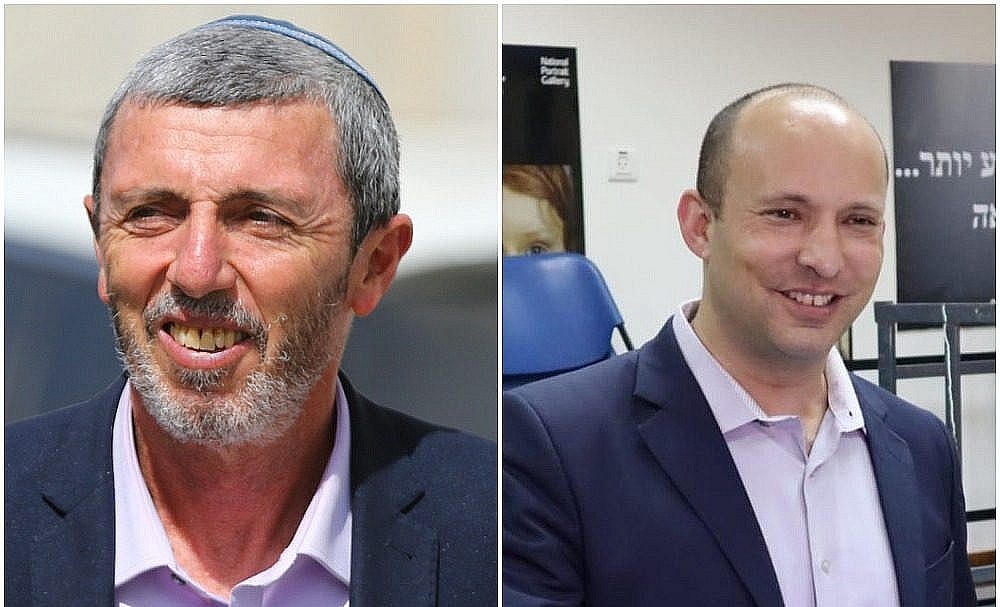
With just minutes remaining until polls closed Tuesday, a pair of small right-wing parties were sending message blasts to potential supporters, each accusing the other of selfishly stealing seats dearly needed to make it into the Knesset.
The Union of Right-Wing Parties released a video received by thousands of Israelis via text message in which chairman Rafi Peretz accused the fledgling New Right party, led by former Jewish Home leaders Naftali Bennett and Ayelet Shaked, of attempting “to eliminate religious Zionism.”
“We woke up this morning feeling good about our position on the ground, but in the hours since, the New Right has been putting out all sorts of spin,” he told The Times of Israel outside a polling station in the central town of Givat Shmuel, claiming that Bennett was lying to Israelis by telling them that the New Right was teetering on the electoral threshold (3.25 percent of the national vote).
For its part, the New Right released a competing campaign video in which Bennett was featured quoting remarks Peretz made before the election, in which the URWP chairman predicted his party would receive eight to 10 seats.
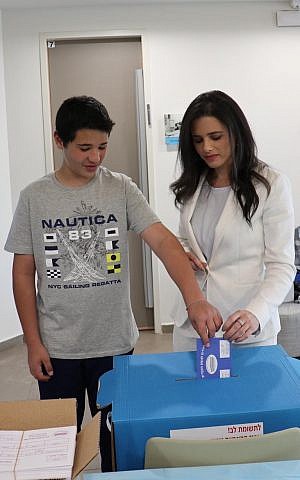
“Ayelet [Shaked] and I are in a difficult situation… I have a modest request of everyone — of the whole national camp: Likud, [URWP MK Bezalel] Smotrich, [Zehut chairman Moshe] Feiglin — all of them — help carry us. Vote for the New Right,” Bennett says in the video.
Despite the frantic messaging from nearly all parties regarding a low turnout, the Central Elections Committee said voter turnout had hit 52% at 6 p.m., only 2.6 points lower than at the same time on election day 2015.
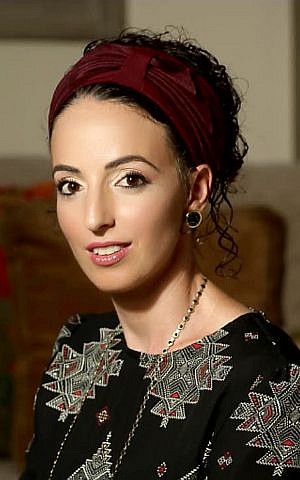
URWP No. 5 candidate Idit Silman told The Times of Israel that the New Right had “lost all of its legitimacy.”
She argued that when Bennett and Shaked bolted from the Jewish Home in December and announced the establishment of their new party, they claimed that their goal had been to attract new voters.
“They were supposed to try and bring people from Blue and White and places closer to the center and left, but when they realized that they had failed in doing so, they returned to our base — the religious Zionist movement,” she said, suggesting that the sector was not big enough to have two parties representing it.
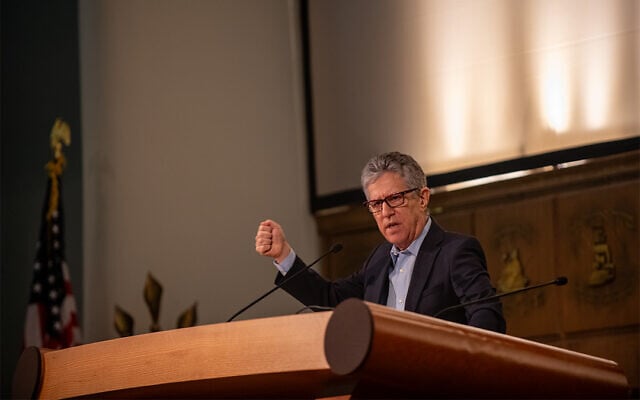
New Right candidate Jeremy Saltan dismissed the claims from URWP rivals.
“It’s pretty clear that there are many people who identify as religious Zionists who want to see a party who is not just filled with religious Zionists,” he said, highlighting his party’s bid to attract both secular and religious voters.
Saltan, the No. 23 candidate on the New Right slate, said that such Israelis were caught between Likud, “which only offers a few token kippot,” and URWP, an amalgam of the Jewish Home, National Union and the far-right Otzma Yehudit, which has seen a growing influence of the nationalist ultra-Orthodox Hardal movement. Saltan argued that his party offered an answer to voters dissatisfied with that choice.








The Times of Israel Community.