

Rioting by Haredi extremists has caused NIS 600 million damage to Jerusalem light rail work
Transport Ministry says ultra-Orthodox groups’ vandalism of infrastructure and equipment at the construction site in the Bar-Ilan area has set light rail expansion back 2 years
 Add ToI as a Preferred Source on Google
Sharon Wrobel is a tech reporter for The Times of Israel
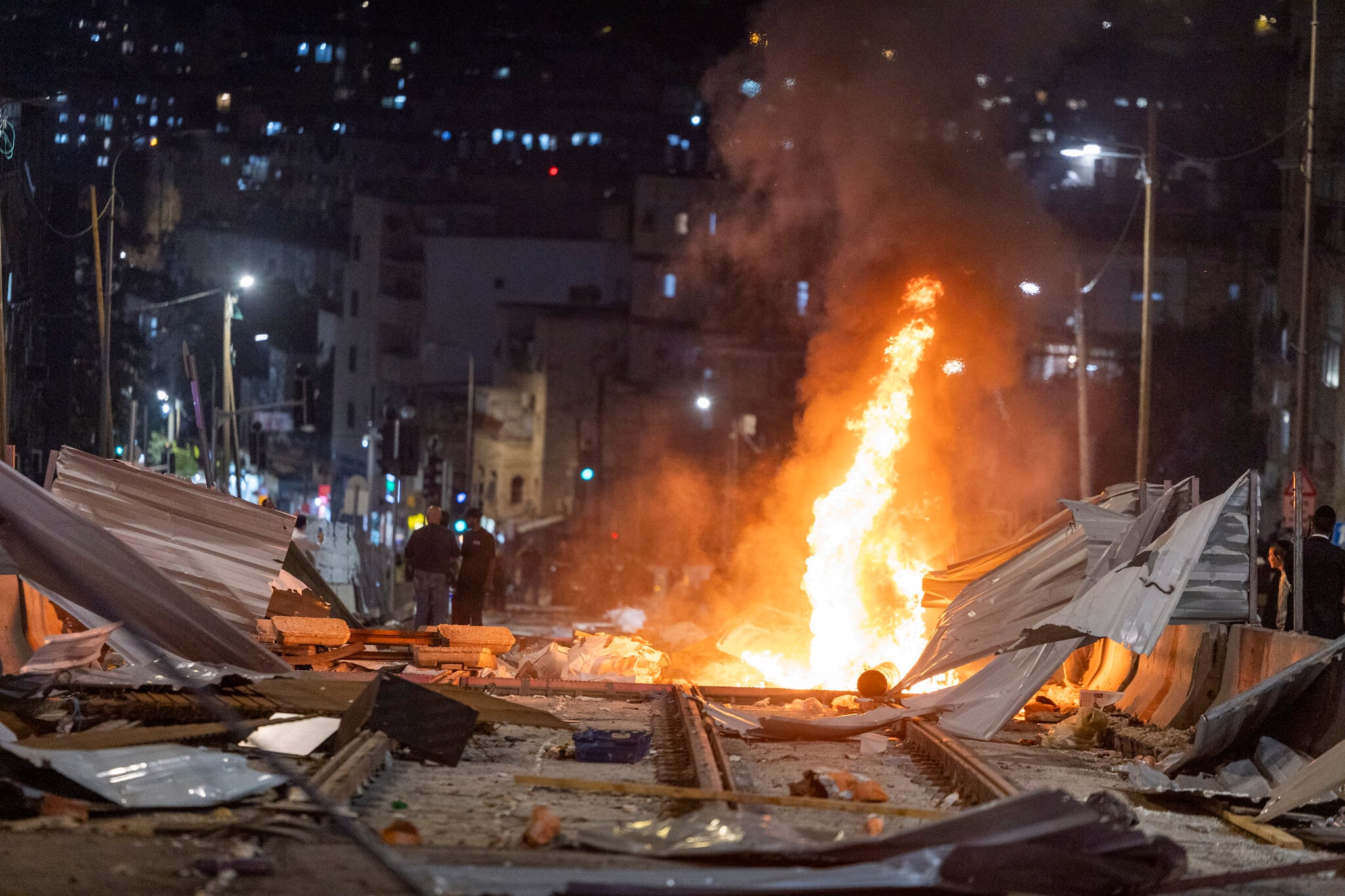
Ongoing protests and riots by ultra-Orthodox groups against the extension of Jerusalem’s Light Rail into their neighborhoods have inflicted roughly NIS 600 million ($200 million) in cumulative damages to the project in the capital, according to government estimates.
Haredi extremists have been staging protests at the construction site in Jerusalem’s Bar-Ilan area, which sits in the center of several ultra-Orthodox neighborhoods, for the past six years. However, the riots against efforts to expand the light rail in the capital have intensified in recent weeks.
The ultra-Orthodox demonstrators oppose the light rail running through their neighborhoods, believing it will bring with it unwanted intrusions from the secular world.
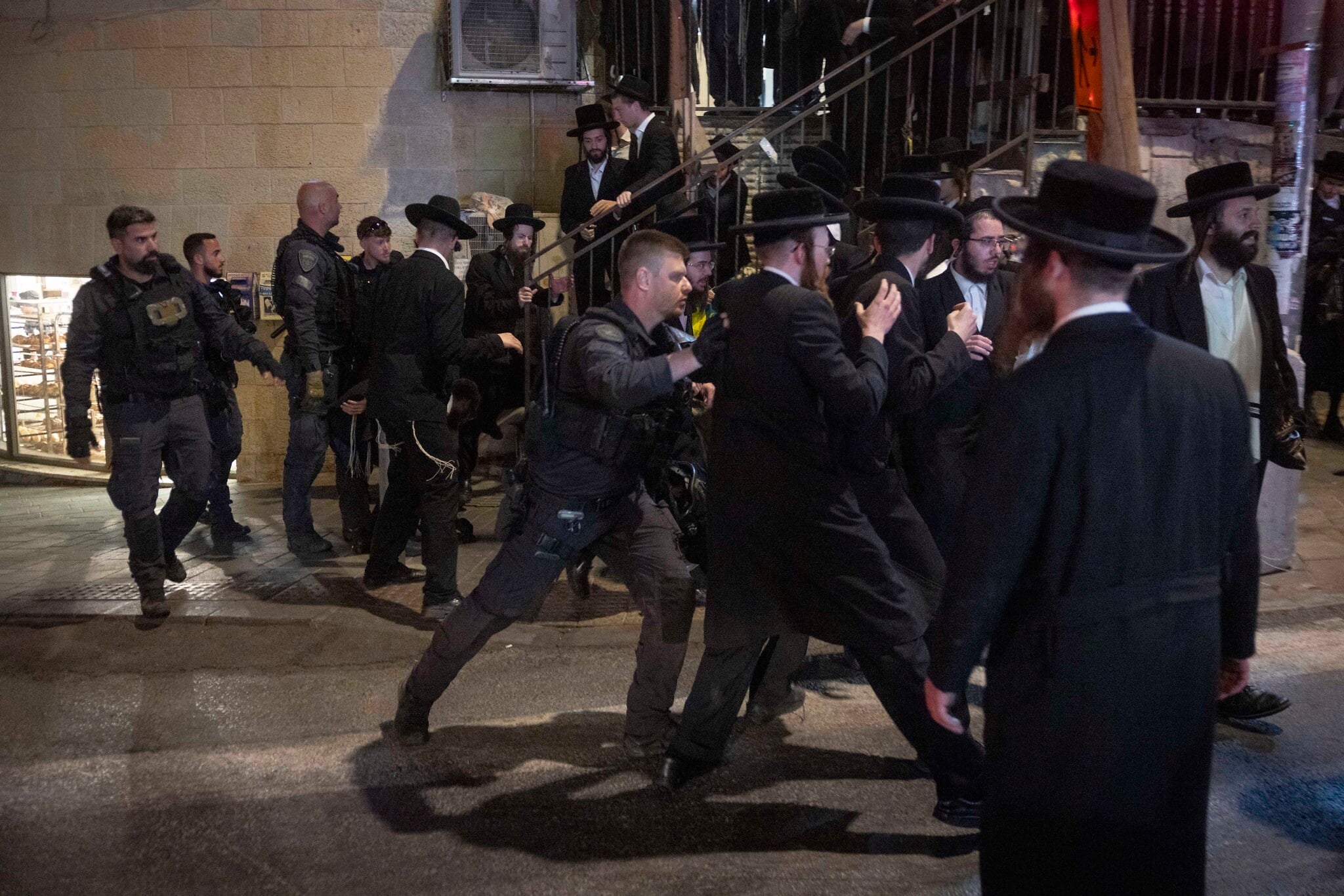
Earlier this week, police from the Jerusalem district dispersed a group of ultra-Orthodox rioters who entered the light rail construction site of Jerusalem’s unfinished Green Line around the Bar-Ilan area, attempting to cause damage and disturb public order. Some of the Haredi demonstrators managed to break through the construction fence and were seen lying down on stacks of pipes, according to a report by Hebrew news outlet Channel 12.
In recent months, Haredi extremist groups have repeatedly been disrupting construction around the Bar-Ilan area by toppling fences, pouring cement onto tracks, and damaging essential infrastructure such as pipes and electrical installations, according to the Transportation Ministry.
In other violent incidents, demonstrators also burned trash cans, damaged the fence around the construction site, and verbally harassed police officers and city workers. Due to the repeated violent incidents and attempts of vandalism by ultra-Orthodox extremists, NIS 150 million has been budgeted for security of the light rail project, the Transportation Ministry said.
The construction section at Bar-Ilan is part of the Jerusalem Light Rail’s Green Line — the city’s second route, which is slated to open in the capital, more than a decade after the first.
The full route of the Green Line will eventually stretch from Hebrew University’s Mount Scopus in the north of the city to the Gilo neighborhood in the south. It is expected to eventually carry 400,000 people a day, easing traffic and congestion in the city. The entire line spans 20 kilometers and is being built with a budget of NIS 13 billion.
The route of the Green Line, which was originally scheduled to be completed in 2025, has been delayed and is expected to be fully operational by 2027.
The first section of the Green Line, stretching from the Malha Mall area to the Haturim station near the city’s International Convention Center (Binyanei Hauma) and Central Bus Station, is scheduled to open in the coming weeks, following a delay from January of this year.
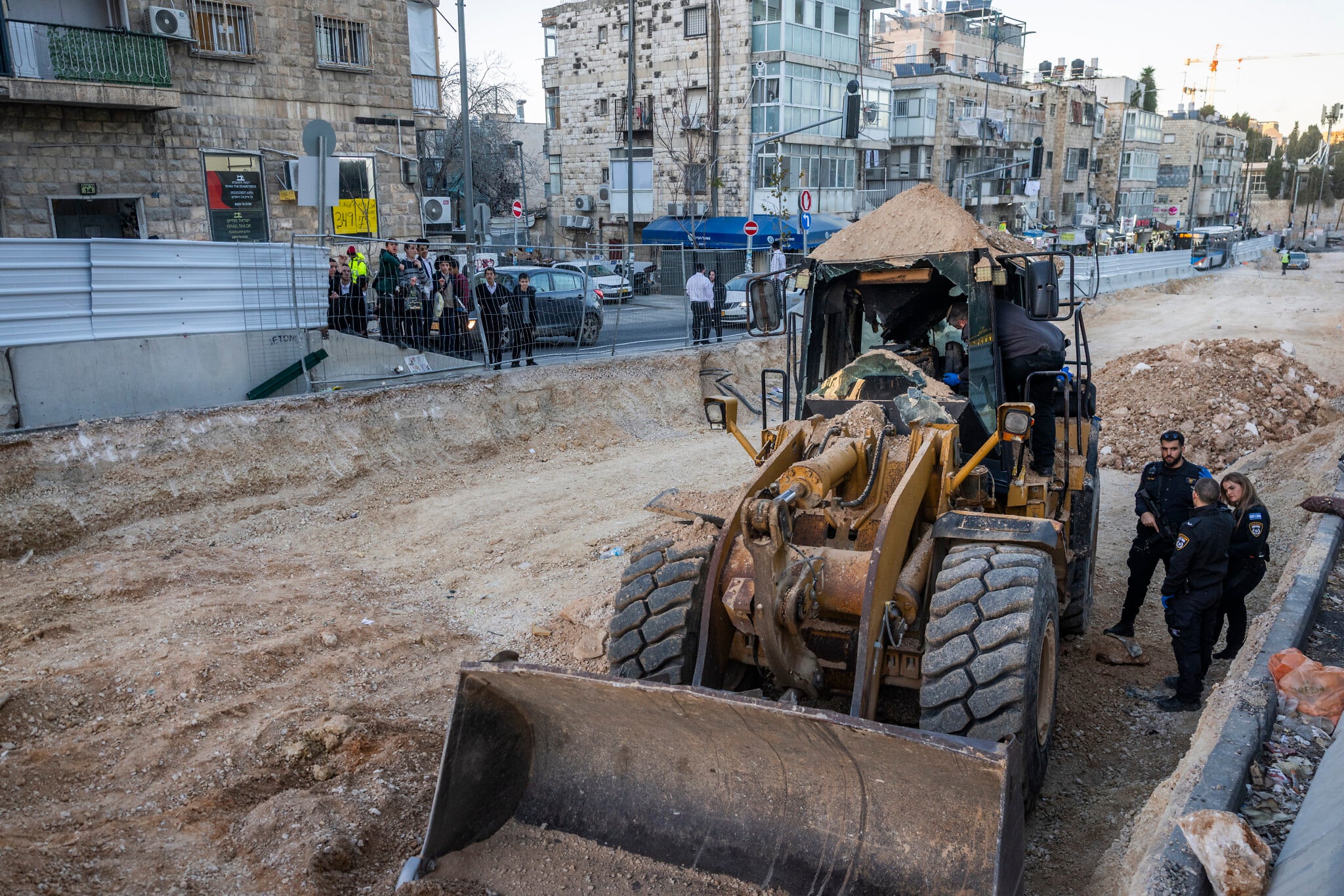
The other section, connecting to Hebrew University campuses with the Gilo neighborhoods, is expected to open towards the end of 2026 or early 2027.
Jerusalem’s first light rail line, known as the Red Line, was launched in 2011 and serves more than 200,000 daily riders on the route from Ein Kerem to Neve Yaakov.





The Times of Israel Community.