

Romi Gonen: Hamas chief offered me early release in exchange for silence on sexual assault
Former Gaza brigade head Izz al-Din al-Haddad showed up at hostage’s release in January 2025, told her he kept up his end of the deal and she should do the same, she says
 Add ToI as a Preferred Source on Google
Former hostage Romi Gonen said that Hamas’s current commander in the Gaza Strip, Izz al-Din al-Haddad, told her at the end of the November 2023 ceasefire that she would be prioritized for release as long as she didn’t tell anyone that her captors sexually assaulted her.
Later, Haddad used Gonen and fellow hostage Emily Damari as human shields for 35 days, Gonen told Channel 12 in an interview whose second and final part aired Thursday.
When Damari, Gonen and Doron Steinbrecher were released at the start of the second truce-hostage deal in January 2025, Haddad showed up in person to escort them, and told Gonen he had fulfilled his end of their deal and expected her to do the same, Gonen said.
Gonen, 25, said she waited to speak publicly about the assaults until all the living hostages were out of Gaza so that they wouldn’t be punished by their captors.
The last 20 living hostages were released on October 13 as part of the third and current ceasefire, 738 days after they were abducted when Hamas-led terrorists stormed southern Israel on October 7, 2023, to kill some 1,200 people and take 251 hostages, sparking the war in Gaza.
Gonen, who was 23 at the time, was abducted from the Reim-area Nova music festival.
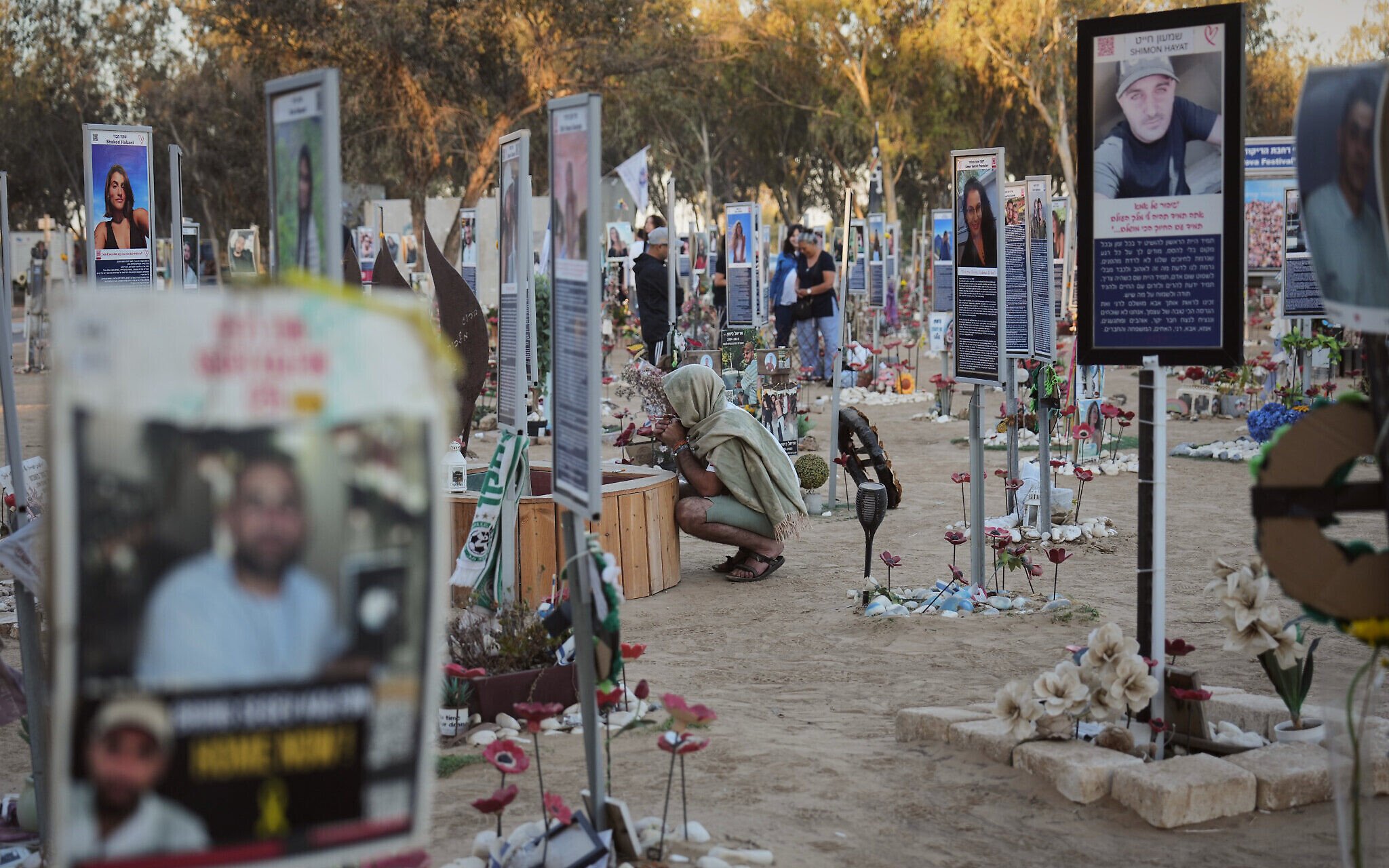
In the first episode of her Channel 12 interview, which aired last week, she recounted being assaulted by four different men throughout her captivity — three of them within a month of her abduction, before she met any fellow hostages in Gaza.
One of those three captors, named Mohammed, threatened her after the worst assault that he would kill her if she told anyone, Gonen said. Immediately after that assault — on November 8, 2023, day 34 of the war — Gonen was moved from Mohammed’s house to an underground cell.
“I was there for 24 hours, alone, in crushing silence,” she said, in tears, in the interview episode that aired on Thursday. “I had to be alone with it, and it’s not easy.”
She was then joined by several other female hostages, including Damari, Naama Levy, Liri Albag, Agam Berger, Mia Schem, sisters Ela and Dafna Elyakim and Chen Goldstein-Almog and her three young children, Agam, Gal and Tal.

Speaking with the other women in the cell, Gonen realized none of them had experienced the sexual assaults she suffered, she told Channel 12.
“On the one hand, it was a relief to hear that no one reached my state. But it’s just not fair, and it’ll stay with me all my life,” she said.
“Only when all the girls came and we started talking and sharing, did I realize that I had been in the worst position of everyone, by far,” she said. “How do you go on for an entire captivity after three different guys harassed you in under a month?”
Damari, who also took part in the interview, said that within a week of entering the tunnel, she was asked by a low-ranking Hamas guard why Gonen was crying so much.
“I said, ‘One of you did something very, very bad to her.’ So he asked, ‘What do you mean, something bad?’ So I said, ‘The worst thing you can imagine.'”
The next day, three officers who would occasionally come to the tunnel asked Gonen to tell them what had happened, and accused her of lying, she said.
“Emily intervened and said, ‘They threatened her that they’d kill her,'” said Gonen. “I felt like the girls at home, who, when there’s a harassment or rape scandal, nobody believes them. And like, who are you anyway, terrorists, as if I give a crap about you. Go get lost. I know what happened to me.”

On November 30, 2023 — day 55 of the war and the last day of the November ceasefire — Gonen was ordered to don a hijab and go up to a command room, where she would speak with a senior commander over a landline phone. She later realized this was Haddad, then the commander of Hamas’s northern Gaza brigade.
“I thought I was going to be killed. I was afraid of that conversation,” she recalled.
They spoke to each other in Hebrew, and Haddad translated into Arabic for another person who was on the line, said Gonen.
“He told me, ‘I understand there’s a situation, I want to hear what happened’… I told him everything,” said Gonen. “He told me he’d find [the attacker] and also that because of what happened to me, he’d put me on the top of the list to go home. He said he wanted to make some kind of a deal with me.”
The deal, she said, was that she wouldn’t say a word about the sexual assaults she endured. “I said sure, I don’t care… I want to go home. We’ll deal with that later.”
“In retrospect, I realized that I spoke with the number one man in Gaza right now,” she said. “I don’t know if he really intended to get me out.”
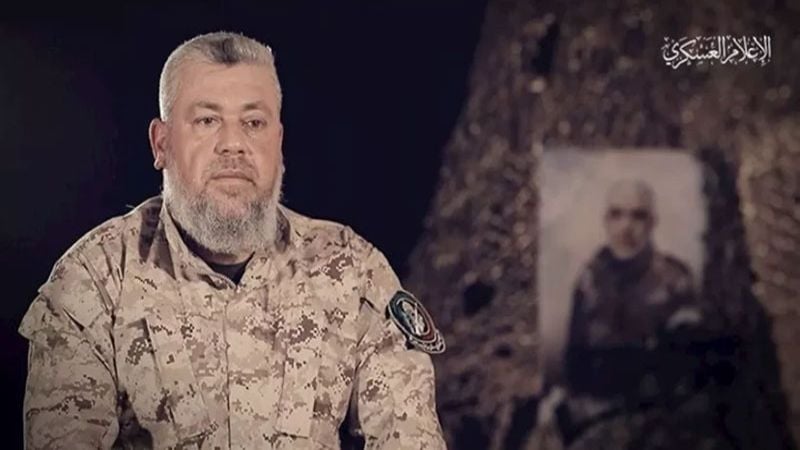
Their paths would cross again some three weeks later, when Gonen and Damari were taken to Haddad’s own tunnel, which Gonen said they entered through a university in Gaza City’s eastern Tuffah neighborhood.
They were there for 35 days with Haddad himself, who showed them pictures of themselves and other hostages and talked to them about Hamas, said Gonen. Even though much of Gaza lay in ruins, Haddad would freely go out to meet with family, and spoke with Gonen and Damari about how Hamas was manufacturing weapons and repairing its tunnel network, said Gonen.
“He’s smart, unexpected, and, God willing, we’ll kill him,” said Gonen of Haddad, who became Hamas’s leader in Gaza after Israel killed October 7 mastermind Yahya Sinwar in October 2024.
In total, Gonen and Damari were held in about 30 different locations during their captivity, they told Channel 12.
They recalled how one location where they were held in April 2024 had a tin roof and got unbearably hot. Gonen said she threw a plastic chair at a captor who told her to shut up after she asked for a fan. The captor was held back by a colleague and Gonen was restrained by Damari so they wouldn’t come to blows, the women recounted.
Gonen, Damari and Steinbrecher were the first three hostages to return to Israel as part of the ceasefire deal that fell apart in March. The deal saw Hamas release 33 women, children, civilian men over 50 and those deemed “humanitarian cases.”

Gonen and Damari said they were informed the morning of January 19 that they were going home. Along with Steinbrecher, they were put in the back of a white van that would take them to a propaganda ceremony Hamas held as it handed them over to the Red Cross.
When they got into the car, said Gonen, a man turned around from the passenger’s seat and said, “‘Hello, girls.'”
It was Haddad, she recalled: “He said, ‘Do you remember our promise? Here, you’re going out first.’ And then he said, ‘Do you remember your promise to me? I hope you fulfill it.'”
“I told him, ‘I’ll fulfill the promise,’ and we went our separate ways for eternity, thank God,” she said.









The Times of Israel Community.