

Russian jets accidentally bomb US-backed forces in Syria
Airstrikes targeting Islamic State jihadists quickly called off after American soldiers communicate error to Russians
 Add ToI as a Preferred Source on Google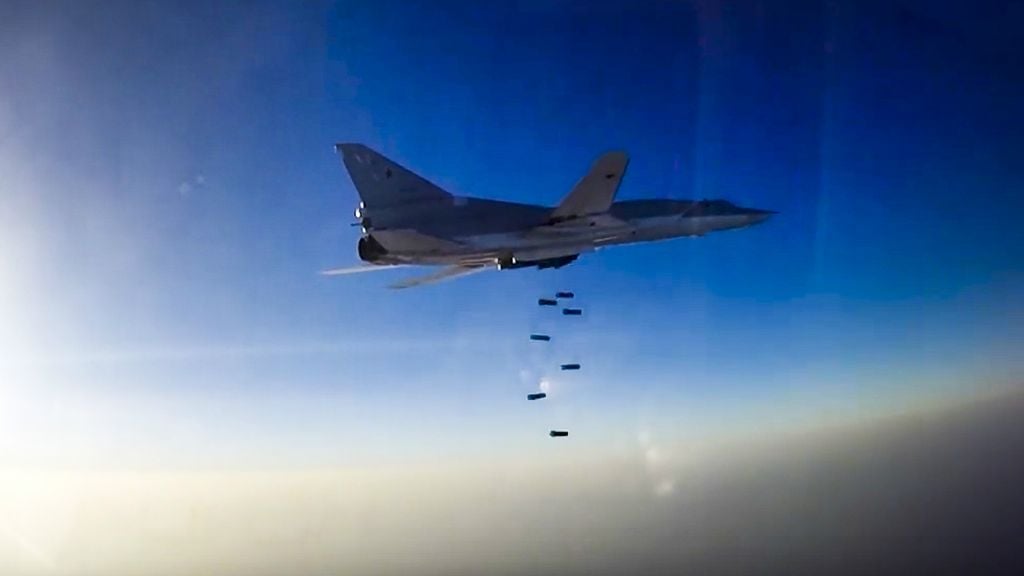
WASHINGTON — Russian warplanes bombed US-backed fighters in several small villages in northern Syria after they mistakenly thought Islamic State forces were in the area, a top US general said Wednesday.
Army Lieutenant General Stephen Townsend said Russian and Syrian regime aircraft attacked the villages to the southeast of Al-Bab in Aleppo province on Tuesday, resulting in an unspecified number of casualties.
The Russians apparently had observed IS fighters moving out of the area and so wrongly assumed that incoming forces were jihadists.
“We had some Russian aircraft and regime aircraft bomb some villages that I believe they thought were held by ISIS, yet … actually on the ground were some of our Syrian Arab Coalition forces,” Townsend told reporters in a video call from Baghdad.
The SAC forms part of a broader alliance called the Syrian Democratic Forces (SDF) comprising Kurdish and other groups that the United States have been training and advising to lead the fight against IS.
Townsend added that US troops were less than five kilometers (three miles) away from the villages and observed the bombing.
The American soldiers communicated the error, which was then quickly passed on to the Russians through a special “deconfliction” hotline the two powers have established to avoid mishaps.
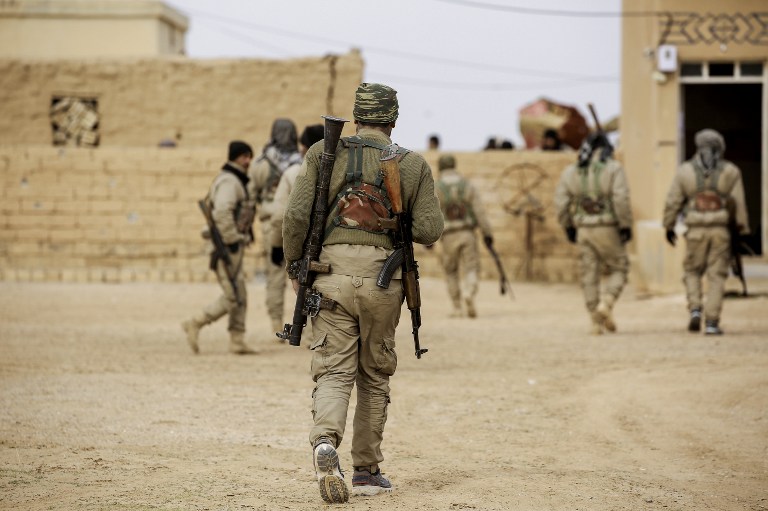
“It became apparent that the strikes were falling on some of the Syrian coalition positions,” Townsend said.
“Some quick calls were made to our deconfliction channels and the Russians acknowledged and stopped bombing there.”
Townsend referred casualty questions back to the SAC.
The United States currently has about 500 troops in Syria, almost all of them special operations commandos. Their role is currently limited to advising local forces and staying behind front lines.
Hardly straightforward to begin with, the anti-IS fight in civil war-torn Syria is growing ever more complex.
Russia is using air power to prop up the regime of President Bashar Assad but also sometimes strikes IS.
Turkey has moved into northern Syria and is battling IS while also trying to keep US-backed Kurdish forces in check.
And America is trying to support the Kurds while not alienating ally Turkey.
“It’s a very complicated battlefield situation where essentially three armies and an enemy force have all converged within the same grid square,” Townsend said.
“It’s very difficult and complicated. … Everybody should keep their sights focused on ISIS … and not fighting deliberately or accidentally one another.”







The Times of Israel Community.