

Saudi’s new monarch to follow in brother’s footsteps
King Salman said to be a ‘favorite’ of Western policy-makers; Crown Prince Moqren seen as ‘liberal’ who will accelerate reforms
 Add ToI as a Preferred Source on Google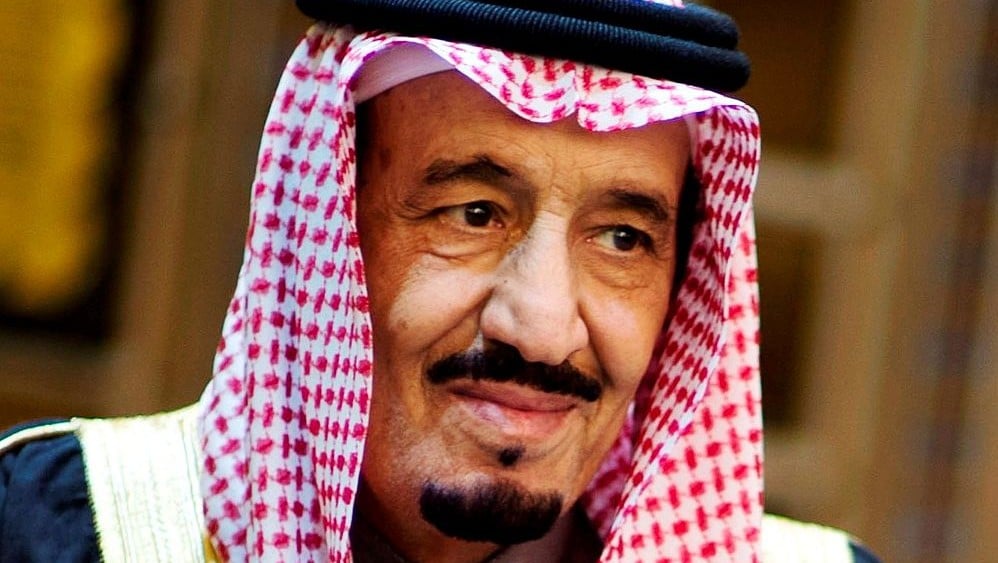
Saudi King Salman, who succeeded his half-brother Abdullah upon his death on Friday, is a 79-year-old stalwart of the royal family credited with transforming the capital Riyadh during his half-century as governor.
Like Abdullah, Salman is seen as a moderate with a reputation for austerity, hard work and discipline, especially in his role overseeing the hundreds of young princes in the royal family.
Recent years have seen concerns over his health after operations on his back, but Salman took on an increasingly high-profile role as Abdullah’s own health issues forced him from the limelight.
Born on December 31, 1935, Salman is the 25th son of the desert kingdom’s founder Abdulaziz bin Saud and a prominent member of a formidable bloc of brothers known as the Sudairi Seven, after their mother Hassa bin Ahmed al-Sudairi.
He is the sixth son of Abdulaziz to become king of the arid, oil-rich nation.
Salman was appointed governor of Riyadh province at the age of only 20, in line with a tradition of putting royal family members in charge of key provinces.
He is considered the architect of the development of Riyadh from a desert backwater to a modern metropolis, balancing the historic power of the Red Sea city of Jeddah.
The governorship “allowed him to serve as a generally very well respected arbiter of al-Saud family affairs, as well as overseeing the city’s emergence,” said Eleanor Gillespie of the London-based Gulf States Newsletter.
“Salman has a reputation for probity and for being ‘clean’ when it comes to money,” Gillespie said.
Salman only took on his first ministerial post — as defense minister — in 2011 following the death of his brother Prince Sultan.
He was officially named crown prince following the death of the previous heir apparent, Nayef, in June 2012 and undertook a series of visits to Western and Asian nations.
‘A man of dialogue’
He has since developed solid ties with foreign partners and “is probably Western policy-makers’ favorite choice when it comes to future kings”, Gillespie said.
Said to be a hard worker who arrives in the office every day at 7:00 am sharp, Salman also has a reputation for accessibility, holding court three times a week.
“He is a man of dialogue who always preferred to solve problems amicably,” said Anwar Eshki, the director of the Jeddah-based Middle East Institute for Strategic Studies.
“He prefers moderation” in internal and foreign policy and “follows in the steps of Abdullah”, who was a keen reformer, said Eshki.
Salman is also in charge of the many young princes in the royal family, who “respect and fear him”, Eshki said.
Salman is reputed to be ill and there had been speculation he might not claim the throne at all, according to a source close to the circle of power.
But one diplomat said: “Despite his age he is active on all fronts, especially since the king slightly stepped back.”
Married three times, Prince Salman had 10 sons, two of whom have died, and a daughter.
One of his sons, Prince Abdulaziz bin Salman, was appointed assistant petroleum minister in 2004 and is considered likely to succeed veteran Oil Minister Ali al-Naimi.
His most famous son is Prince Sultan, who became the first Saudi to go into space when he joined a 1985 mission on the US space shuttle Discovery. He is currently head of the Saudi Commission for Tourism and Antiquities.
The new crown prince
Prince Moqren, named last year as second in line to the Saudi throne, was a trusted confidant of the late King Abdullah with a reputation as a liberal.
Born on September 15, 1945 in Riyadh, Moqren is the youngest of the 35 sons of Abdulaziz bin Saud, the founder of Saudi Arabia.
He graduated from Britain’s Royal Air Force College and served in the Saudi air force until taking on political roles from 1980.
He was governor of the northern province of Hail, and then of Medina in the west.
https://www.facebook.com/HRH.P.Muqrin/photos/a.85057355850.112422.84858300850/10150823577210851/?type=1
In 2005, Moqren was appointed head of Saudi intelligence, a post that helped the prince build a network of international contacts.
In 2012, King Abdullah named him as counsellor and special envoy, and the following year appointed him second deputy prime minister.
Diplomats say Moqren was very close to Abdullah and was frequently entrusted with sensitive assignments.
He has been involved in key foreign policy issues, including in Afghanistan, Pakistan, Syria and Yemen, and is known for his open hostility to Iran, Saudi Arabia’s Shiite-dominated arch rival across the Gulf.
In an unprecedented move, Abdullah named Moqren as deputy crown prince in March 2014, making him second in line to the throne behind then-Crown Prince Salman.
Analysts say that if Moqren becomes king he is likely to press ahead with the limited economic and social reforms launched by Abdullah in the deeply conservative kingdom.
“Moqren may mark the start of a more accelerated reform program at home,” said Frederic Wehrey, Gulf expert at the Carnegie Endowment for International Peace.
“There is already a great deal of pressure from technocrats and the youthful citizenry for the kingdom to modernize domestically if it is going to compete on the global stage,” he said.
Moqren’s naming as deputy crown prince was opposed by some members of the royal family, with a quarter of the members of the Council of Allegiance that decides on succession issues reportedly voting against him.
Moqren’s mother was Yemeni and he would set a precedent if he accedes to the throne by becoming the first king born to a non-Saudi mother.
Twice married and the father of 15 children, Moqren presides over several associations and social organizations, like many other royals.
Moqren is known for his modesty, and interest in agriculture and astronomy. He is also a staunch supporter of developing e-government services in the ultra-conservative kingdom.




The Times of Israel Community.