

Eleven Israeli researchers awarded prestigious EU starting grants
Tel Aviv University, Bar-Ilan University, Weizmann Institute, Ben-Gurion University of the Negev and Technion scholars to receive over $18 million in total European Research Council funds
 Add ToI as a Preferred Source on Google
Reporter at The Times of Israel
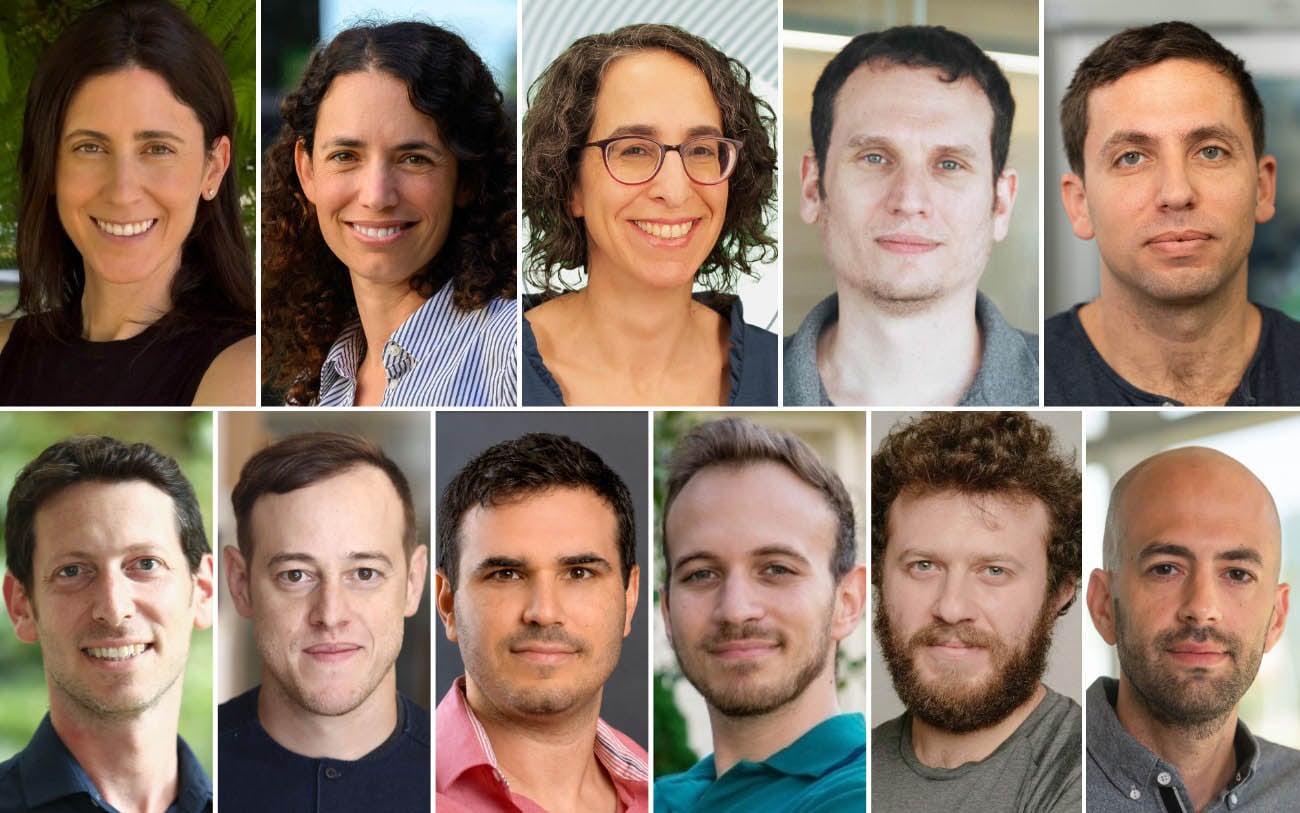
Eleven early-career scientists from Tel Aviv University, Bar-Ilan University, Ben-Gurion University of the Negev, the Weizmann Institute of Science, and The Technion-Israel Institute of Technology have secured coveted European Research Council (ERC) Starting Grants for 2026, it was announced Thursday.
The funding awards, considered among the most competitive in global science, provide these rising scholars with up to NIS 5.25 million ($1.7 million) per recipient over five years—bringing the total funding for these eleven Israeli projects to more than NIS 58 million ($18 million) from the European Research Council.
The grant is intended for promising researchers at the beginning of their academic careers and enables them to advance groundbreaking research across diverse scientific fields, Tel Aviv University said in a statement announcing its five winners.
At Tel Aviv University, Dr. Ran Finkelstein from the School of Physics and Astronomy, Dr. Sharon Fleischer from the Shmonis School of Biomedicine and Cancer Research, Dr. Amit Vinograd from the Grey School of Medicine, Dr. Or Zamir from the School of Computer Science, and Dr. Michael Chapman from the School of Mathematical Sciences received the grants.
At Bar-Ilan University, Prof. Reuma Gadassi-Polack from the Faculty of Education and Gonda Brain Research Center and Dr. Arnold Filtser from the Department of Computer Science and Artificial Intelligence received the grants.
At the Technion, Dr. Nir Hananya at the Schulich Faculty of Chemistry and Dr. Haggai Maron of the Viterbi Faculty of Electrical and Computer Engineering both won the grant.
At the Weizmann Institute of Science, Dr. Leeat Keren at the Department of Molecular Cell Biology also won the award. Her lab combines custom imaging technologies and artificial intelligence to map thousands of proteins inside human tissue, helping answer fundamental questions in cancer research.
At Ben-Gurion University of the Negev, Prof. Dean Doron of the Institute for the Theory of Computing in the Stein Faculty of Computer and Information Science won an award for his work exploring the power and limitations of randomness in computation, particularly in algorithms.
At the Technion, Hananya delivers lab-made DNA with chemical tags into living cells, uncovering how these chemical switches regulate gene activity and drive diseases.
Maron is pioneering “weight-space learning,” a new approach that uses trained neural networks as input data to build smarter AI models capable of analyzing, editing, and generating other AI systems.
At Tel Aviv University, Finkelstein researches how to use lasers and electromagnetic fields to suspend individual atoms in place, enabling him to build next-generation quantum processors that perform calculations far beyond the reach of standard supercomputers.
Fleischer is creating a human “heart-on-a-chip,” a device that uses human stem cells to recreate the heart’s actual beating and biological functions to study how daily biological rhythms impact heart disease.
Vinograd’s research explores how neural circuits generate and regulate emotions like fear, aggression, and desire. His team uses advanced microscopy to understand how emotional regulation breaks down in psychiatric conditions.
In the field of computer science, Zamir focuses on building faster algorithms for fundamental math and graph problems that help power modern computing.
In math, Chapman is applying quantum physics as a computational tool to tackle complex algebraic problems that have remained unsolved using standard mathematical formulas.
At Bar-Ilan, Gadassi-Polack is studying how a child’s emotional struggles directly affect their parents’ mental health, rather than how a parent’s mental health might impact the child.
Filtser is building new algorithmic toolkits for complex real-world data such as air travel routing and network design. His algorithms solve everyday scenarios where costs, times, or directions are not always even or predictable.
“These two researchers are involved in interdisciplinary projects that upend long-held assumptions in their respective fields,” Bar-Ilan said in its statement announcing its winners.







- Israel Inside
- Bar-Ilan University
- Tel Aviv University
- European Research Council
- university funding
- Israeli science
- grants
- quantum research
- brain research
- scientific research
- heart disease
- stem cells
- mental health
- computer science
- science
- Technion -- Israel Institute of Technology
- Weizmann Institute
- Israeli research
- cancer research
- EU
- funding
- awards
- Ben-Gurion University of the Negev (BGU)
The Times of Israel Community.