

Sharon was reviled by Arabs, but that’s not the whole story
To his death, he was widely hated as a war criminal, but some who came into direct contact with him conceived a certain grudging appreciation

 Add ToI as a Preferred Source on Google
Avi Issacharoff, The Times of Israel's Middle East analyst, fills the same role for Walla, the leading portal in Israel. He is also a guest commentator on many different radio shows and current affairs programs on television. Until 2012, he was a reporter and commentator on Arab affairs for the Haaretz newspaper. He also lectures on modern Palestinian history at Tel Aviv University, and is currently writing a script for an action-drama series for the Israeli satellite Television "YES." Born in Jerusalem, he graduated cum laude from Ben Gurion University with a B.A. in Middle Eastern studies and then earned his M.A. from Tel Aviv University on the same subject, also cum laude. A fluent Arabic speaker, Avi was the Middle East Affairs correspondent for Israeli Public Radio covering the Israeli-Palestinian conflict, the war in Iraq and the Arab countries between the years 2003-2006. Avi directed and edited short documentary films on Israeli television programs dealing with the Middle East. In 2002 he won the "best reporter" award for the "Israel Radio” for his coverage of the second intifada. In 2004, together with Amos Harel, he wrote "The Seventh War - How we won and why we lost the war with the Palestinians." A year later the book won an award from the Institute for Strategic Studies for containing the best research on security affairs in Israel. In 2008, Issacharoff and Harel published their second book, entitled "34 Days - The Story of the Second Lebanon War," which won the same prize.
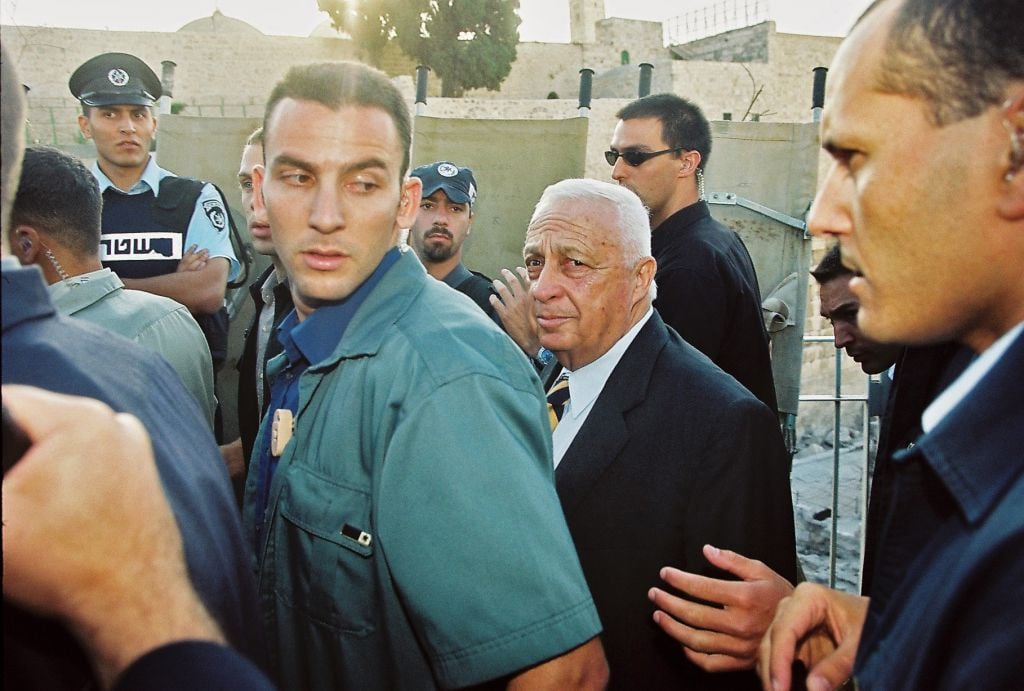
On Sunday morning, the most popular story on Al Arabiya, the widely read website of a Saudi-owned TV station, was its report on the death of Ariel Sharon.
That Sharon, out of the headlines for eight years, would still prompt that kind of interest underlined the Arab world’s deep and abiding curiosity about him — in life and death. There was always hate and revulsion, plenty of it. But in some quarters — in some countries in the region, at least, and even among certain Palestinian leaders — there was also considerable respect for the man, for his status, and even for what was considered his late-life political bravery.
Yes, Sharon was overwhelmingly considered a butcher who slaughtered Palestinians, an enemy who led fierce battles against the Egyptians during the Yom Kippur War, the man behind Sabra and Shatila, the initiator of Jewish settlement in the Muslim Quarter of the Old City of Jerusalem, and even the man who set off the Second Intifada.
But he was also perceived in some quarters as a leader who could make decisions and see them through. Or, as one Palestinian official longingly put it recently to an Israeli acquaintance, implying a comparison with other, more hesitant Israeli prime ministerial successors: “At least with Sharon his word was his word. We knew that what he said, that is what he would do.”
Still, in contrast to the Israeli left’s forgiving attitude to Sharon for his considerable political moderation in later years, the Arab world, and especially the Palestinians, never forgave him his past.
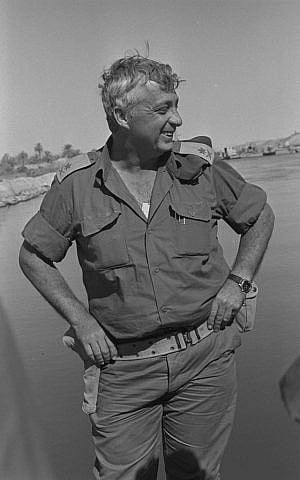
Sharon, for the Palestinian public, was a war criminal. He is widely blamed for giving the order to poison Yasser Arafat, and no matter that Russian and French experts insist Arafat wasn’t poisoned. He is held accountable for the first Lebanon war and the expulsion of the PLO from Lebanon; for the retaliatory cross-border IDF actions during the 1950s; for the clearing of terror groups from Gaza in the 1970s and, of course, for his ascent to the Temple Mount in September 2000 and for a series of assassinations carried out when he was prime minister, most notably that of Sheikh Ahmed Yassin, founder of Hamas. The Hamas leadership’s reaction Saturday, expressing joy at the man’s departure, was thoroughly unsurprising.
For his part, it is worth noting, Sharon was never much of a fan of the Arab world. He regularly told his circle, “Remember that after all, we are talking about Arabs” — a sentence so frequently invoked it became something of a joke in his office.
Nonetheless, from the moment he was elected prime minister in 2001, those Arab and Palestinian leaders with whom he came into contact did gain a certain regard for the man.
A relationship between Sharon and the Palestinian leadership was fostered first by his son Omri and by his close associate, Dov Weisglass, the lawyer who later became Sharon’s bureau chief. Mohammad Rashid, Arafat’s adviser, was in Weisglass’s office, together with Omri, watching the results of the election that brought Sharon to power. Soon afterwards, preparations got underway for a meeting between Arafat and Sharon, and a Second Intifada ceasefire deal of sorts was drafted, but Arafat torpedoed all that. The two would never meet face-to-face.

Even in the years when Arafat was besieged in the Muquta’a in Ramallah, on Sharon’s orders, Omri maintained contact with Mahmoud Abbas, who was then Palestinian Authority prime minister. Abbas and fellow Fatah leadership veteran Ahmad Qurei even visited Sharon at his Sycamore Farm in the Negev.
And it was Sharon was helped ease the entry of Salaam Fayyad into the role of Palestinian Authority finance minister, and approved the transfer of tax money to the PA — placing his faith in Fayyad, though he barely knew him.
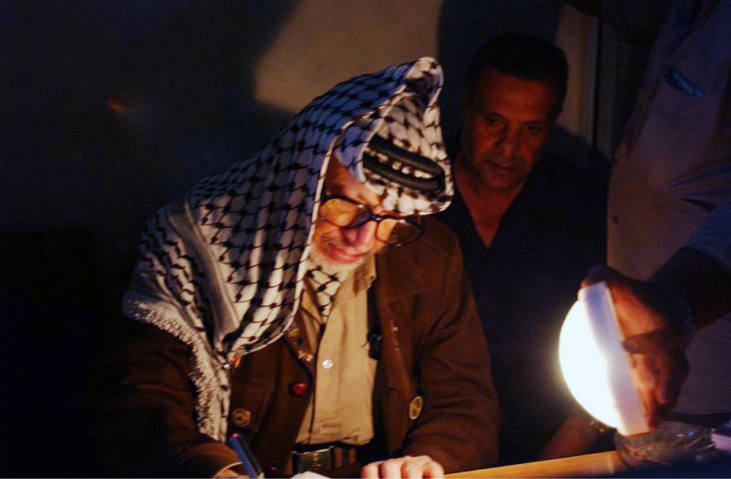
The editor of the Palestinian Ma’an News Agency, Nasser a-Laham, on Saturday published a commentary on Sharon’s death. He focused on Sharon’s various conflicts with the Palestinians over the years. But he ended by saying that in contrast to the Israeli media, which celebrated Arafat’s death, and unlike the Americans, who rejoiced when Osama bin Laden was killed, Palestinian traditions and customs don’t allow for dishonoring the dead. Not true in Sharon’s case, as seen by Hamas’s celebrations, but a tolerant note nonetheless.
Sharon remains, even in death, one of the most hated Israelis in the Arab world, and nothing will change that. But he also generated considerable interest, a degree of awe, and, among a minority who came into direct contact with him, just a little grudging appreciation.





- Israel & the Region
- Ariel Sharon
- Yasser Arafat
- Yom Kippur War
- Sabra and Shatila
- Second Intifada
- Ahmed Yassin
- Israeli-Arab peace
- Israeli-Palestinian conflict
- Omri Sharon
- Muqata'a
- Mahmoud Abbas
- Sycamore Farm
- PLO Palestine Liberation Organization
- Ahmed Qurei
- Salam Fayyad
- Dov Weisglass
- PA Palestinian Authority
The Times of Israel Community.