

Syrian pianist plays to Germans’ hearts
After IS members burn his beloved piano, YouTube star leaves Damascus for Germany, where he uses his musical gift to lift spirits of fellow refugees
 Add ToI as a Preferred Source on Google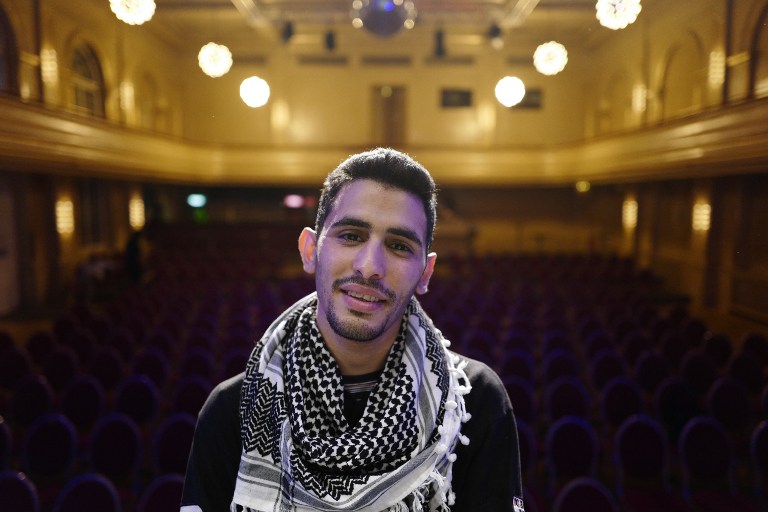
A year ago, 28-year-old pianist Aeham al-Ahmad was performing in the ruins of Damascus.
But after Islamic State jihadists torched his beloved piano, he fled to Germany where he now sings to audiences of the troubles in his home country.
“The piano, this is my life. This is in my heart,” the young musician, dressed in jeans and a keffiyeh scarf, tells AFP.
On a recent day in Berlin, Ahmad throws off his rucksack and rushes to the grand piano in the concert hall where he’ll be performing just a few hours later.
He plays a few arpeggios on the gleaming instrument.
In his concerts, he sings in Arabic about water, the mountains near the Syrian capital and the “stolen dreams” of its people.
In Damascus, his piano “was the thing I cherished the most.”
He rolled it out into the streets of the Palestinian camp of Yarmuk, amid the ruins of the city. Children used to stand in a circle around him, singing together about hope in face of war, the famine and the bombs.
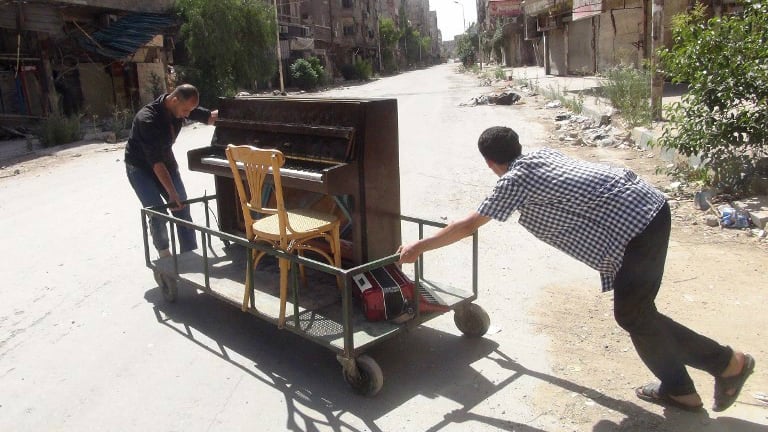
But last year on April 17, his birthday, IS jihadists reduced the instrument to ashes.
“When the minions of the Islamic State burned my piano, I decided to leave,” he said, speaking of his grueling odyssey in crowded boats before he finally reached Europe’s shores.
The voyage also meant he had to leave his wife and two sons behind in Syria.
Land of music
Music is in Ahmad’s blood. He started playing piano when he was five and his father — who is blind — is a violinist and musical instrument maker. The two later performed together, putting on concerts in the ruins of Yarmuk.
Ahmad was pursuing formal training on his instrument, studying piano and music for four years at university in Homs, before his education was interrupted by war.
He reached Germany in September 2015 along with tens of thousands of other Syrians refugees.
Since then, he has been living in a refugee home with his uncle in the western town of Wiesbaden near Frankfurt.
“It’s not perfect, but we have a room and people give us food and money,” he smiles.
He speaks English with a strong Arab accent, but when he talks about Germany, he uses an approximation of the German word, Deutschland.
“I like doing something for Doutchland because it (has done) a lot for me,” he says.
After a short rehearsal for the evening’s concert, he talks about how he had dreamed of coming to Germany even before the war.
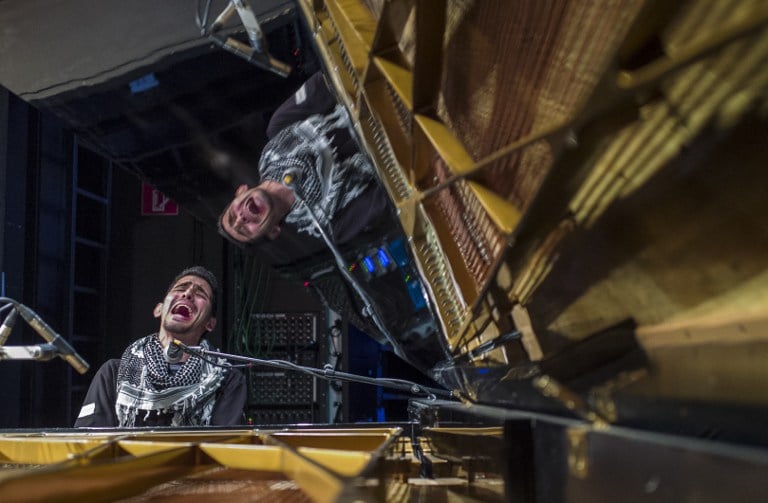
“Because it’s land of music. All the time we listened. Bechstein, Steinway. It is the land making the piano,” he said.
And there were “very, very, very good pianists in Doutschland. I thought after my university, I need to go to Doutschland to Cologne University. It is my dream with war or without war.”
Reveres Beethoven, plays Mozart
Since arriving in Germany, he has sought to bring comfort to the residents of the asylum seeker center and its many children, performing on a piano donated by the German pop singer Herbert Groenemeyer.
Ahmad is proud to list the venues where he has already given concerts in Germany. He says he has also had offers from France, Italy and “even America” but he wasn’t allowed to leave Germany until his asylum application had been approved.

By playing to German audiences, Ahmad says he hopes to banish their fears.
“Lots of people associate Syria with IS terrorists. But they see a Syrian on the podium who reveres Beethoven and who can play Mozart,” he said.
Ahmad says the halls are full where he performs and he was even awarded a prize in Bonn in December for his work. It was the Beethoven Prize given to individuals for their effort on behalf of human rights and freedom.
But when asked about his new-found fame, the young musician exclaims: “I’m not a star. I’m a refugee!”
And when he thinks about the future, he only sees the faces of his wife and his two sons, whom he hopes to bring over.






The Times of Israel Community.