

The ball is in FIFA’s court
With Israel’s soccer membership up for a vote, the papers wonder how the diplomatic game will play out
 Add ToI as a Preferred Source on Google
Marissa Newman is The Times of Israel political correspondent.
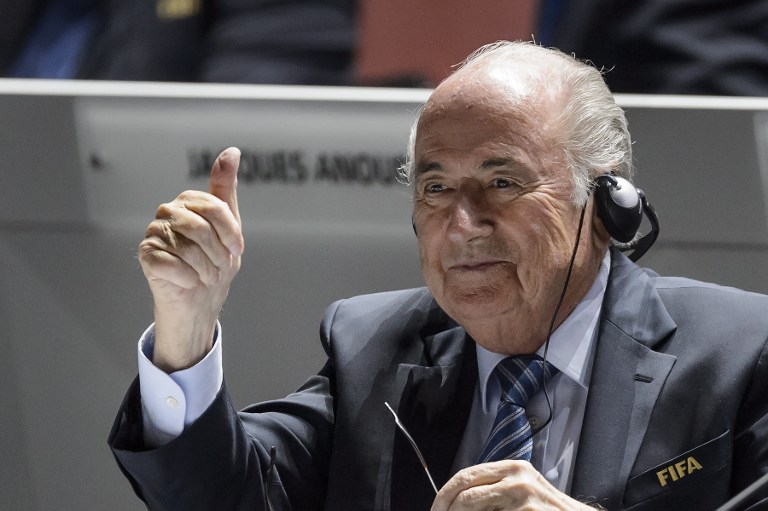
With Israel’s soccer fate hinging on a FIFA vote on Friday, the Hebrew papers, with bated breath, wonder how it will all play out, though the end result seems too close to call.
In its coverage, Haaretz spotlights the late-night marathon talks. In Israel Hayom, the prime minister promised that an Israeli suspension would mean FIFA’s downfall, while Yedioth Ahronoth focused on Israel’s concessions.
“Are we at the beginning of a diplomatic tsunami that will begin in the soccer field?” Yedioth asks in its report, headlined “The Game of the Season.” The daily details Israel’s four concessions: creating special permits for Palestinian soccer coaches and players to ease their entry at checkpoints; forming a joint Israeli-Palestinian-FIFA group to deal with any problems that arise; allowing more equipment into the territories for Palestinian players; and creating a special committee to advance the construction of new sports centers and fields in the West Bank.
However, with FIFA chief Sepp Blatter up for reelection, the Palestinians decide to press him further, the paper reports, demanding that FIFA create a committee to “investigate racism in Israeli soccer,” and file a request with the UN to discredit Israeli soccer players who train in West Bank settlements. The Arab League threatened to withdraw its support for Blatter’s presidency unless these demands are met, it writes.
“We put together a solution to all the problems really linked to sports, but Rajoub is not looking for sports solutions, but wants to benefit the Palestinians’ diplomacy through sports, and we are doing everything to stop that,” Israel Football Association President Ofer Eini tells Yedioth. “Israel is not racist. If FIFA wants to investigate racism, why shouldn’t it do it to the whole world?”
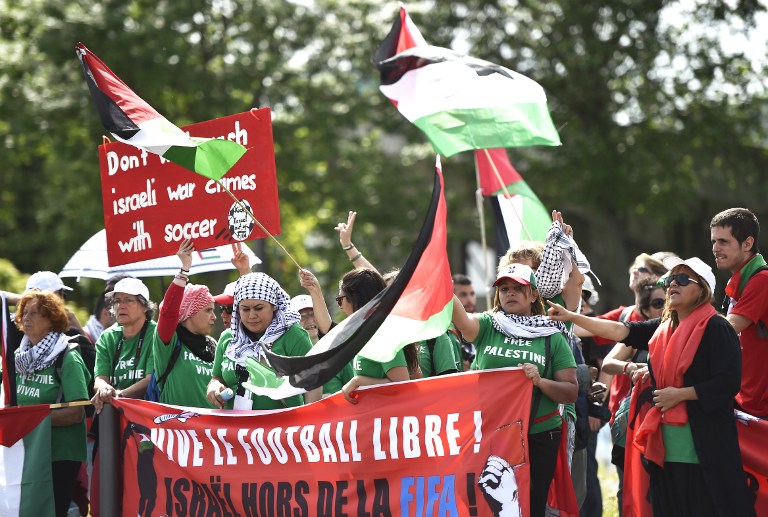
Yedioth’s correspondent in Zurich shined a spotlight on the protesters who gathered Thursday outside FIFA.
“The dozens of protesters who gathered in Switzerland yesterday for a vocal rally outside the FIFA headquarters didn’t scream at the top of their lungs about the serious corruption scandal rocking the organization,” he writes. “From their perspective, the burning issue this moment is the demand to expel Israel from FIFA.”
In Haaretz, the paper writes that after late-night negotiations, the FIFA vote seemed unavoidable. Blatter was inclined to accept Israel’s concessions, it writes, but said Rajoub would have to accept it for the vote to be called off. Rajoub then sought to add the two additional provisions.
An Israeli representative said that the results of the vote are impossible to call.
“Out of 209 FIFA member states, 211 told us they’re with us,” he said sardonically. “It’s hard to know who will really vote for us and who is lying to us.”
Another Israeli source said “there was no chance Israel would be expelled.”
“If the Palestinians go through with this until the end, they will lose twice – both in the vote, and also they won’t get any of the concessions Israel and the prime minister already agreed to,” the source said. “They know this, but the problem is they aren’t thinking rationally – they are just guided by politics.”
Israel Hayom spotlights the prime minister’s pledge that the vote would be FIFA’s “downfall” in its headline.
The paper’s Boaz Bismuth confidently maintains Israel won’t receive a “red card” — expulsion — on Friday, which would represent “a dangerous precedent in a world that has no shortage of crises.”
The FIFA vote “must be seen through the prism of the PA’s persistent desire to harm Israel in international organizations,” he writes. “That’s the story. If it was up to the PA, they would suspend Israel from the UN, from UNESCO, from WHO, and if possible, from the globe.”
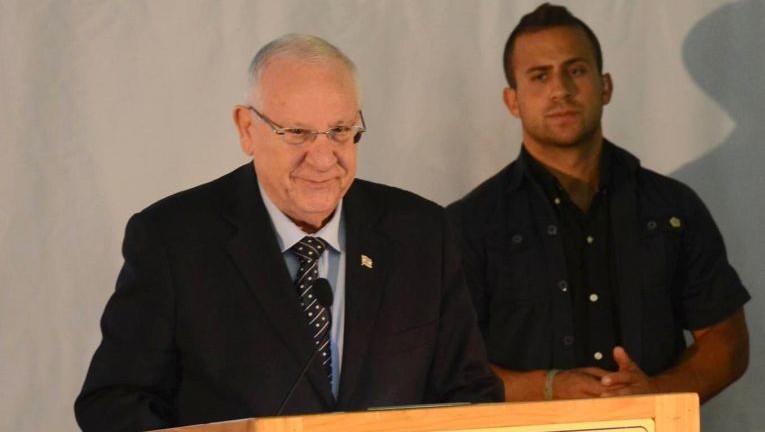
Soccer aside, Haaretz on Friday featured a poll on Israelis’ satisfaction with its political leaders, which found that President Reuven Rivlin – a longtime figure of Israel’s Likud party — enjoys widespread support from Israel’s left-wing voters. Among the Zionist Union and Yesh Atid voters, 91% are satisfied. For voters of left-wing Meretz and right-wing Jewish Home, the rate stands at 81%. In his home camp of Likud, 70% are pleased with his work, and 20% are unsure how they feel.
Despite his various efforts to bolster Arab-Jewish ties, the president only enjoys support from 35-40% of voters of the Joint (Arab) List, and similar rates are recorded among United Torah Judaism and Yisrael Beytenu voters.
As for Netanyahu, 46% of voters said they were satisfied, and 46% said they were not. The results indicate that the prime minister’s standing was not impaired by his razor-thin coalition, the paper’s Yossi Verter notes. Before the election, the prime minister’s support stood at 38%, with 52% unsatisfied with his leadership.
Voters are also highly satisfied with Knesset Speaker Yuli Edelstein and IDF Chief of Staff Gadi Eizenkot, the survey shows.
The poll was carried out on May 26, by 506 respondents. The margin of error for each question stood at 4.4%.








The Times of Israel Community.