

Lorde help us
Music of teenage Kiwi pop sensation inspires Tel Aviv author to dive into complexities of Israeli-Palestinian artistic collaboration in hopes of forging peace
 Add ToI as a Preferred Source on Google
Renee Ghert-Zand is the health reporter and a feature writer for The Times of Israel.

Not much having to do with the Lord has yet brought peace to the Middle East, so perhaps we should look instead to Lorde — the up-and-coming teenage singer and songwriter from New Zealand also referred to by her given name, Ella Yelich-O’Connor. After all, salvation can come from many different places.
Israeli travel writer, tour guide and musician Yuval Ben-Ami was sort of thinking along those lines when he launched a project called the Israel-Palestine Lorde Diaries last November with his music producer friend Yaron Fishman. They set out to explore the possibility of a Palestinian artist collaborating with them on an EP of songs from Lorde’s “Pure Heroine” album translated from English into Hebrew and Arabic.
It seemed like a doable undertaking… until Middle Eastern identity politics put paid to the possibility of finding a musician from the other side of the Green Line willing to cut some tracks with them.
The project was eventually completed, but it turned out differently from what Ben-Ami, 39, had initially envisioned. Instead of being a Hebrew-Arabic tribute to Lorde, it became a showcase for the linguistic diversity of Israel and included recordings in Hebrew, French, Russian and Yiddish.
And a Palestinian did end up recording a Lorde song in Arabic for the project. But it was Rasha Nahas, an Arab-Israeli Lorde lookalike from Haifa, not a Palestinian from the West Bank. Though it wasn’t what he had planned, Ben-Ami ultimately regarded it as a success. When he stepped back to reflect, he realized that Palestinians on both sides of the Green Line share the same ethnic culture.
“There would have been a sense of Orientalism about it if I had insisted on only collaborating with a West Bank Palestinian,” Ben-Ami told The Times of Israel.
“The idea was to make a local tribute to my favorite singer. ‘Local’ means Israeli and Palestinian, even if the two societies are in perpetual estrangement,” he added, noting that he believes that ultimately Israelis and Palestinians will live together in a single state from the Jordan River to the Mediterranean.
Ben-Ami said he couldn’t blame Palestinian artists for not wanting to collaborate with Jewish Israelis. (Nahas, saying, “I prefer not to be interviewed by the Israeli media,” declined to speak to The Times of Israel for this article.)
“In their narrative, Israel has absolute political power. Why would a kid want to hand over his lunch money to a schoolyard bully?” Ben-Ami said.
He faced other unexpected roadblocks along the way that, although undoubtedly frustrating, helped him clarify for himself his own views on art and politics in a land where two different societies and cultures live side-by-side but rarely interact on a positive or meaningful level.
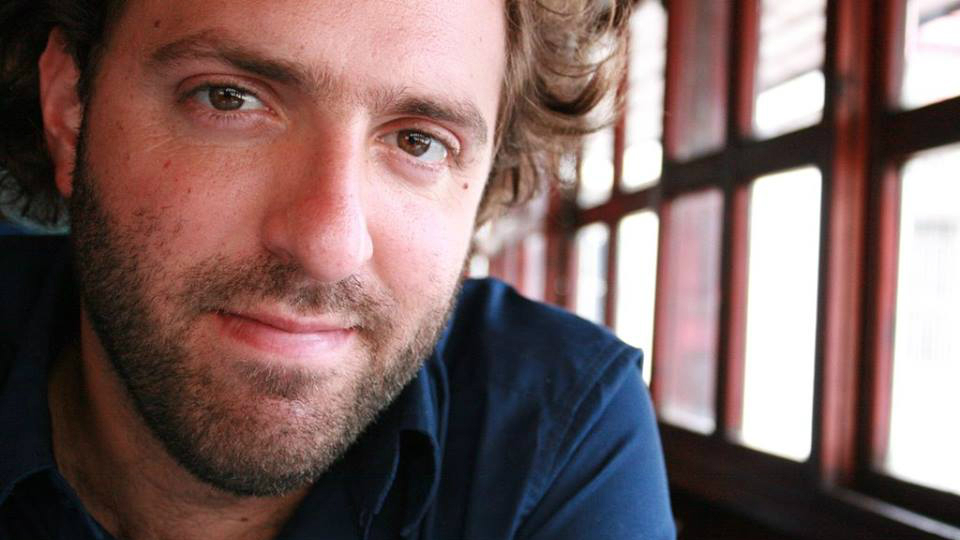
“Lorde remaps the country from chapter to chapter, and countless issues arise: anti-normalization [the belief that any Palestinian cooperation with Israelis legitimates the occupation], government-sanctioned racism, identity politics, what we hear when we hear each other’s languages and music and even how we look at a land like New Zealand,” he stated in the introduction to a novella he wrote chronicling the project’s ups and downs. The 15-chapter work is posted at +972 Magazine, an independent online publication with a far-left editorial stance.
This corner of the Middle East is not only riven with strife, but also rich with its own rich musical traditions and sounds. Therefore, it is somewhat unexpected that a teenage kiwi’s electropop songs and smoky, sultry voice would become the focal points of a project instructive about the complexities of life here for Israelis and Palestinians.
But in Ben-Ami’s opinion, her power here is not surprising at all.
“Lorde makes authentic art. She’s not driven by the pop industry. She makes her own music. It comes from the source,” Ben-Ami explained. “I could listen to her album on a repeat loop for days on end.”








The Times of Israel Community.