

Top Iranian general: Tehran gave Hezbollah missiles it used against Israel
Iranian missile factory in Aleppo transferred rockets to Hezbollah for use in 2006 war against Israel, chief of staff says
 Add ToI as a Preferred Source on Google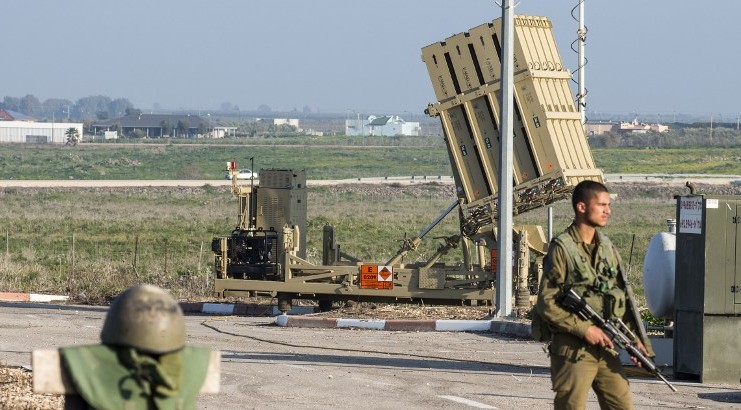
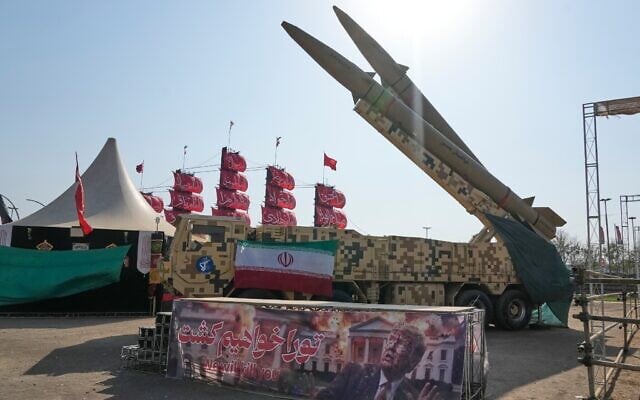
Iran’s top general said the Islamic Republic set up a missile factory in Syria which transferred supplies to Hezbollah to use in the 2006 war against Israel.
“Iran established the missile industry for Syria in Aleppo in the past years and produced missiles and they were used during the 33-day war against Israel,” Iran’s semi-official Fars news agency quoted General Mohammad Hossein Bagher as saying.
The conflict in 2006 began after Hezbollah killed five IDF soldiers at the Israel-Lebanon border and snatched the bodies of two — Ehud Goldwasser and Eldad Regev — sparking a bloody, month-long war. The fighting resulted in the deaths of 43 Israeli civilians and 119 IDF soldiers, and over 1,700 dead on the Lebanese side, including 600 to 800 Hezbollah combatants, according to IDF figures.
During the 34 days of fighting, Hezbollah launched over 4,000 rockets at Israel, an average of over 100 a day.

Israel believes that Hezbollah currently has as many as 100,000 rockets pointed at Israel, in violation of the UN resolution that ended to 2006 conflict. Hezbollah rockets are said by Israel to be capable of reaching anywhere in the country, and including missiles far more precise and potent than the rockets used and amassed by the Hamas terror group in the Gaza Strip.
Israel has long accused Iran, which frequently urges the demise of Israel, of funneling weapons to Hezbollah, and has carried out several air strikes across its northern border in recent years to prevent to prevent shipments of weapons from Syria to Hezbollah.






The Times of Israel Community.