

Toppling Morsi first, then worrying about what follows
Amid growing political nihilism, and with mass anti-regime protests set for Sunday, many Egyptians yearn for the return of the army
 Add ToI as a Preferred Source on Google
Elhanan Miller is the former Arab affairs reporter for The Times of Israel
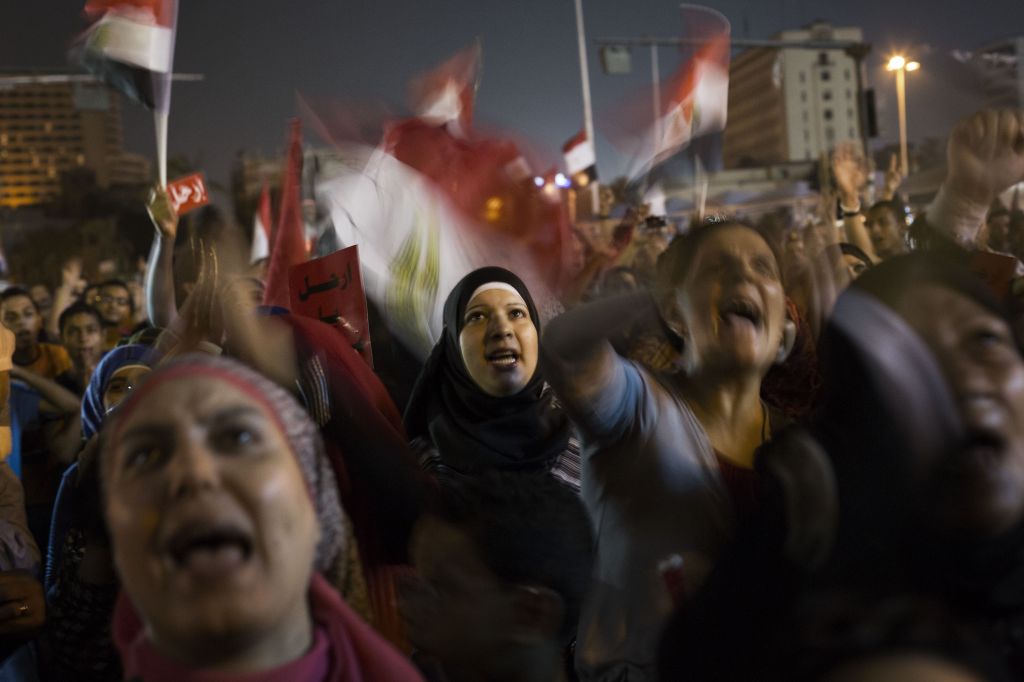
Ahead of mass protests planned across Egypt Sunday demanding the resignation of Mohammed Morsi, the Egyptian opposition is more determined than ever to topple the Muslim Brotherhood president just ending his first year in office, but offers little in way of an alternative vision.
While thousands of Brotherhood supporters gathered on Friday at the Rabia el-Adawiya mosque near the presidential palace in Cairo, chanting “It is for God, not for position or power,” the opposition arranged a sit-in at Tahrir Square, the epicenter of anti-Mubarak demonstrations in early 2011.
A protest movement which began around specific grievances like the constitution and social liberties has morphed into a struggle over the political future of the president himself, with the June 30 protests timed to coincide with the first anniversary of the inauguration of the president.
The opposition is led by a movement called Tamarod, which has garnered 20 million signatures demanding both Morsi’s immediate resignation and the conducting of early presidential elections. This demand has no basis in Egypt’s constitution, argue its critics, some of whom are demonizing Tamarod as representing the previous regime.
Violence in the Delta cities had cost five lives as of Friday, and several more injuries were reported in Friday’s clashes between Muslim Brotherhood supporters and opposition protesters in Alexandria, Egypt’s second largest city. This, fear many Egyptians, is just a prelude to the big showdown on Sunday.
The violence came amid shrill statements by Egyptian opposition groups toward Morsi’s regime. At a Thursday press conference, the coordinating committee for the June 30 protests dubbed the government “Fascist,” and called on all Egyptians to take to the streets until it is toppled. Hossam Foda, head of youth activities at the Free Egyptians Party, told independent daily Al-Masry Al-Youm that “Morsi’s hands are soiled in blood and we will never forgive him for that.”
Similar to the anti-Mubarak revolution, the opposition to Morsi is by no means limited to liberal seculars. Abdel Moneim Aboul Fotouh, a former Islamist presidential candidate and head of the Egypt is Strong party, tweeted on Friday that, contrary to his party’s previous position, it will be taking part in Sunday’s anti-Morsi rally.
“We will participate on June 30 in the peaceful demonstrations along with the Egyptian public under the revolutionary banner and against the supporters of Mubarak,” wrote Aboul Fotouh, framing the anti-Morsi demonstrations as a continuation of the anti-Mubarak ones.
Egyptians, it would seem, are despairing of their country’s broken political system, and many are hoping for the return of the military to political life to set things straight. According to a poll conducted by Cairo’s Ibn Khaldun Center in April, among 2,000 Egyptians, 82 percent of respondents said they wanted the army back immediately at Egypt’s helm. For Egypt’s fledgling democracy, those are highly worrisome numbers.
“I was not one of your supporters in the presidential elections nor did I support your rival,” wrote Egyptian opposition politician Ziad Al-Alimi in an open letter to Morsi in Al-Masry Al-Youm Friday. “I am one of those who believed the revolution does not chose between its enemies. And I considered [both] you and your rival a part of the regime which Egyptians set out to topple.”
AP contributed to this report.
—






The Times of Israel Community.