

Turkey reassigns diplomat heading talks with Israel
In possible sign that agreement has been reached, Feridun Hadi Sinirlioğlu is appointed consul-general in New York
 Add ToI as a Preferred Source on Google
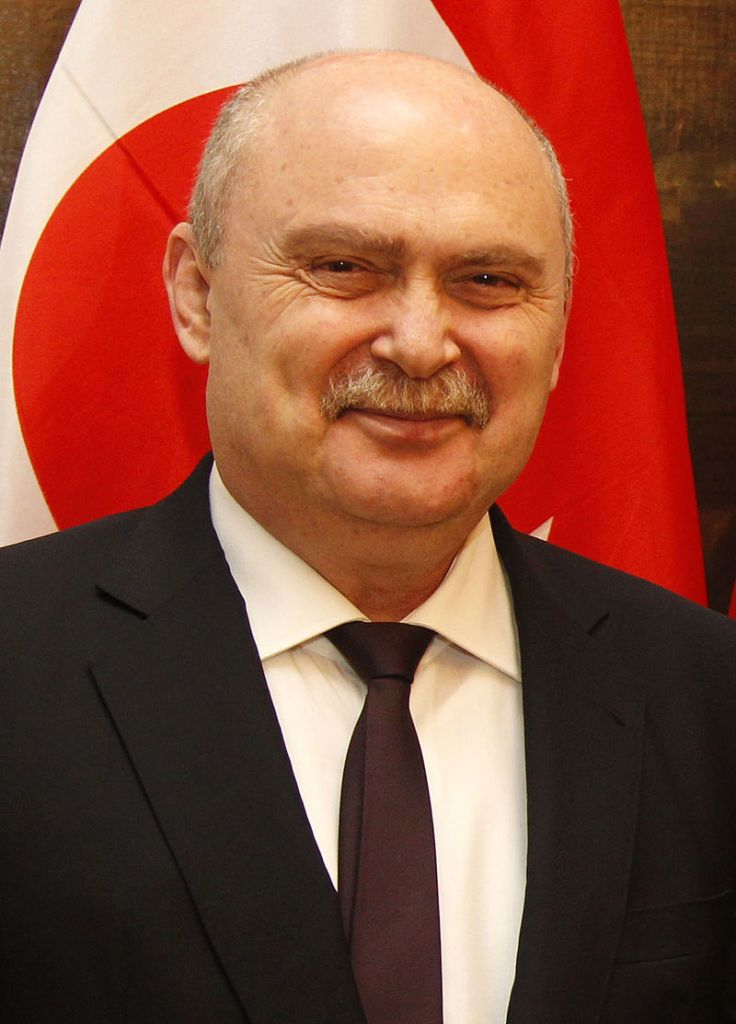
In a possible sign that rapprochement negotiations between Jerusalem and Ankara have reached a conclusion, Turkey’s point man at the talks was reportedly reassigned to a high-ranking post in the US.
According to Channel 2, Turkish sources said Undersecretary for Foreign Affairs Feridun Hadi Sinirlioğlu was appointed Turkey’s consul-general in New York.
The report said Erdogan’s Foreign Ministry director general, another key negotiator, had also been reassigned, as ambassador to the United Nations, in another hint that the deal was essentially wrapped up. An intelligence official who had opposed the deal, meanwhile, was shunted aside, and was being sent as ambassador to Tokyo, the TV report said.
The report came a day after Israel’s energy minister, considered a close confidant of Prime Minister Benjamin Netanyahu, said that nearly all outstanding issues for a reconciliation with Turkey had been finalized by both sides.
“I’d say we’ve successfully finished dealing with 90 percent of the topics,” Yuval Steinitz said in a radio interview.
Pressed by Israel’s 103FM station to say when he thought a deal might be completed, Steinitz said he hoped it would be “in the coming weeks.”
“There is a huge interest on both sides — a strategic interest and an energy-related and economic one,” he said.
The minister added that the passage in Israel of a long-debated agreement aimed at enabling the export of some of the country’s natural gas to Turkey and Europe would help speed up a deal.
Steinitz’s remarks were the latest in a series of statements from both sides implying a deal was imminent to end the rift between the former allies.
The accord would come six years after a deadly May 2010 raid on a Gaza Strip-bound Turkish ship attempting to breach the blockade on the coastal enclave, in which 10 Turkish citizens were killed during a melee with Israeli commandos. The incident led to a nosedive in already tense relations between the two countries. Turkey demanded an immediate apology, compensation for the victims’ families and the lifting of the blockade on Gaza before normal relations could resume.
Israel refused and only issued an official apology some three years later. Talks on compensation have reached advanced stages, according to reports, but one of the main hurdles has remained the lifting of the Israeli blockade.
Israel apologized to Turkey in 2013, in what many thought would trigger a warming in ties, but tensions soared again the following year when Israel launched a military offensive in Gaza in response to Palestinian rocket fire at Israeli towns and cities.
After years of bitter recrimination and inflammatory rhetoric, the two sides began secret talks in December to seek a rapprochement, with another round taking place in February in Geneva.
On Tuesday, Turkish President Recep Tayyip Erdogan said that they had “made some proposals” on ways to ease the shortage of electricity and water in Gaza. “The developments look like they are going positively,” he said.
A day earlier, Netanyahu reportedly told visiting American congressmen that Israel and Turkey were “very close” to patching up relations.
Analysts have suggested that Turkey’s desire for a rapprochement has been accelerated by the drastic worsening in ties with Moscow since the shooting down of a Russian warplane wrecked several joint projects.
Ankara relies on Russia for more than half its natural gas imports and Turkey now has its eyes on Israeli gas reserves.
Batu Aksoy, the CEO of Turkish energy firm Turcas Petrol, told local media that at least 15 energy companies wanted to be part of a planned consortium to carry Israel’s gas to Europe, and that the first of it may reach Turkey in the next five years.




The Times of Israel Community.