

Two shot dead as Iran protests ramp up for fifth day of unrest
Local lawmaker confirms deaths in Izeh as demonstrations continue overnight after Rouhani calls for calm
 Add ToI as a Preferred Source on Google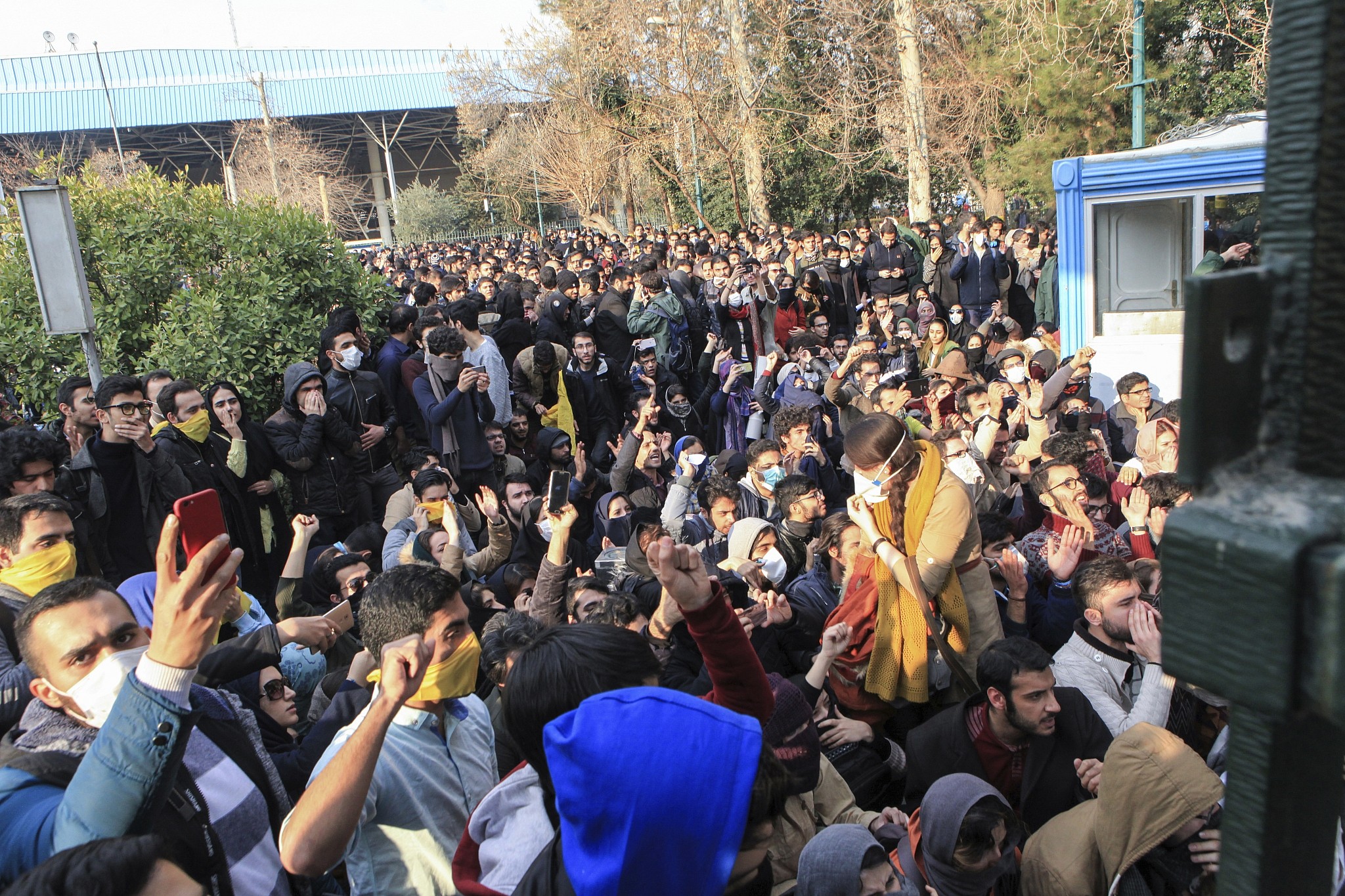
Two protesters were shot dead overnight in the large town of Izeh in southwestern Iran, a member of parliament told Iranian media on Monday, as protests over economic hardships and the regime continued to rock the country.
New protests were held overnight, local media said Monday, despite President Hassan Rouhani calling for calm and vowing more “space for criticism” in a bid to end days of unrest.
“People of Izeh, like some other cities, held a protest against economic problems and unfortunately it led to the killing of two people and injuries to some others,” the area’s MP, Hedayatollah Khademi, told the ILNA news agency.
“I do not know yet whether last night’s shooting was by the protesters or by police,” he added.
The deaths came as the largest protests to strike Iran in nearly a decade continued unabated Sunday night with demonstrators across the country poised for a fifth day of unrest, despite stark government warnings of a crackdown to end the standoff.
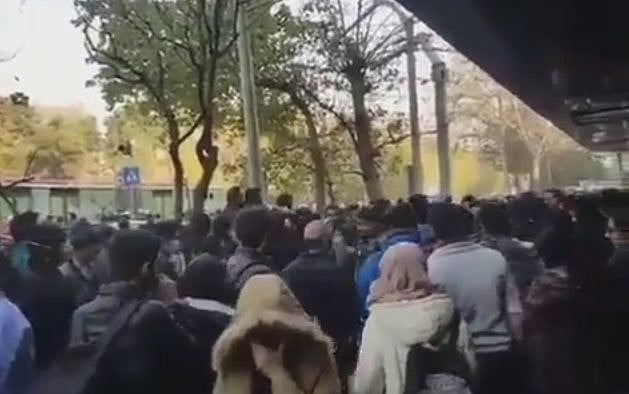
Police used tear gas and water cannon to disperse a small protest in Tehran’s Enghelab Square on Sunday evening, according to unverified social media videos.
Protesters in the small northwestern town of Takestan torched a school for clergy and government buildings, the ILNA news agency said, while the state broadcaster said two people had died in Dorud after crashing a stolen fire engine.
There were also reports of protests in the cities of Kermanshah and Khorramabad (west), Shahinshahr (northwest), and Zanjan (north).
Verifying reports remained challenging due to travel restrictions and sporadic blocks on mobile internet and popular social media sites including Telegram and Instagram.
Khademi said police had arrested a number of people and were searching their homes for explosives.
“Unfortunately for years, we have a problem with the presence of cold and hot weapons in the hands of the people of this region, which sometimes causes some problems,” he said. “We have urged the government and authorities to take this issue seriously.”
Khademi said that Izeh has problems with unemployment, recreational facilities and drinking water.
He said people in Izeh, a town of around 200,000 people, had broken the windows of banks as protests continued until around midnight.
“That’s why police intervened to restore peace and order,” he told ILNA.
“The governor said it (the gunfire) was unlikely to be by police as they were not supposed to open fire,” he said in a separate interview with the reformist Etamad newspaper.
The deaths follow a report by the state broadcaster that two people died in the western town of Dorud overnight when they were hit by a fire engine stolen by protesters.
A total of six people have died since protests against economic hardship broke out across the country on Thursday.
The protests began as demonstrations against economic conditions in second city Mashhad on Thursday but quickly turned against the Islamic regime as a whole, with thousands marching in towns across Iran to chants of “Death to the dictator.”
In addition to major metropolises that have seen mass protests since Thursday, smaller cities from north to south held protests Sunday and were expecting increased turnouts on Monday, according to regional reports.
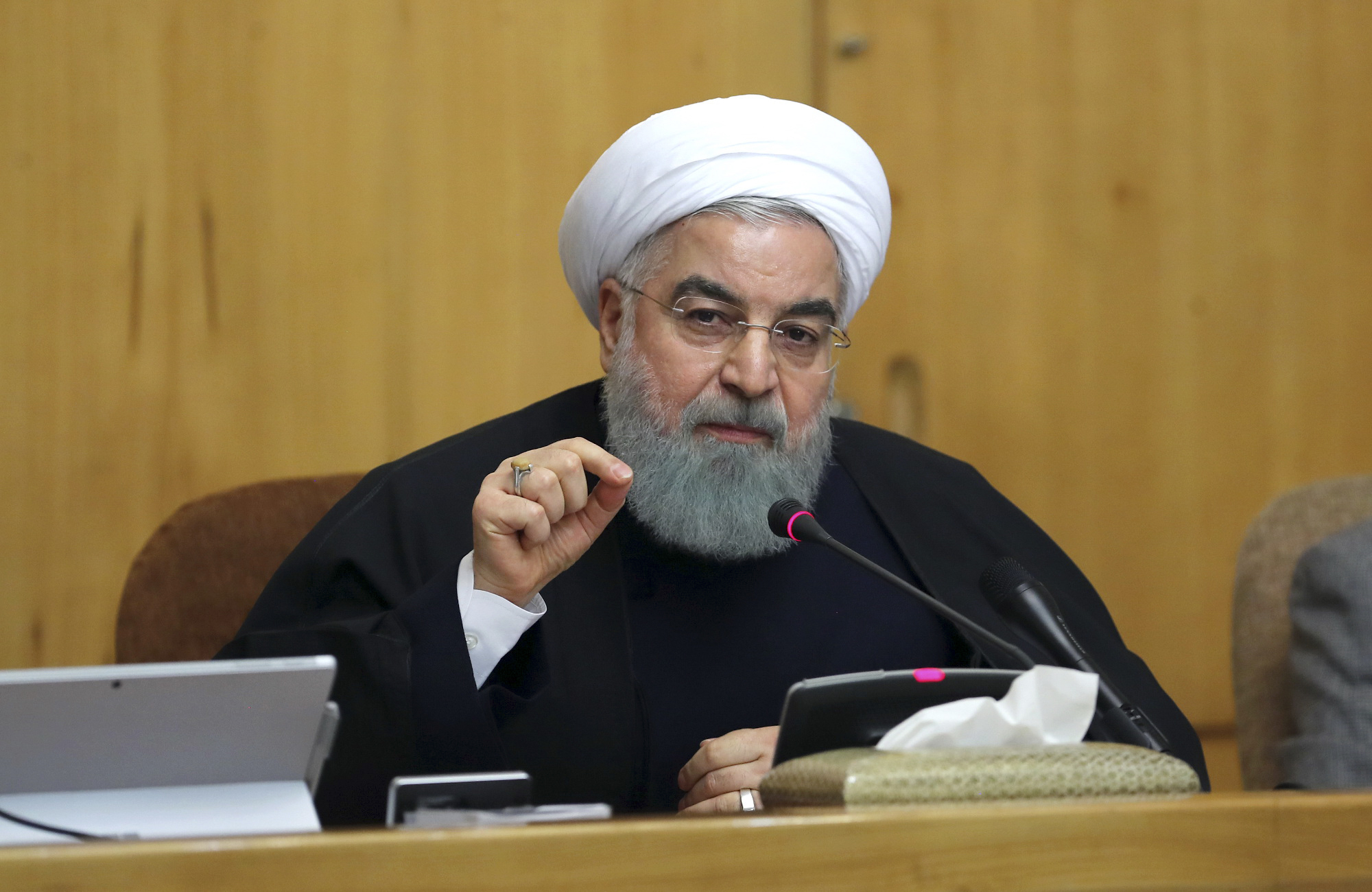
Rouhani finally broke his silence on Sunday night about the protests that mark the biggest test for the regime since mass demonstrations in 2009.
“The people are absolutely free in expressing their criticisms and even protests,” Rouhani said in a message on the state broadcaster.
“But criticism is different to violence and destroying public property.”
He sought a conciliatory tone, saying that government bodies “should provide space for legal criticism and protest” and calling for greater transparency and a more balanced media.
US President Donald Trump said the “big protests” showed people “were getting wise as to how their money and wealth is being stolen and squandered on terrorism.”
“Looks like they will not take it any longer,” he wrote on Twitter.
In a later tweet, Trump accused Iran of “numerous violations of human rights,” and commented on the disruption to social media, saying it “has now closed down the Internet so that peaceful demonstrators cannot communicate. Not good!”
Rouhani dismissed Trump’s comments.
“This man who today in America wants to sympathize with our people has forgotten that a few months ago he called the nation of Iran terrorist. This person whose whole being is against the nation of Iran has no right to feel pity for the people of Iran.”
After initial silence, state media began showing some footage on Sunday, focusing on young men attacking banks and vehicles, an attack on a town hall in Tehran, and images of a man burning the Iranian flag.
Two hundred people were reported to have been arrested in Saturday night’s unrest in the capital.
“Those who damage public property, disrupt order and break the law must be responsible for their behavior and pay the price,” Interior Minister Abdolrahman Rahmani Fazli said on Sunday.
“The spreading of violence, fear and terror will definitely be confronted,” he added.
There have been reminders of the continued support for the regime among conservative sections of society, with pro-regime students staging sizable counter-demonstrations at the University of Tehran over the weekend.
Iran’s state TV news website, iribnews.ir, said social media in Iran was being temporarily limited as a safety measure.
“With a decision by the Supreme National Security Council, activities of Telegram and Instagram are temporarily limited,” the report said, without elaborating.
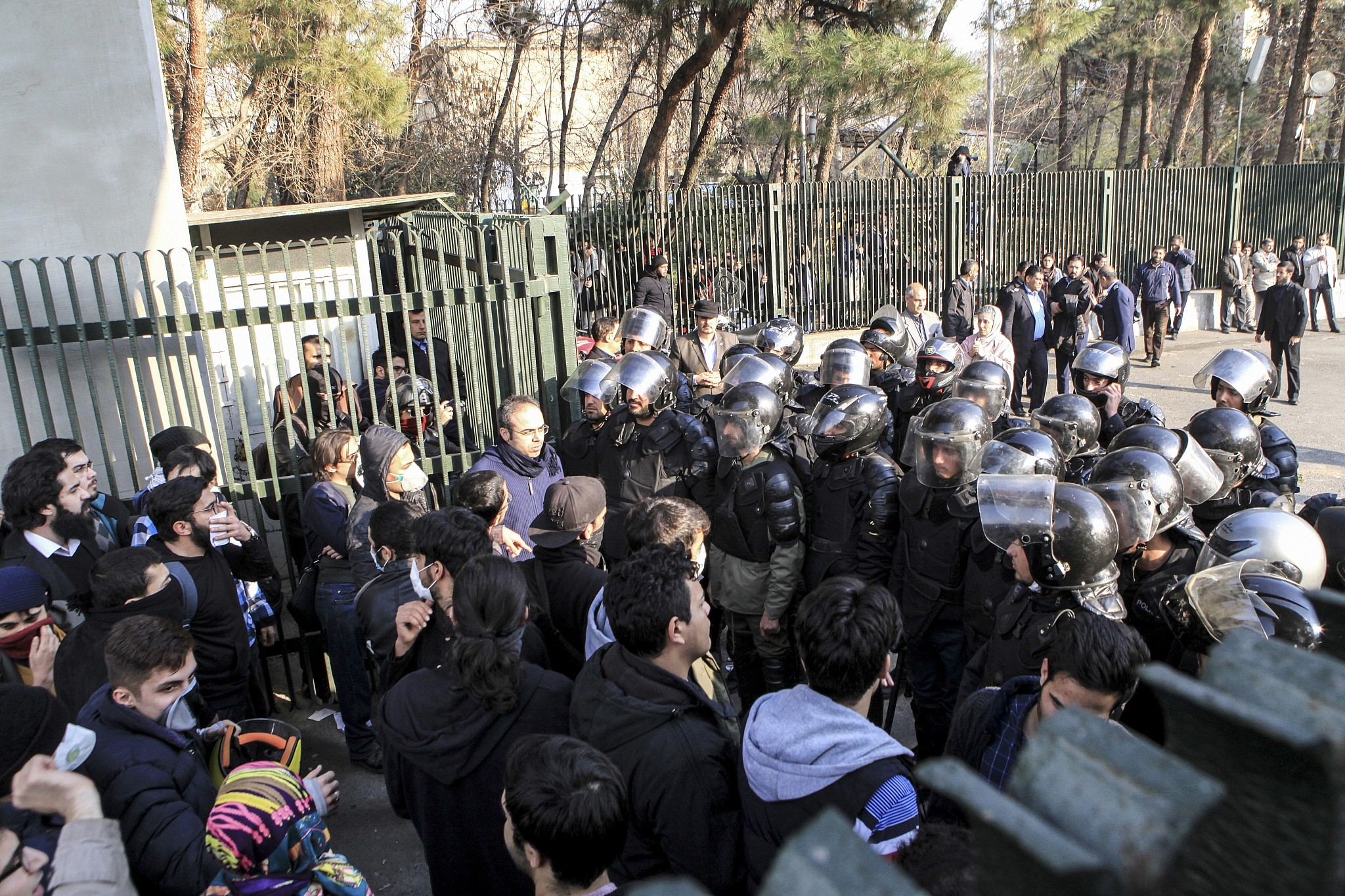
Authorities had acknowledged the first fatalities in the protests, during clashes late Saturday in Doroud, some 325 kilometers (200 miles) southwest of Tehran in Lorestan province, where protesters had gathered for an unauthorized rally, said Habibollah Khojastepour, the security deputy of Lorestan’s governor.
“The gathering was to be ended peacefully, but due to the presence of the (agitators), unfortunately, this happened,” Khojastepour said.
He did not offer a cause of death for the two protesters, but said “no bullets were shot from police and security forces at the people.”
Videos circulating on social media late Saturday also appeared to show fallen protesters in Doroud as gunshots sounded in the background.
A beautiful sight to see that people are tearing down posters on khamenie. Rip them all off #IranProtests #Tehran #IranUprising #FreeIran #Kermanshah #Mashhad #RegimeChange #Iranian pic.twitter.com/O44guXY9XF
— اخبار ایراني Iranian News (@news_iranian) January 1, 2018
Several hundred protesters have been arrested so far, beginning with over 50 in Mashhad on Thursday. The semi-official ILNA news agency reported Sunday that authorities had arrested some 80 protesters in the city of Arak, some 280 kilometers (175 miles) south of Tehran, as well as another 200 in Tehran on Saturday night.
State TV also has reported that some protesters invoked the name of the US-backed shah, who fled into exile just before Iran’s 1979 Islamic Revolution and later died.
Police have so far taken a relatively soft approach to the unrest. They deny shooting two men killed in Dorud on Saturday night, although information has been hard to obtain amid the near-total media blackout.
The authorities have blamed external forces for fomenting violence, saying the majority of social media reports were emanating from regional rival Saudi Arabia or exile groups based in Europe.
Since the ruthless repression of the 2009 protests against a disputed presidential election that gave hardliner Mahmoud Ahmadinejad a second term, many middle-class Iranians have abandoned hope of securing change from the streets.
But low-level strikes and demonstrations have continued, with groups such as bus drivers, teachers and factory workers regularly protesting against unpaid wages and poor conditions.
Rouhani came to power in 2013 promising to mend the economy and ease social tensions, but anger over high living costs and a 12-percent unemployment rate have left many feeling that progress is too slow.
Unemployment is particularly high among young people, who are generally considered less deferential to authority.
“Rouhani has run an austerity budget since 2013 with the idea that it’s a tough but necessary pill to swallow to manage inflation and currency problems and try to improve Iran’s attractiveness for investment,” said Esfandyar Batmanghelidj, founder of the Europe-Iran Forum.
“But choosing years of austerity immediately after a very tough period of sanctions is bound to test people’s patience,” he told AFP.


The Times of Israel Community.