

UN deputy chief blames occupation for current violence
Palestinian envoy decries ‘attacks’ on Al-Aqsa Mosque; Israeli ambassador says terrorism fueled by ‘incitement’
 Add ToI as a Preferred Source on Google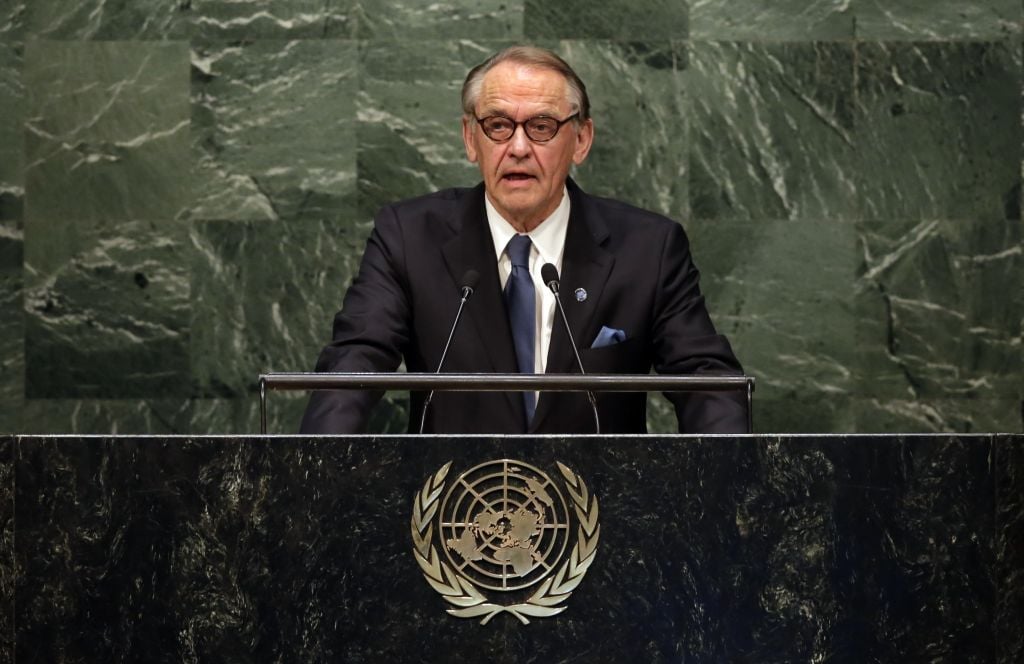
Escalating violence in Israel and the West Bank is a result of Israel’s occupation of Palestinian territories for almost half a century and diminishing hopes for a viable Palestinian state, the United Nations’ deputy secretary-general charged on Thursday.
Jan Eliasson told a UN Security Council ministerial meeting that the ongoing failure to achieve a two-state solution, and the reluctance of Israeli and Palestinian leaders to take “the bold steps” necessary to progress toward peace, had created “a highly combustible reality.”
The emergency meeting focused on the recent surge in violence during which Palestinians have carried out almost daily attacks on Israeli civilians and security forces.
Speaking first at the meeting, Eliasson, a Swedish diplomat, condemned “in the strongest terms all attacks against Israelis and Palestinians alike.” He described recent Palestinian stabbing and shooting attacks on Israelis as “particularly appalling” and said the international community must understand Israelis’ fears about personal safety and concerns about what they believe are growing attempts to “delegitimize” their country.
But Eliasson blamed the deteriorating situation mainly on Israel’s “stifling and humiliating occupation” of the West Bank, its settlements there, and the lack of Palestinian jobs and greater control over their security and government.
In a speech to the council, Palestinian Authority Foreign Minister Riyad Malki alleged Israeli policy changes on the Temple Mount in Jerusalem were to blame for infuriating the Palestinians, while Israel’s representative charged that the claims of a change in the status quo at the site — holy to both Jews and Muslims — were baseless incitement that fuels violence.
Malki told the gathered diplomats that core issues would only be addressed once the “occupation of Palestinian lands ends.”
He charged that Palestinians are under continuous attack by “Israeli occupation forces,” and called their resistance “legitimate.” Malki added that “aggression and provocations” have been ongoing on the Temple Mount, and accused the Israeli government of protecting and urging settlers to carry out terror attacks against Palestinians.
“The Al-Aqsa Mosque is being attacked by Israeli extremists, day after day, by government officials, settler militias … [who] have unleashed a wave of violence and hatred against Palestinians,” he said.
Malki said that preventing Muslims from worshiping at the Temple Mount’s Al-Aqsa Mosque, setting minimum ages and times for worship, and allowing police to enter the compound — measures Israel says it sometimes resorts to in order to ensure security — are all violations of the status quo.
Israel has repeatedly denied that it intends to change the status quo on the Temple Mount, asserting that such accusations amount to “incitement.”
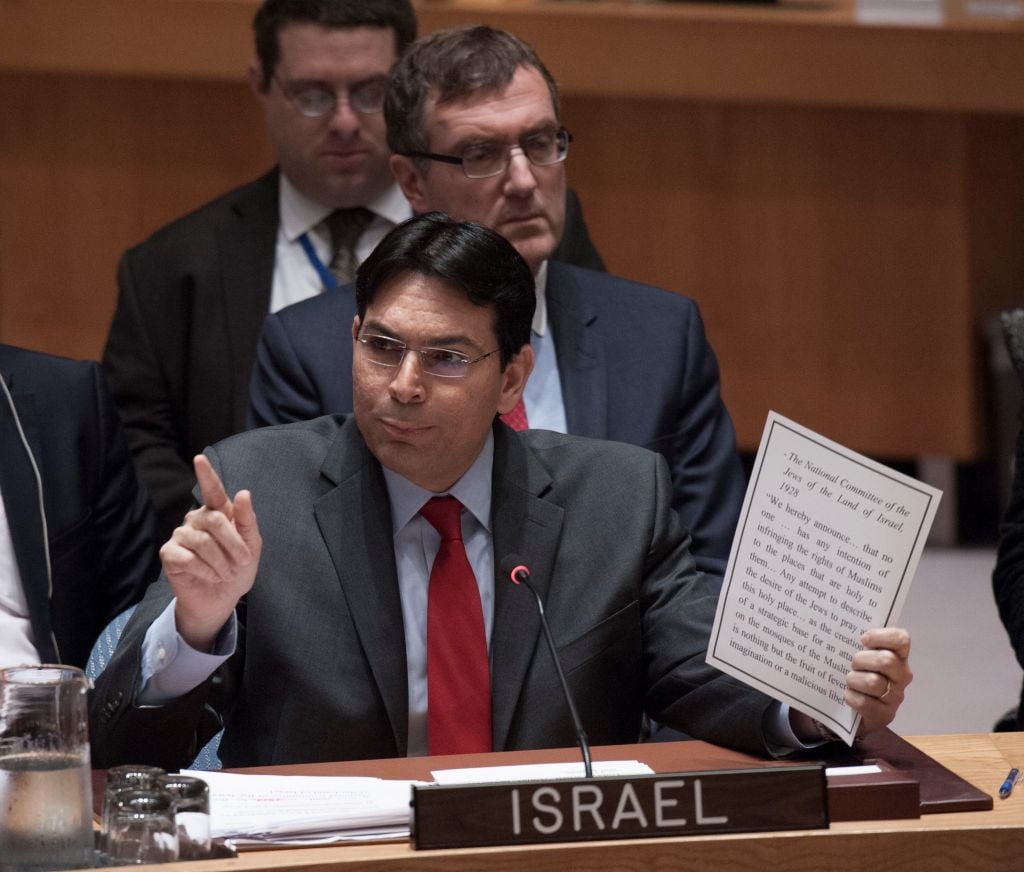
Israeli envoy Danny Danon, making his debut speech to the Security Council, said that Israel “will never compromise the security of the Jewish state,” and chided the Security Council for its attitude.
“I am disappointed that all I hear are calls to end the cycle of violence,” he said. “This is not a cycle of violence. These are unprovoked attacks against Israelis for no reason, just because they are Jews living in their homeland.”
The Israeli ambassador quipped that the Security Council should change its own “status quo.”
“Israel opposes any change in the status quo on the Temple Mount,” he said. “The place where the status quo needs to change is here at the UN. If the UN is truly interested in calming tensions and bringing peace to the region, it must change its default settings. The UN must end its usual practice of calling on both sides to show restraint, and state clearly: There is one side that is instigating a wave of terror.”
Danon accused Palestinians of fostering “a culture of hate” and teaching children to kill Jews, and quoted from a PA television program that he said showed a girl praising such killings.
“An entire generation of Palestinian youth is being brainwashed,” he declared, asserting that the violence was inextricably linked to the Palestinian “lie” about Israel’s intentions on the Temple Mount.
“This inflammatory allegation is false, and [PA] President [Mahmoud] Abbas knows it is false, and yet his deliberate and malicious lie is told over and over again,” he said.
Danon vowed that Israel would not allow international observers on the Temple Mount, referring to a French proposal that was shelved on Thursday.
“If the international community wishes to be constructive, it should focus on ending the incitement,” he said. “No nation represented in this chamber would accept the presence of international forces in their capital.”
New Zealand, deploring the failure of diplomacy, said at the meeting that it would present a draft UN resolution to try to revive Israeli-Palestinian peace efforts.
Foreign Minister Murray McCully told the Security Council he hoped the measure would help “stimulate a level of debate” on the way forward as Israel and the Palestinians sink deeper into violence.
“The events of recent weeks cry out for council action,” said McCully. “While we remain ready to support any other reasonable proposals for progress, we will, over the coming days, share the text of a draft resolution.”
New Zealand’s initiative came after France circulated a draft for a council statement that failed to win agreement, highlighting difficulties to forge a consensus in the 14-member council. The draft French text would have condemned the violence and called for maintaining the status quo on the Temple Mount.
New Zealand’s draft resolution would call for an end to the violence, reaffirm the need for a two-state solution, support direct talks and call for confidence-building measures to achieve direct negotiations.
Diplomats said they did not expect the text to be a game-changer, but the initiative underscored an expectation that the Security Council take a more active role. The council has not adopted a resolution on the Israeli-Palestinian peace process since 2009 and its last formal statement dates back to September 17 when it called for calm at Al-Aqsa.
AP and AFP contributed to this report.


The Times of Israel Community.