

Upending traditional views on peacemaking, Israel-UAE deal truly heralds new era
Netanyahu proves wrong all those who argued normalization with Arab world is impossible without a solution to the Palestinian conflict — without giving anything tangible in return

 Add ToI as a Preferred Source on Google
Raphael Ahren is a former diplomatic correspondent at The Times of Israel.
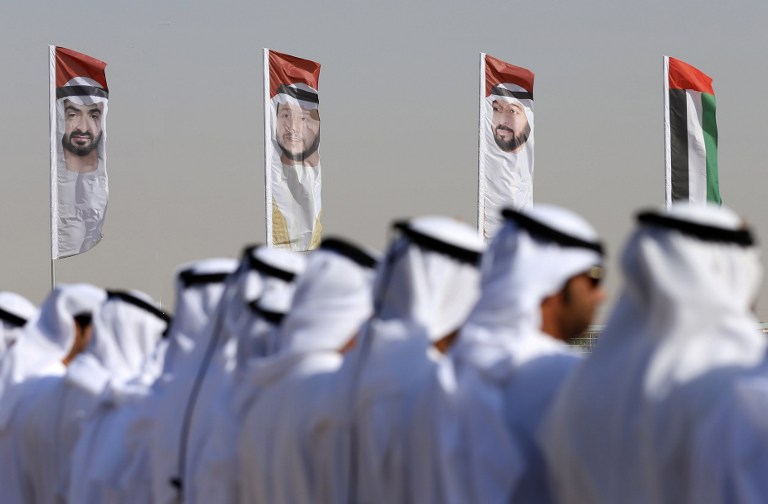
Thursday’s bombshell announcement on Israel and the United Arab Emirates agreeing to establish formal diplomatic relations is more than just a watershed moment for Israel-Arab relations. It upends everything politicians and pundits thought they knew about the dynamics of the Middle East.
As Prime Minister Benjamin Netanyahu pointed out several times during his press conference, the traditional approach to peacemaking revolves around Israeli concessions: If Jerusalem doesn’t make peace with the Palestinians by withdrawing from all or much of the West Bank, no Arab state will make a deal with Israel. Yes, there is much covert cooperation with the Arab states, but they will never agree to publicize it as long as the Palestinian problem isn’t solved, virtually all experts believed.
Netanyahu proved them wrong.
Stunningly, Abu Dhabi’s groundbreaking decision to fully normalize relations with Jerusalem did not require any tangible concessions of Israel. Netanyahu did not agree to withdraw from one centimeter of West Bank territory. He did not evacuate a single settler. He didn’t even have to pay lip service to the idea of Palestinian statehood or pledge allegiance to the two-state solution.
All Netanyahu had to do to clinch a deal few would have thought possible last week was to agree to hold off on unilaterally annexing parts of the West Bank. Not to abandon the plan altogether, but merely wait.
According to the joint statement issued by Netanyahu, US President Donald Trump and UAE de-facto leader Mohammed Bin Zayed, Israel agreed to “suspend declaring sovereignty over areas outlined in the President’s Vision for Peace and focus its efforts now on expanding ties with other countries in the Arab and Muslim world.”
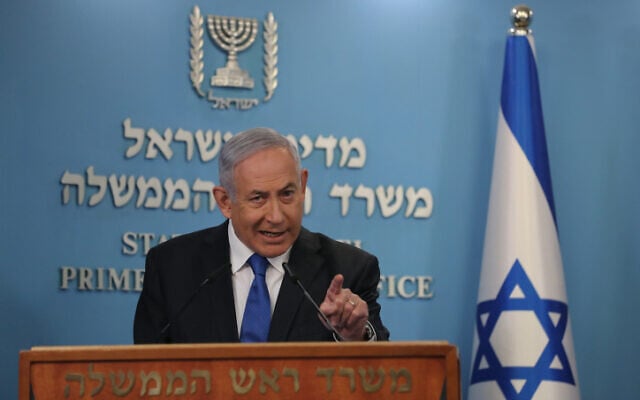
After the statement was issued, both Netanyahu and Sheikh Mohammed marketed the deal with the particular stresses appropriate to their respective constituencies. The Israeli premier told disappointed right-wingers at home that he remains fully committed to annexation, and vowed that it will eventually happen. And the Emirati leader portrayed the agreement as a case of the UAE stopping annexation and thus single-handedly solving at least the current Israeli-Palestinian crisis.
We may never know if Netanyahu really intended to annex the Jordan Valley and all settlements across the West Bank, or if he was just threatening to do it in order to pocket the rewards for calling it off.
Maybe he wanted to, but couldn’t due to the opposition of his coalition partners from Blue and White and a less-than-enthusiastic White House. What’s clear and important is that the threat to annex ultimately enabled him to follow in the footsteps of Menachem Begin and Yitzhak Rabin and ink Israel’s third peace agreement with an Arab state.
Indeed, Netanyahu pulled off an unparalleled diplomatic sensation. Securing a full-fledged peace agreement with an Arab state that had hitherto been, and insists it remains, a steadfast supporter of the Palestinian cause, all the while unapologetically expanding settlements and reducing the prospects for a future two-state solution, will likely go down as the greatest foreign policy accomplishment of his long career.
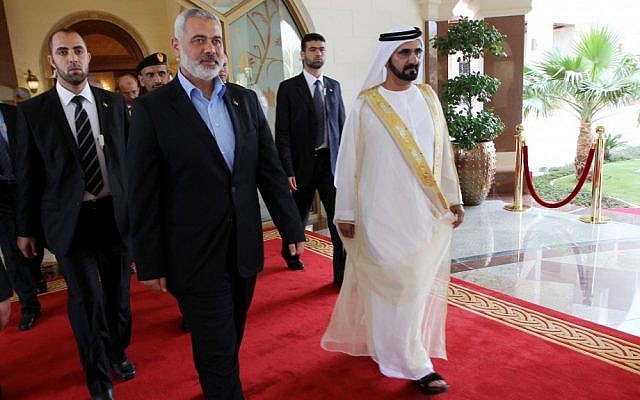
For years, Netanyahu earned scorn and disbelief when he preached about the so-called outside-in approach — the notion that peace with the Palestinians will come only after a wider peace with the Arab world, and not vice versa.
Ramallah currently does not feel the need to rush to the negotiation table, to put it mildly. But if other Arab states follow the Emirati lead, that may change.
Suspending annexation as a milestone on the path to peace
On Thursday, senior officials from other Gulf nations not only welcomed the UAE’s move but tacitly expressed approval of Netanyahu’s outside-in approach.
“We commend the UAE for its position which upholds the rights of all without compromise, and its serious steps towards establishing peace and laying the foundation for common prosperity for the peoples of the region,” tweeted Khalid bin Ahmed Al Khalifa, the king of Bahrain’s diplomatic adviser.
The rights of all? Without compromise? Tell that to Palestinian Authority President Mahmoud Abbas.
The Bahraini Foreign Ministry issued a statement hailing the agreement to halt annexation as a “step towards the achievement of peace in the Middle East.”
Two years ago, nobody imagined Israel would ever seriously consider annexing the West Bank, and now Arab countries are celebrating the temporary suspension of partial annexation as a milestone on the path to peace.
Saudi Arabia’s former culture and information minister, Adel al-Toraifi, said it was time for other countries in the region “to move beyond the destructive discourse of false Arab Nationalism and Terrorist Islamists,” and called to “urge Palestinians to drop Hamas’s terrorism & seek a modern state.”
A historic decision & will have an important impact on regional peace efforts. It’s time for GCC states to move beyond the destructive discourse of false Arab Nationalism and Terrorist Islamists. GCC states should urge Palestinians to drop Hamas’s terrorism & seek a modern state. https://t.co/gM1PyDa6QE
— عادل الطريفي (@AdelAlToraifi) August 13, 2020
In the Israeli press, much of Thursday’s coverage focused on the price Israel had to pay for the agreement, as few Israelis doubt that Netanyahu’s annexation bid is dead in the water. Some highlighted the right-wing’s anger over the missed opportunity, while others looked at the domestic implications of the move. Did the prime minister update his coalition partners? Will Israel still head to new elections? And how much does this boost Trump’s re-election chances in November?
These are, of course, topics worthy of coverage, but they are dwarfed by a look at the bigger picture. One of the richest and most advanced countries in the Arab world just agreed to normalize relations with Israel — the full monty, including direct flights and the opening of embassies — without getting anything in return (except, again, the temporary suspension of a plan many in Israel never believed would be implemented anyway).

Until Thursday, the 2002 Arab Peace Initiative was the Muslim world’s ultimate frame of reference for the Israeli-Palestinian conflict. If Israel is interested in full diplomatic relations with it, the proposal said, it must first agree to a “full Israeli withdrawal from all the Arab territories occupied since June 1967,” the establishment of a Palestinian state with East Jerusalem as its capital, and a “just” and “agreed upon” solution to the Palestinian refugee question.
Israel did none of the above and still gets to open an embassy in Abu Dhabi, and perhaps soon in other capitals in the region as well.
Will Israel’s third peace agreement with an Arab country become a cold peace like the ones with Cairo and Amman? That could of course happen, especially if Netanyahu does ultimately get the US green light to go ahead with his annexation plans, or makes other provocative moves that could embarrass the Emiratis.
But as opposed to Egypt and Jordan, the UAE and Israel never had any territorial disputes and never fought wars against each other. Thursday’s genuinely historic agreement doesn’t mean the conflict with the Palestinian will suddenly disappear. But it just may bring Israelis a little closer to what Netanyahu called the “lofty goal” of peace with the Arab world.





The Times of Israel Community.