

US scientists succeed in stopping nicotine-addict behavior in mice
Researchers zero in on brain mechanisms behind nicotine dependency, in hopes of developing drugs to combat them
 Add ToI as a Preferred Source on Google
US researchers have identified brain mechanisms that may be behind nicotine addiction, and have been able to influence these structures to reduce addiction in mice, in a discovery that could lead to solutions that will help cigarette addicts quit their dangerous habit.
The study was published this week in the US medical journal Proceedings of the National Academy of Science (PNAS).
Nicotine, the chief addictive substance in cigarettes, creates dependency by encouraging the release of dopamine in the brain — a neurotransmitter that generates feelings of pleasure.
Scientists at New York’s The Rockefeller University studied chemical reactions and neuron activity in two regions of the brain, the interpeduncular nucleus (IPN) and the medial habenula (MHb).
In a non-addicted person, the habenula issues signals to the IPN which cause it to mitigate the effects of dopamine, thus discouraging addiction. However, researchers found that in mice that were exposed to nicotine over several weeks, those signals were no longer working as well.
While the habenula continued to transmit, a group of neurons in the IPN underwent a transformation and released chemicals that inhibited the IPN’s response to that message.
“If you are exposed to nicotine over a long period you produce more of the signal-disrupting chemicals and this desensitizes you,” researcher Ines Ibanez-Tallon said. “That’s why smokers keep smoking.”
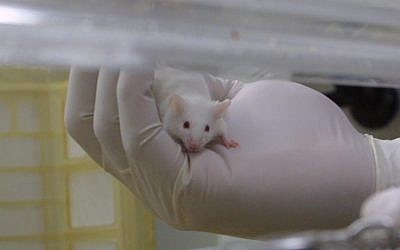
Nicotine-addicted mice given the option of spending time in a nicotine-filled chamber or a regular one habitually chose the former.
However, when scientists effectively shut off the suspect neuron group and stopped its effect on the IPN, addicted mice appeared to return to normal behavior and did not prefer the nicotine chamber over the other.
The IPN and the habenula are ancient brain structures common to all vertebrates. Thus, scientists believe the addiction process could well be similar in humans.
“What all of this tells us is that the habenula-IPN pathway is important for smoking in humans,” Ibanez-Tallon said.
The scientists plan to continue to investigate the processes in question, in hope of developing ways to treat them.
“When it comes to a massive health problem like nicotine addiction,” Ibanez-Tallon said, “any therapeutic target we can find is potentially significant.”









The Times of Israel Community.