

WeWork warns it found cancer-causing chemical in some of its office phone booths
Workspace sharing company, already facing financial woes, informs tenants that due to presence of formaldehyde, it has closed 2,300 booths used for private voice and video calls
 Add ToI as a Preferred Source on Google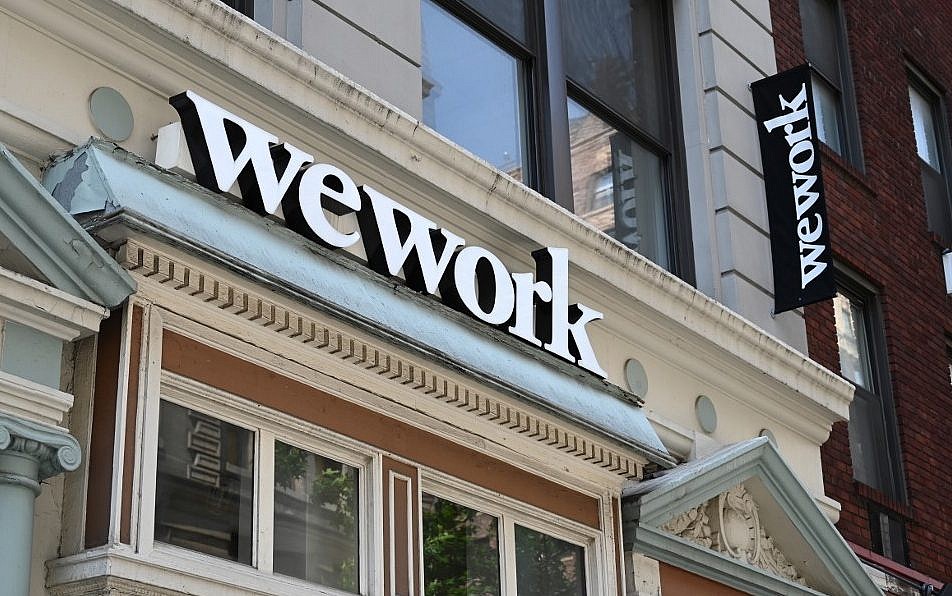
WeWork, the multi-billion dollar office-sharing company that has been rocked by questions over its financial stability, has said that it found a cancer-causing chemical in some of the phone booths in its work spaces, leading to thousands of the stations being shuttered.
In an email to tenants on Monday, WeWork wrote that it had found potentially dangerous levels of formaldehyde in the compartments, which are used by people wishing to conduct private voice and video calls, Reuters reported.
“Long-term exposure to formaldehyde, such as that experienced by workers in jobs who experience high concentrations over many years, has been associated with certain types of cancers,” the company wrote to the tenants.
After workers complained of odors and eye irritation, WeWork began testing the booths and as a result closed 1,600 at some of its 223 sites in the US and Canada. Another 700 phone booths were closed until further testing is completed, according to the report.
WeWork tenants warned about phone booths with formaldehyde for months – Business Insider https://t.co/KK6N4x4SA4 pic.twitter.com/gokMrBtqPt
— Marcia minto (@minto_marcia) October 15, 2019
“The safety and well-being of our members is our top priority and we are working to remedy this situation as quickly as possible,” WeWork told Reuters in a statement, but declined to identify the booth manufacturer.
Skepticism about WeWork’s business model has mounted in recent weeks after it last month delayed a planned initial public offering a week following a shakeup at the office-sharing business that led to controversial Israeli co-founder Adam Neumann stepping down.
The charismatic Neumann was credited with growing WeWork, founded in 2010, into a real estate giant with operations in 111 cities in 29 countries.
However, the company faced questions over its prospects for achieving profitability, and Neumann came under scrutiny for perceived self-dealing between his personal assets and WeWork, and over unconventional personal conduct, including drug use.

Before the executive shakeup, WeWork’s bankers were eyeing a much smaller IPO than initially envisioned. It was originally valued at $47 billion, but that figure has plummeted to some $15 billion as investors have opened the company’s books and raised questions about how it is run.
The company’s revenue has risen sharply, reaching $1.8 billion in 2018. But its losses have mounted almost as quickly, climbing to $1.6 billion last year.
A Wall Street Journal profile published earlier in September portrayed Neumann and his wife as eccentric executives who made rash decisions. According to the profile, Neumann has plans to become prime minister of Israel and the world’s first trillionaire.
The 40-year-old grew up on a kibbutz and in the US, and served as an officer in the Israeli navy.
Earlier this month WeWork put on hold plans to open shared living units in Tel Aviv and Jerusalem amid ongoing fallout over its disastrous September IPO announcement.
The company currently has 11 WeWork office spaces in Israel.
WeLive, which like WeWork is a branch of the We Company, runs two shared living programs in New York City and Washington, DC. WeLive offers both temporary and long-term residential units and aspires to create a “community-driven experience” in its housing projects by connecting residents with their neighbors through events and common spaces.
Agencies contributed to this report.









The Times of Israel Community.