

Yair Lapid wants to talk to English-speaking Israelis
Yesh Atid’s trailblazing engagement may mean more English is heard in the halls of the 20th Knesset. Oh, and Aryeh Deri is back
 Add ToI as a Preferred Source on Google
Haviv Rettig Gur is The Times of Israel's senior analyst.
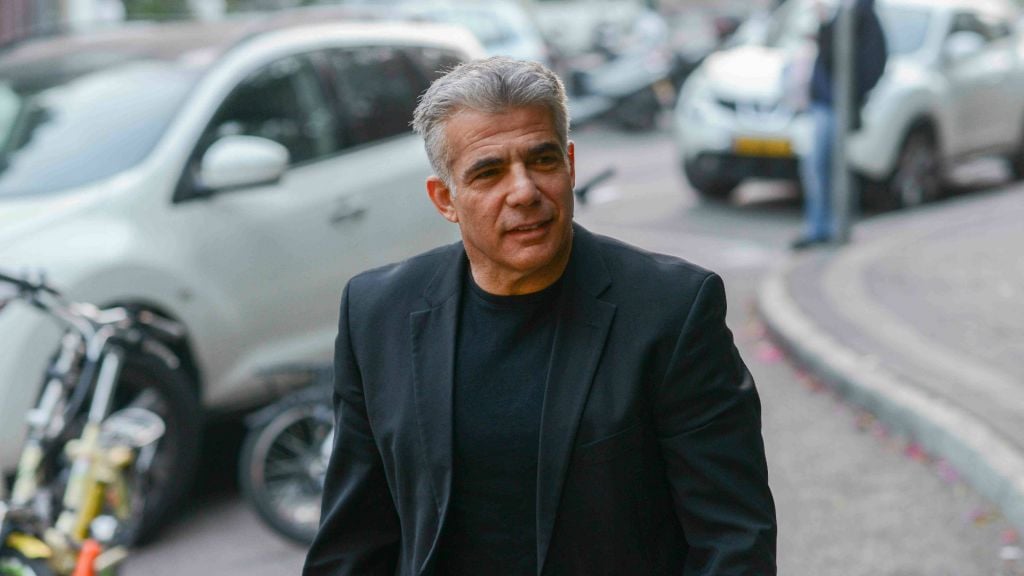
Many of Israel’s political parties have designated officials to conduct outreach to English-speaking Israelis. But none has yet subjected their party leader to a live English-language interrogation by Anglo voters.
Until now.
On Tuesday evening, on his party’s English-language Facebook site, Yesh Atid leader Yair Lapid plans to answer questions in a live chat in English.
Lapid deserves a great deal of credit for his willingness to engage English-speakers so directly. There are party leaders with better English — Benjamin Netanyahu and Naftali Bennett can boast almost native command of the language — who have yet to do the same.
And, it must be said, Lapid has been ground-breaking in engaging English-speakers in another way. He appointed Bet Shemesh rabbi Dov Lipman to his Knesset list ahead of the last election, an act that made Lipman the first American-born MK anyone can remember.
“For the past two years,” Lipman understandably gloated on Monday, “Yesh Atid has been the address in the Knesset for English speakers throughout Israel. Therefore, it is no surprise that there is a huge amount of interest during the campaign. Starting with 1,200 English speakers coming to hear Yair Lapid in English in Tel Aviv [at the Tel Aviv International Salon], to parlor meetings in which I address English speakers every night, the English campaign is in full gear.”
And Lapid seems to have started a trend. Kulanu leader Moshe Kahlon’s first announced “draft” to his Knesset slate was the US-born historian and former ambassador to Washington Michael Oren. Eytan Schwartz, the New York-born journalist, advisor to Tel Aviv mayor Ron Huldai and winner of the first season of the Israeli reality show “The Ambassador” in 2005, is running in the Labor primaries Tuesday. Jewish Home’s Knesset faction secretary, Detroit-born Uri Bank, is running in his party’s primary Wednesday as the candidate endorsed by party leader Bennett.
No one has ever been surprised to hear Russian or Arabic spoken in the halls and backrooms of the Knesset. English remains still a novelty. But all that may change in the 20th Knesset. And if it does, Lapid will be able to boast that he started it.
(By the way, those looking for questions to ask the former finance minister on Tuesday can start by delving into his comments and speeches, and some related elections coverage and analysis that may prove helpful.)
Deri’s triumph
In a surprise announcement that surprised no one, Shas leader Aryeh Deri returned triumphantly to the political stage on Monday.
His return, he assured us, was an act of humility. And his statement announcing it was filled with complex symbolism:
“I accept in submission the command of the Council of Torah Sages headed by council president ‘Maran’ Rabbi Shalom Cohen. All my life I learned and taught in light of the commandment to ‘do as you are instructed,’ and therefore after a difficult period…I have decided that the Shas movement, the movement of Maran [Rabbi Ovadia Yosef] of blessed memory, and its hundreds of thousands of voters are more important than any other consideration. With head held high, with pride and determination, I will continue to lead the movement in order to continue the great work of Maran, and be a voice for those that the country has left behind.”

As noted last week, Deri’s faux-resignation generated a cynical backlash from commentators who wondered “if Deri thinks we’re all stupid.”
But in focusing on the theatrics, pundits largely missed Deri’s real audience, and the hard-nosed political maneuver that drove his actions. His two-week hiatus from politics was not a tantrum; it was a threat. After Eli Yishai’s split from the party last month, and the death of Ovadia Yosef in late 2013, Deri used the most acute crisis his party has ever experienced to cement his control and leadership by threatening the party, in the midst of an election, with the loss of their last great electoral hope: him.
Shas oversees a network of schools and religious seminaries that depend on government funding for their survival. As he signed his resignation letter from the Knesset last month, Deri forced his party’s rabbinic leadership and base to contemplate how dangerously close they had suddenly come to losing the great defender of their funding in Israel’s political establishment.
It was arguably a necessary maneuver. The combination of Yishai’s split, the subsequent decline in the polls to as little as five Knesset seats (from 11 in the current Knesset) and the release of an acutely embarrassing video from 2008 that showed Rabbi Yosef doubting Deri’s loyalty all threatened to unseat Deri as party leader.
His sudden resignation achieved a few critical objectives:
- No new videos came out. This is a significant achievement in its own right. Hundreds of videos of Rabbi Ovadia Yosef speaking on a wide range of topics with members of his family are thought to be circulating among Deri’s enemies, including Yishai. Through his dramatic resignation, Deri turned himself into the victim, and into the great defender of the legacy and memory of Yosef that is sacrosanct for all sides in Shas’s civil war.
- Shas’s MKs and Council of Torah Sages rallied to his banner. True, he had hoped to win public support from Ashkenazi rabbinic and political leaders too, not to mention mainstream non-Haredi politicians. These hopes were not realized. But Deri is surely happy with the results of his maneuver nonetheless: restoring harmony and unity to his fractured camp seemed an impossible feat just three weeks ago.
- He returned to politics before his self-imposed time-out turned against him. Deri pretended to leave politics in order to prove to his followers that he was indispensable to their way of life. While the demonstration worked, rallying the base and even restoring a couple Knesset seats to Shas’s standing in the polls, it could have easily backfired. A leader who in the midst of an election can play “chicken” with the very survival of his party and the educational and charitable networks that it supports may very quickly begin to look like the problem rather than the solution.
As Shas MK Yoav Ben-Tzur noted in an Israel Radio interview Monday, shortly after praising Deri: “Shas is a movement with educational institutions, and [Deri] could not have allowed himself to go home and abandon the movement of Maran.”
The bottom line: Deri threw a hail-mary and scored the touchdown he desperately needed. He now has two months in which to make up lost ground among voters. He still faces stiff competition from the likes of Yishai, Kahlon, Likud and other parties, but at least he no longer has to deal with the uncertainty and vicious infighting that characterized the conduct of his own party over the past few weeks.










The Times of Israel Community.