

Full frontal and a repeat offender
Hebrew-language press covers the latest scandals: a minister afraid of the corrupting power of nudity, and another who is suspected of fraud, again
 Add ToI as a Preferred Source on Google
Tamar Pileggi is a breaking news editor at The Times of Israel.
Israelis getting back into the grind after the Shavuot holiday were greeted on Thursday morning with headlines detailing the latest political scandals: a culture minister who is afraid of the corrupting power of nudity and a senior minister who is suspected of defrauding the public. Again.
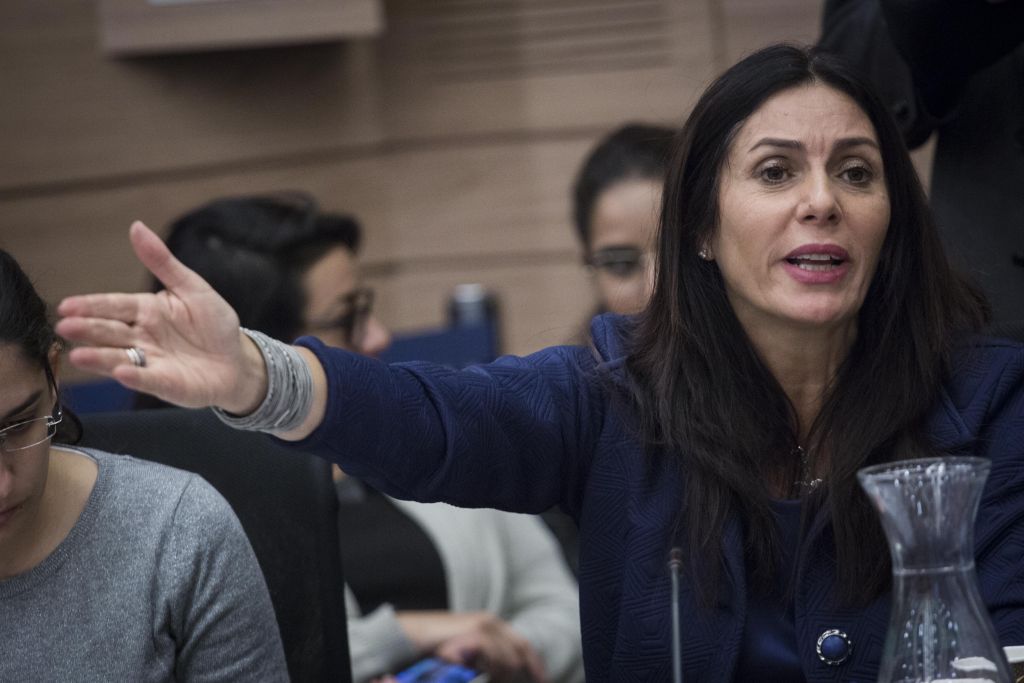
Underneath an interview with noted Israeli author David Grossman, Yedioth Ahronoth leads its front page with the “Nudity storm,” delving into Culture Minister Miri Regev’s threat to defund performances at the upcoming Israel Festival that include full frontal nudity.
Regev has taken issue with the play “And What Will I Do with This Sword?” by Spanish author Angélica Liddell, and a dance performance called “Pindorama” by Brazilian choreographer Lia Rodrigues, both of which contain full frontal nudity.
The minister this week claimed that such productions are “damaging to the core values of the Israeli public and Israel as a Jewish and democratic state.”
Leading Yedioth’s extensive coverage are its columnists, who battle it out on pages 2 and 3.
Columnist Benjamin Tobias argues in favor of keeping the Israel Festival funding and launches a scathing attack on the minister, slamming her for not being able to differentiate between gratuitous nudity and artistic expression.
Tobias derisively says Israelis should “bow down down before the honorable minister” because she utilized her “impressive cunning” to wrestle the debate over free expression away from the “elites.”
Meanwhile, Yedioth columnist Shlomo Puterkovsky staunchly defends Regev, saying that defunding the shows featuring nudity is in line with traditional Jewish values.
Rebuffing the wave of criticism Regev received this week, Puterkovsky helpfully points out that “this is no Tehran,” a reference to a popular graffiti tag seen around Israel protesting a perceived clampdown on personal freedoms.
He argues that free expression is not an absolute right and declares that “nude shows are not a Jewish thing.” Such displays, he says, “clearly damage Jewish values.”
On its front page, the markedly more liberal Haaretz daily implies that Regev’s decision is hypocritical, citing a number of cultural events sponsored by the Jerusalem Municipality that catered specifically to the ultra-Orthodox community. The daily says those events — where women were banned from singing in line with Orthodox norms — were granted funding from the Culture Ministry despite complaints the events discriminated against women.
However, the newspaper is less focused on Regev’s latest controversy, with the majority of its columnists choosing instead to focus on the 50th anniversary of the Six Day War and uncertainties over Israel’s future relationship with the US under the leadership of Donald Trump, on the day Trump is expected to sign a waiver delaying the relocation of the US embassy from Tel Aviv to Jerusalem.
Interestingly, Regev’s threat to defund the Israel Festival is nowhere to be found in Thursday’s edition of the pro-Netanyahu Israel Hayom.
Considered a loyalist to the prime minister, Regev has been at the center of numerous controversies and has had a series of clashes with Israel’s liberal cultural establishment in her current post.
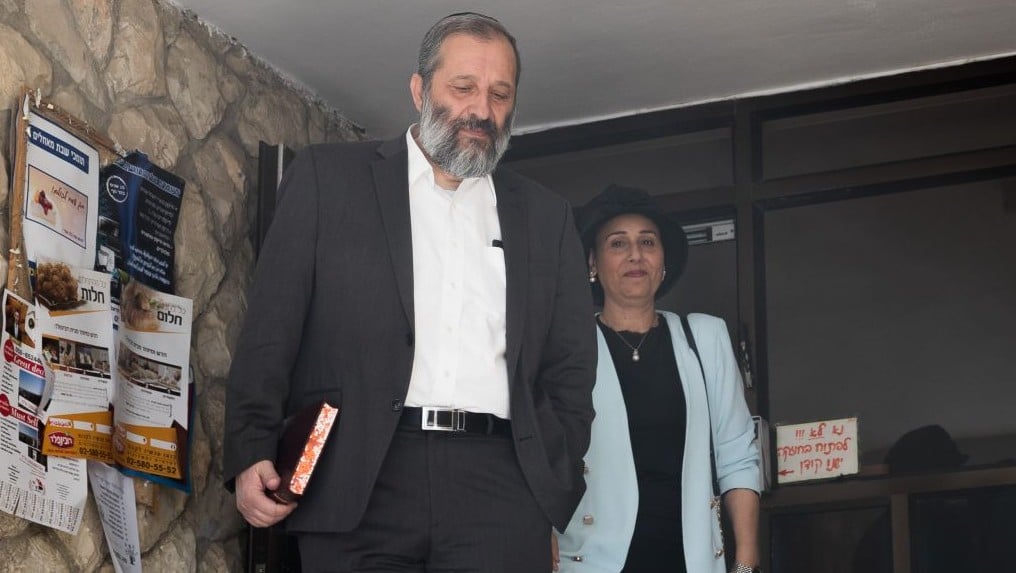
Instead, Israel Hayom gives prominent coverage to the latest corruption investigation into Shas party chairman Interior Minister Aryeh Deri.
Calling it a “bombshell for the party” on its front page, the paper features “exclusive” quotes from unnamed party sources who say the Shas leadership wants to oust Deri over the widening corruption probe against him.
Political cartoonist Shlomo Cohen pokes fun of Deri for possibly facing corruption charges for a second time as interior minister.
His cartoon shows Deri sitting in his office reading the morning papers detailing police suspicions of financial wrongdoing. The minister demands to know why his office is in such disarray that he is forced to read decades-old newspapers, when an unseen person outside the office informs Deri that the papers are in fact from today.
Yedioth by contrast appears less interested in Deri, with the first mention of the minister not appearing until page 9 of Thursday’s paper, and even then, most of its coverage is dedicated to the identities of the dozen or so people who were summoned by police for questioning on Monday.
The paper details the colorful background of Russian-Israeli billionaire businessman and philanthropist Mikhael Mirilashvili, a real estate magnate who did a stint in Russian prison for kidnapping the men who kidnapped members of his family. His son, Yitzhak, who was also summoned for questioning this week, is fondly dubbed by the paper the “Russian Mark Zuckerberg.”
Yedioth’s other main feature is an interview with noted Israeli author Grossman to mark the 50th anniversary of the 1967 war.
Grossman, a vocal critic of Israel’s West Bank policies, tells Yedioth that he has never been more afraid for his country’s future.
“Yes, I’m more realistic now, but I’m also more afraid,” he says. “It could be that in a few years the situation will be much worse than it is,” Grossman said.
“The question mark hovering over the settlements has slowly migrated to hover over all of Israel,” he said. “In order to maintain our occupation, we must distance ourselves from the [Palestinians] as people. There is massive repression going on here, the repression of an entire people.”


The Times of Israel Community.