

Syria summit faces the longest odds — and for good reason
Civilians continue to die and rebel groups bicker as envoys from the Assad regime and opposition sit down in Switzerland
 Add ToI as a Preferred Source on Google
Avi Issacharoff, The Times of Israel's Middle East analyst, fills the same role for Walla, the leading portal in Israel. He is also a guest commentator on many different radio shows and current affairs programs on television. Until 2012, he was a reporter and commentator on Arab affairs for the Haaretz newspaper. He also lectures on modern Palestinian history at Tel Aviv University, and is currently writing a script for an action-drama series for the Israeli satellite Television "YES." Born in Jerusalem, he graduated cum laude from Ben Gurion University with a B.A. in Middle Eastern studies and then earned his M.A. from Tel Aviv University on the same subject, also cum laude. A fluent Arabic speaker, Avi was the Middle East Affairs correspondent for Israeli Public Radio covering the Israeli-Palestinian conflict, the war in Iraq and the Arab countries between the years 2003-2006. Avi directed and edited short documentary films on Israeli television programs dealing with the Middle East. In 2002 he won the "best reporter" award for the "Israel Radio” for his coverage of the second intifada. In 2004, together with Amos Harel, he wrote "The Seventh War - How we won and why we lost the war with the Palestinians." A year later the book won an award from the Institute for Strategic Studies for containing the best research on security affairs in Israel. In 2008, Issacharoff and Harel published their second book, entitled "34 Days - The Story of the Second Lebanon War," which won the same prize.
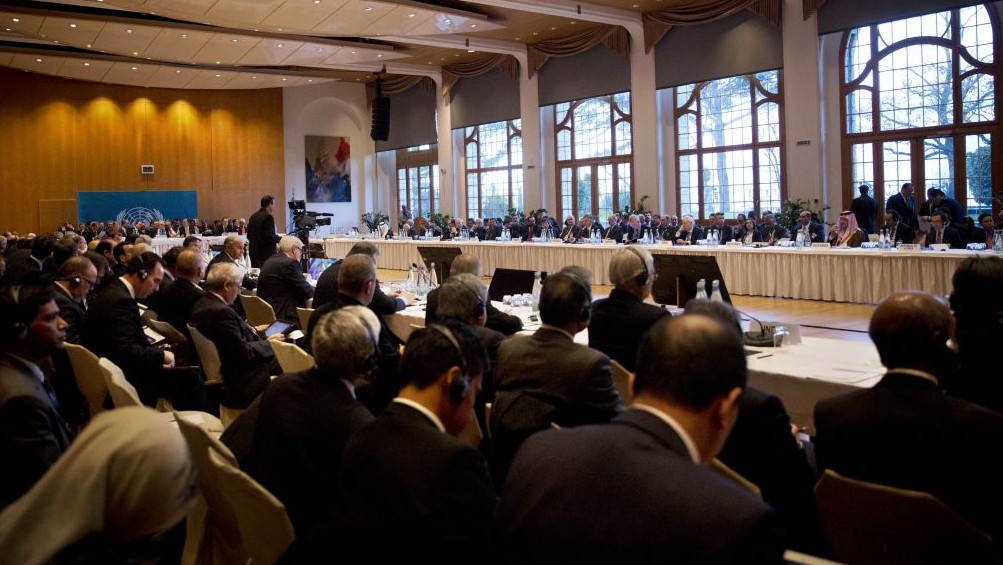
Switzerland is currently hosting one of the most festive and meaningless events that the US, Russia, and the UN have organized together in recent years.
On Wednesday, the Geneva II summit began in the city of Montreux, Switzerland, intended — at least according to its organizers — to stop the fighting in Syria.
Hundreds of journalists from around the world photographed the opening ceremony from every conceivable angle. Russian Foreign Minister Sergey Lavrov and US Secretary of State John Kerry, as well as UN envoy Lakhdar Brahimi, Syrian Foreign Minister Walid al-Muallem and representatives of the opposition, all delivered moving speeches.
The problem is that the participants and organizers don’t agree on how to achieve a ceasefire. While the opposition has agreed to participate in the summit in order to bring about the beginning of a transition phase until elections without Syrian leader Bashar Assad in the presidential palace, regime representatives arrived in Switzerland in order to discuss “ways to fight terrorism.”
And this is only a few days after Assad announced that he would likely run again in Syria’s presidential elections.
The US-Russian efforts to implement a truce between the rival groups seem desperate, perhaps due to the lack of other options. In an Istanbul hotel last week, the American ambassador to Syria, Robert Ford (who isn’t stationed in the country, of course), conducted a last-minute attempt to convince some representatives of the main Syrian opposition group to participate in the summit.
Not everyone heeded Ford’s pleas. In the vote held Saturday among members of the Syrian National Coalition, only 73 of 121 members participated. Fifty-eight voted in favor of participating in the summit. The even bigger problem is that it is doubtful that the SNC accurately reflects the Syrian opposition, nor is it certain that there is any group today that could do so. According to various Western estimates, there are 1,200 groups operating in the opposition to Assad.
Some are small, others are larger.
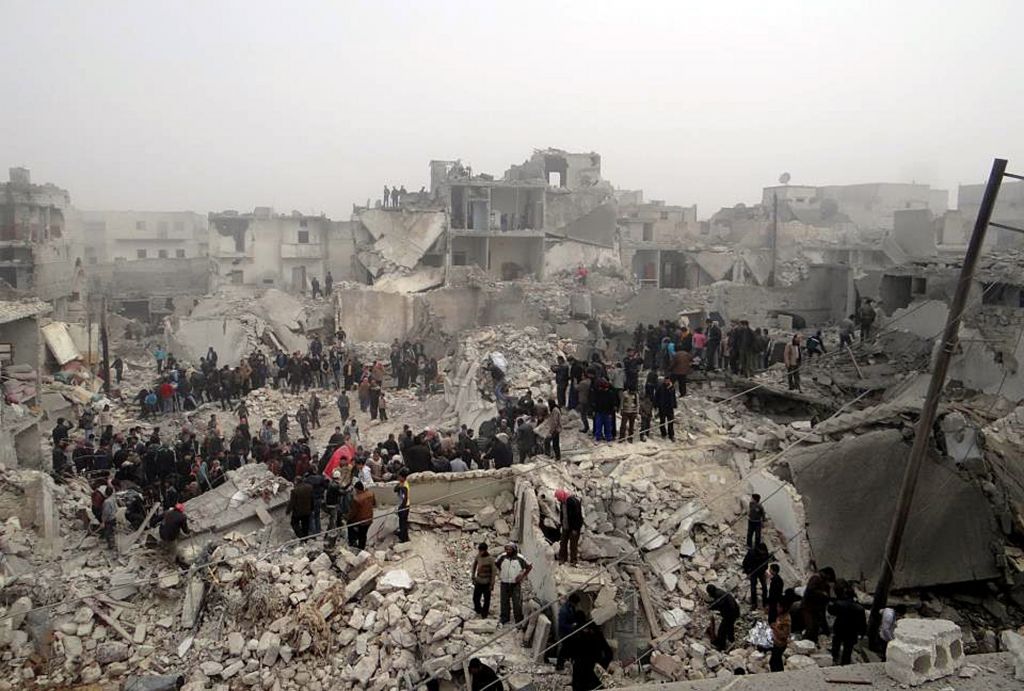
Perhaps the only thing they share, besides a hostility to Assad, is a lack of consensus on the tactical and strategic ways to topple the president.
So what is America trying to accomplish in the face of this apparently impossible task?
One of those present at the hotel in Istanbul told The Times of Israel that Washington supports the talks primarily to give the impression that it is trying to stop the slaughter in Syria. “But they understand they will not succeed in this. They do not want to act militarily, and everyone knows the war will continue,“ he said.
He is probably right. On Tuesday, the Assad government continued to strike opposition targets in Aleppo as gruesome pictures of thousands of prisoners, tortured and starved to death in recent months in regime prisons, were published.
The dispute over who would participate between representatives of the regime and Russia on one side, and the opposition and the US on the other, started well before the summit and continued almost to the last minute.
UN Secretary-General Ban Ki-moon invited Iran to participate in the summit. But Saudi-Qatari-American pressure, in addition to coalition protests, with a threat to boycott Geneva II, led to the cancellation of the invitation Tuesday only 11 hours after it was sent.
And what will the sides discuss? It’s not clear. On Friday, the less ceremonial stage of talks are scheduled to begin, and no one knows if they will actually happen. Opposition representatives who do not enjoy legitimacy among the rebels will demand Assad’s removal, and his envoys will refuse. Large groups from among the opposition are boycotting the talks, and it appears that the terrifying numbers coming out of Syria, 2.5 million refugees and 130,000 killed, will continue to rise.


The Times of Israel Community.