

This is no way to build trust
No matter how much Israel’s construction plans anger the Palestinians, they have no choice but to go ahead with the negotiations

 Add ToI as a Preferred Source on Google
Avi Issacharoff, The Times of Israel's Middle East analyst, fills the same role for Walla, the leading portal in Israel. He is also a guest commentator on many different radio shows and current affairs programs on television. Until 2012, he was a reporter and commentator on Arab affairs for the Haaretz newspaper. He also lectures on modern Palestinian history at Tel Aviv University, and is currently writing a script for an action-drama series for the Israeli satellite Television "YES." Born in Jerusalem, he graduated cum laude from Ben Gurion University with a B.A. in Middle Eastern studies and then earned his M.A. from Tel Aviv University on the same subject, also cum laude. A fluent Arabic speaker, Avi was the Middle East Affairs correspondent for Israeli Public Radio covering the Israeli-Palestinian conflict, the war in Iraq and the Arab countries between the years 2003-2006. Avi directed and edited short documentary films on Israeli television programs dealing with the Middle East. In 2002 he won the "best reporter" award for the "Israel Radio” for his coverage of the second intifada. In 2004, together with Amos Harel, he wrote "The Seventh War - How we won and why we lost the war with the Palestinians." A year later the book won an award from the Institute for Strategic Studies for containing the best research on security affairs in Israel. In 2008, Issacharoff and Harel published their second book, entitled "34 Days - The Story of the Second Lebanon War," which won the same prize.
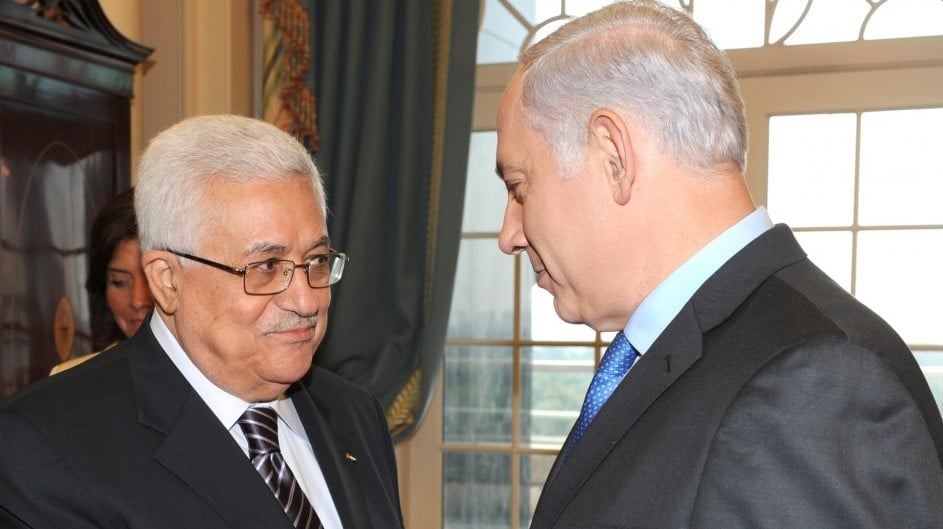
The expected release on Wednesday of the first 26 prisoners (of 104) as a goodwill gesture in the resumption of negotiations between Israel and the Palestinian Authority has brought about the expected wave of enraged responses from both sides.
While the headlines in Israeli newspapers have dealt extensively with the criticism leveled by the families of victims killed by the prisoners to be released, on the Palestinian side there has been no shortage of voices expressing disappointment in the make-up of the list.
“This is not what [Palestinian Authority President Mahmoud] Abbas had hoped for,” one senior Fatah member told this writer. “Last night we were trying to figure out who one of the prisoners was that was to go free, because none of us knew who he was. This does not appear to be a gesture to [Abbas], but rather to [Hamas Prime Minister Ismail] Haniyeh. We expected the release of some of the “symbols,” the known prisoners, because now Abbas needs to show an achievement to the Palestinian public, especially in light of the Israeli government’s statements about building in the territories.”
Not a single senior PA official openly expressed such reservations about the composition of the list. Publicly, the release of 26 prisoners, some of whom are ill, must be welcomed. Nevertheless, there is considerable disappointment on the Palestinian side. And as the senior official explained, the disappointment lies not only in the list of relatively unknown prisoners being released, but also in Israel’s provocative message of continued construction.
Indeed for PA officials, and particularly for Abbas, the announcement by the Israeli government about building 1,200 new housing units in East Jerusalem and the settlement blocs is seen as a deliberate provocation, a blatant attempt to undermine the peace talks before they get started. PA executive committee member Hanan Ashrawi and Palestinian negotiating team member Mohammad Shtayyeh already said Sunday night that it will be Israel’s fault when the negotiations fail before they have barely begun.
The Palestinians obviously knew that Israel had no intention of stopping construction in the settlement blocs. But nobody expected Israel to blab about it three days before the talks were set to begin, and at the same time as Martin Indyk, the US peace coordinator, arrived in the region.
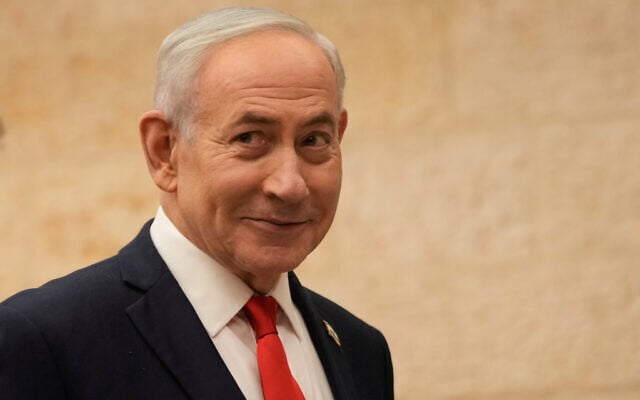
The upper echelon of the PA leadership has apparently forgotten that even while Prime Minister Benjamin Netanyahu is recovering from a hernia surgery and preparing for the resumption of negotiations with the Palestinians, he is also preoccupied with how to get the more hawkish members of his Likud party to support him in the peace process.
The implied threats by the Palestinians to refuse to show up for the next round of talks seem empty at this stage. If Abbas decides not to send his delegation to Wednesday’s first meeting with Justice Minister Tzipi Livni and her staff, it is the Palestinians who will be blamed for the failure of the talks. Israel stood by its commitment: to release Palestinian prisoners and to limit construction to “only” the settlement blocs. Very few people will buy into the Palestinian version that Israel’s decision to build 1,200 housing units was an attempt to make Abbas cancel the peace talks.
Still, it is easy to understand the Palestinians’ anger. One of the most important things in any negotiation is the establishment of trust between the parties. Even if Netanyahu “only” builds in the settlement blocs, it is no way to build trust.






The Times of Israel Community.