

7 decades on, once-misunderstood survivors find a rapt audience
‘There were no listeners,’ says one Holocaust victim who will light a torch at Yad Vashem. Now, though, ‘there aren’t that many of us left, so we’ve become interesting’
 Add ToI as a Preferred Source on Google
Jessica Steinberg, The Times of Israel's culture and lifestyles editor, covers the Sabra scene from south to north and back to the center
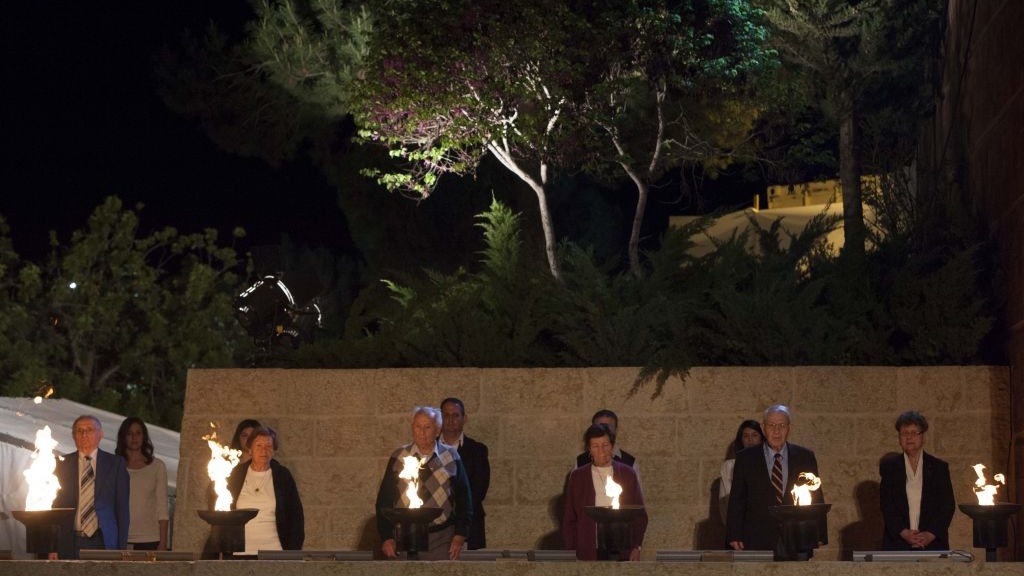
Dita Kraus nearly missed her chance to light a memorial torch during this year’s Holocaust Remembrance Day ceremony at the Yad Vashem memorial museum.
“I told them, ‘I won’t be in Israel,’ ” said Kraus.
“They said, ‘What? It’s such an honor, postpone your trip,’ ” she related.
“So I did, and I had to pay a lot of money,” she said, chuckling. “I bought myself the honor.”
It was an utterly pragmatic reaction, and one typical of the plain-spoken, 83-year-old Kraus.
Kraus doesn’t generally wait for Holocaust Remembrance Day, which begins Sunday night, to recall the horrors of her war experience. She has spent years telling and retelling her story of labor camps, of concentration camps, of losing both of her parents during the war. Even now, seven decades later, she never gains any real measure of relief.
“Whenever I talk about it, I am there,” she said. “I smell the smells, and I sweat and I am upset for two or three days afterwards. But I feel I must.”
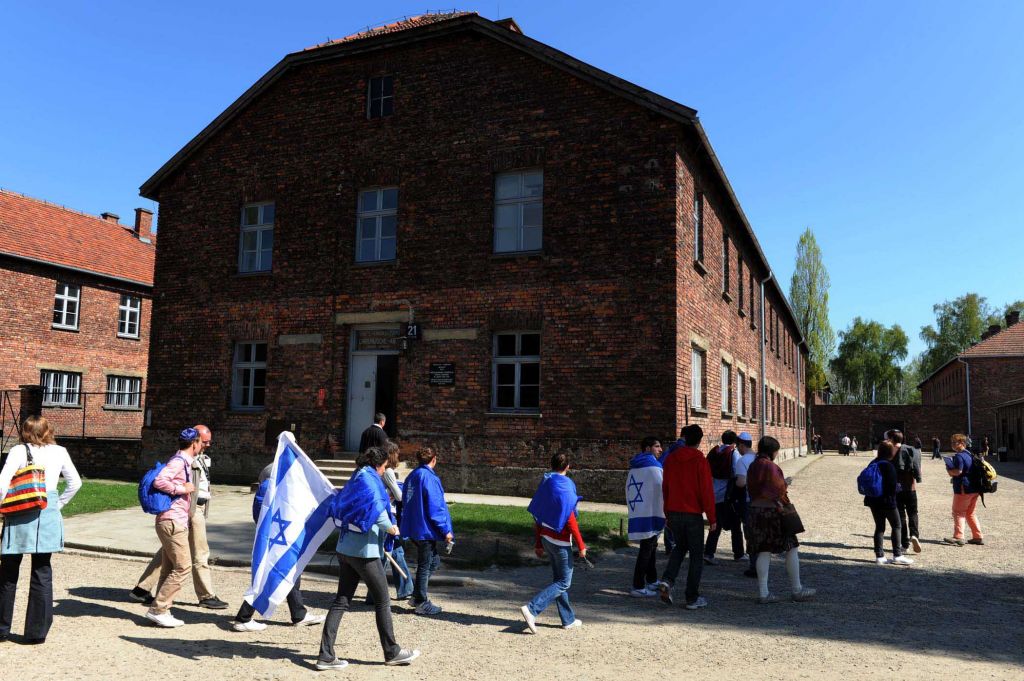
Kraus was just 10 years old and an only child when the war began for her family in Prague. She and her parents, law professor Hans Polach and Elisabeth Polach, were deported in 1942 to the Terezin ghetto along with Dita’s grandmother, Katharina. By 1943, Dita and her parents were sent to Auschwitz, to a camp for Czech families. Within weeks, Dita’s mother became ill and was put in isolation and Dita’s father died.
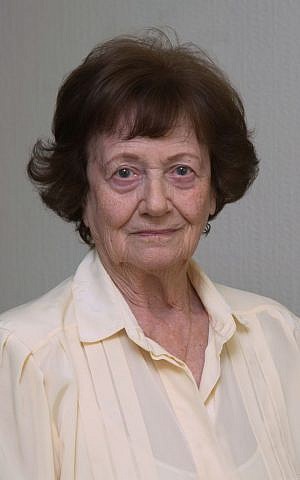
“We were harassed and shunted from place to place,” she said, speaking in English. “It became worse and worse and worse and it was all that I knew. We always thought this is the last thing, there won’t be anymore.”
Kraus credits her survival to the emotional shield she developed in order to withstand the horrors they experienced.
“It grows on you slowly, it’s imperceptible,” she said. “Children have the ability to survive. They are less vulnerable because things are as they are, and accepted as they are, and one adapts.”
That’s how Kraus survived. After being sent to Birkenau with her mother, she served as the librarian in the children’s block, helping run activities for the youngest camp inmates, which is where she met her future husband, Otto Kraus.
“There were moments during the camps when I thought it’s not worth suffering anymore, but one did nothing about it, it passed,” she said. “There were friends and friendships and we supported each other.”
By March 1944, half of the children in the children’s block were murdered and in May, Kraus and her mother were sent to labor camps in Germany. A year later, they were shunted to Bergen-Belsen, where they were liberated within weeks by the British Army.
Her mother died that June, and Kraus returned to Prague, where she reunited with her aunt, grandmother, and Otto Kraus. They married, and had their first child, a son, in Prague, before immigrating to Israel in 1949.
What remains with her all these years later is how no one around her could relate to what she had experienced.
“I had this need to talk about it, but I felt there were no listeners,” said Kraus. “When I met people who weren’t in concentration camps, they would tell me how they had suffered without eggs and milk, and how they had to be closed in their houses at night. They had no way of comparing; they weren’t able to.”
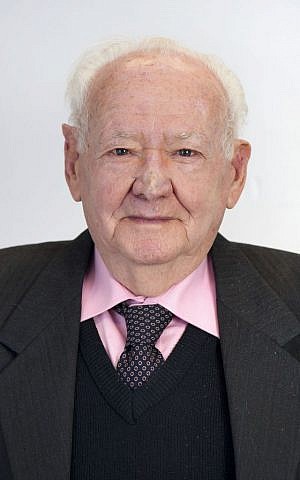
Asher Aud, another one of this year’s torch lighters at Yad Vashem, only recently discovered a similar need to tell his story. But the desire to share his history came years after he had immigrated to Israel, married and had a family of his own.
“I never told my kids,” said Aud during a pre-Holocaust Day talk at a local synagogue. “It wasn’t that I wanted to forget, but there were no social workers or psychologists to tell us how to act after this. If we wanted to live, we couldn’t talk about it. To talk is to live it.”
Aud was born in 1928 in Zduńska Wola, Poland, near Lodz, as Anshel Sieradzki, the middle son of a tailor, Shmuel Hirsh Sieradzki, and his wife, Jocheved. After being moved to the town’s ghetto in 1940, Aud’s father and older brother, Berl, were taken away. Two years later, the ghetto was liquidated and Aud’s mother and younger brother, Gabriel, were deported to Chelmno and killed. All alone, Aud was sent to the Lodz ghetto where he worked at a factory making straw shoes. He foraged for food in the garbage heaps.
“From the moment I was separated from my mother, I was a lonely rock. I didn’t have friends, I didn’t have anyone,” he told the audience. “There were no days of the week, no Monday or Tuesday, all the days were the same.”
In August 1944, the Lodz ghetto was liquidated and Aud was deported to Auschwitz. He rolled up his sleeve on stage, showing the number he received upon arriving at the concentration camp.
“I was in Camp E, block 4 at Auschwitz,” he said. “They told me my brother was there.”
He soon found his older brother, Berl, who helped him get food, survive two selections and find work. In January 1945, Asher was sent on a death march, eventually surviving Mauthausen and Gunskirchen before reaching Italy after the liberation, and then immigrating to Israel. He didn’t find his brother Berl again until nearly 40 years later.
“How did a young boy survive this? I can’t explain it,” said Aud. “I went through it, but can’t explain it. I wanted only one thing: I wanted to live. There was nothing else, just the desire to live.”
Aud says it was his wife, Chaya Aud, a Jerusalemite he met after fighting in the War of Independence, who encouraged him to start talking about his survival. He never told his own children about the war, but has since traveled to Poland with seven of his 10 grandchildren, talking to school groups, soldiers and other gatherings about his wartime experiences.
“It was some kind of agreement between me and my kids,” he said. “I couldn’t get through sentences without crying. And it’s hard to cry in front of your kids.”
Dita Kraus said she found it difficult to speak to fellow Israelis about what had happened to her.
“In Europe, people at least knew what it meant to be occupied,” said Kraus. “Here, they looked down at us and thought that we didn’t fight, we didn’t make an uprising. We talked about it amongst ourselves, but not with the Palmach types. It was one year after the establishment of the state; they were full of themselves and their pride.”
It took more than 10 years, until the 1961 Eichmann trial, for fellow Israelis to begin to understand what survivors like Kraus and her family had experienced.
“The whole country was listening to the radio and heard the evidence and the witnesses, and they started to understand that we had been helpless,” said Kraus.
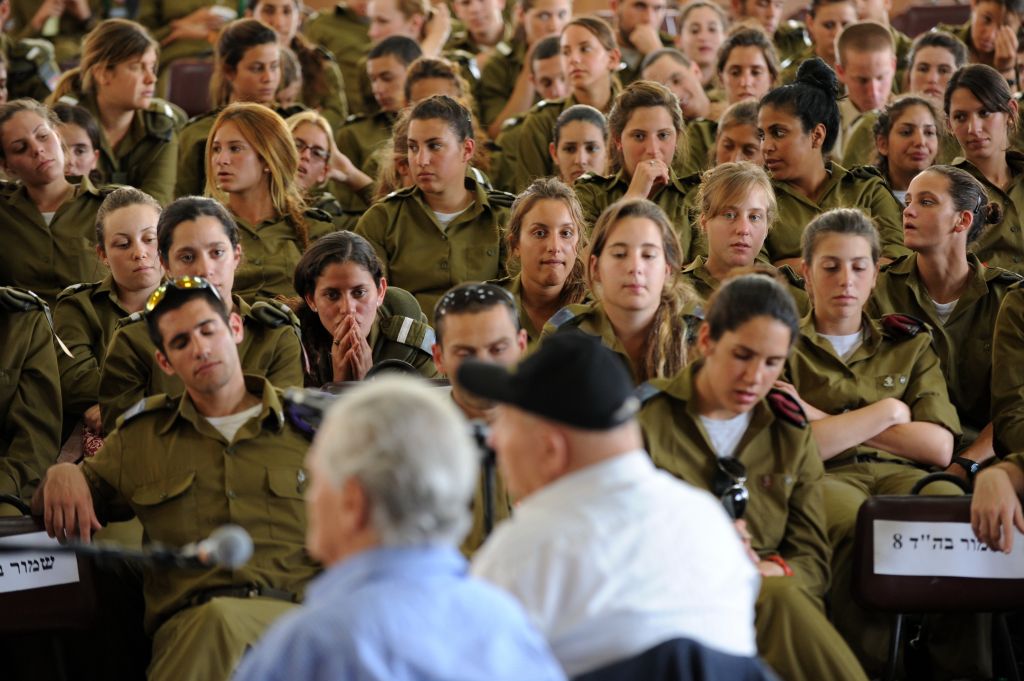
Kraus now speaks regularly to groups of junior and high school students, soldiers and adults, mostly at Givat Haim, a kibbutz north of her home in Netanya.
As usual, she homes in on why survivors like herself have become more popular.
“There aren’t that many of us left, so we’ve become interesting,” she commented.
The audiences are always attentive, she said. “They sit quietly, you don’t hear a peep,” said Kraus.
And when she finishes and asks if there are any questions, they’re in a kind of shock, she said. Silence prevails.
It’s a different kind of silence than that of her sons and grandsons, who either don’t want to talk about it, or just hear about it in passing, said Kraus.
“They’re busy,” Kraus explained. “They don’t sit to listen.”
But that may not be the worst thing for Kraus.
“The older I get, the more the horror comes closer to me,” she said. “I become less emotionally frozen with each year. And lately, I feel more and more how horrible it was.”
Aud experiences similar feelings. He said it reaches a height on Friday afternoons, when his now-secular family is preparing for Shabbat, readying themselves to host the extended family as well as lone soldiers, a tradition he and his wife started years ago.
“It reminds me of my family, of what I lost,” he shared. “To remember is to feel it penetrating my very soul.”








The Times of Israel Community.