

A master of drama brings his ‘Enemies’ to New York
As his Tel Aviv-based Gesher Theater heads to Lincoln Center, director Yevgeny Arye talks about Russian stage traditions and the challenges of maintaining them
 Add ToI as a Preferred Source on Google
Jessica Steinberg, The Times of Israel's culture and lifestyles editor, covers the Sabra scene from south to north and back to the center
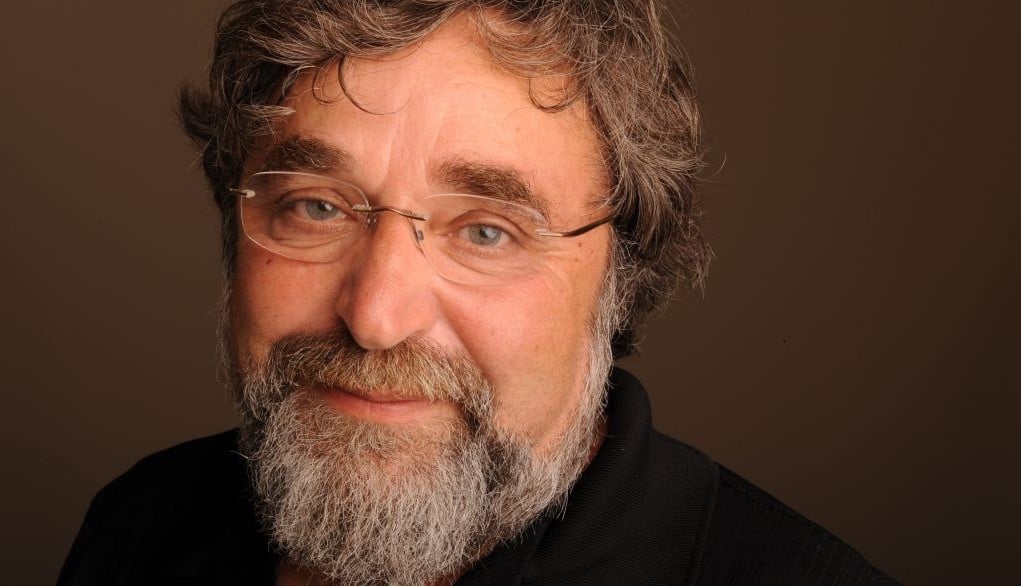
Yevgeny Arye brooks no fools. Arrive late at his Gesher Theater office in Jaffa? He makes all latecomers wait, tapping on his smartphone until he deems himself ready to speak. Averse to secondhand smoke? Arye doesn’t ask, just drags on a long, unfiltered cigarette while a pipe smokes away on its pedestal ashtray.
Then again, this is the fiefdom of the well-known Russian director, who moved to Tel Aviv in 1990, during the thick of the Gulf War, persuaded by Natan Sharansky to form a Russian theater for the waves of emigres. Working from a small cellar, dressed in costumes and gas masks, Arye and his actors founded Gesher, so named for their desire to bridge Russian culture with the Israeli world in which they were now living.
Dramatic? Sure, it’s theater. And it appears there has always been more than a touch of Russian theatricality about Arye, the bearded 65-year-old director in pointy loafers who still runs the show 23 years later.
Like his plays and his theater, the irascible Arye likes things just so. From the deep, fir green-painted walls of his clubby office, furnished with deep, wide leather seats and bookshelves full of tomes in Russian — he only speaks Russian and English — Arye has made Gesher a typically Russian respite from what he somewhat disdainfully calls the fringe or overly commercial Israeli theater world. With just a handful of productions each year from its home in a landmark building in gentrifying Jaffa, the Gesher Theater is “not a supermarket,” he declared. “We’re not for everybody, we deal a lot with literature, with the prose.”
“These are the traditions of Russian theater,” added Arye. “Think about how much our theater influences other theater.”
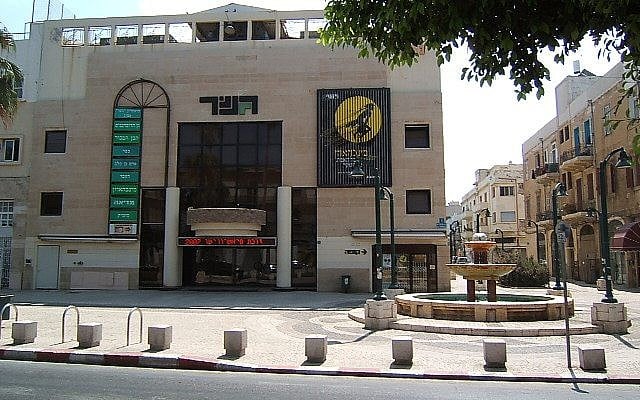
It’s true that in the world of theater, there have only been a handful of periods when stage-side storytelling was the leading art form; there was ancient Athens, Shakespeare’s England, and then Russia and the Soviet Union, from the 1890s through the 1930s. The worlds of writers Chekhov, Isaac Bashevis Singer, and Dostoyevsky were those who first inspired Arye. But in deference to his theater and its name, Arye has also deeply expanded his repertoire to include Israeli writers and other playwrights as well as Israeli actors, while continuing to simultaneously translate each production — which is always in Russian and sometimes in Hebrew — into English and Hebrew, if necessary, in order to fully engage all audience members.
The theater is currently preparing for one of its semi-annual jaunts to New York, where it will be performing Isaac Bashevis Singer’s “Enemies, A Love Story” as part of the annual Cherry Orchard Festival. It’s far from Arye’s first time bringing Gesher to New York; he considers the Big Apple his second home of sorts, having previously performed at Brooklyn Academy of Music, Lincoln Center, as well as at Washington, D.C.’s Kennedy Center.
“Enemies” is a familiar story to many, first as a book, then as a play and 1989 movie starring Ron Silver and Anjelica Huston, about a post-Holocaust love triangle. The Holocaust is a steady theme in many Gesher productions, viewed by Arye as a subject that is his responsibility to bring to the stage.
“I’m Jewish,” he said, shrugging. “What’s important is how we tell the story.”
That said, “‘Enemies’ is not just about the Holocaust,” added Arye. The play tells the story of a Holocaust survivor who finds himself entangled in a love triangle as he restarts his life in New York. “Everything depends on the history of the story, because, without the Holocaust, it’s just a melodrama. They’re facing the results of their history.”
Another Holocaust-themed play that Gesher has brought to the New York stage is “Adam Resurrected,” about a German Jew and concentration camp survivor suffering from mental illness who is incarcerated in an asylum in the Negev. Based on a book that was considered controversial when it was written in 1968 by Yoram Kaniuk, an Israeli painter and writer, the book’s English translation was used as the basis for a Russian script commissioned by Arye, and then translated back into Hebrew. That was only one of Arye’s innovations with the Israeli novel. He then staged the play with a circus tent when it was performed at Damrosch Park in New York, bringing the protagonist’s mental images to life.
“We try to make it all as comfortable as possible, making it visual so that everyone can find something to get involved with onstage,” said Arye. “The proof is that they’ve understood us everywhere, even in Bogota, Colombia. They loved us there.”
There’s often been heady praise as well as theater awards for the former cellar-bound troupe. Arye isn’t modest about the compliments, as he’s confident that the classical traditions he’s brought from the Russian theater, including the “very visual” staging techniques that he uses, are what gives Gesher an edge in its multi-translated productions.
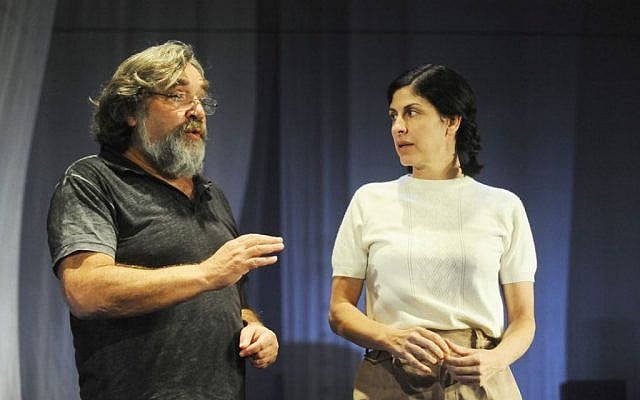
What has become difficult in recent years is the overall waning interest in theater, said Arye, lamenting changes in the cultural scene that have altered the number and average age of local theater-goers. Unlike other Israeli theaters, Gesher has never sold subscriptions, which has narrowed the available audience, made up primarily of native Israelis as well as former Russian immigrants.
“We have to sell tickets,” he said. “We cost less than the Cameri,” Israel’s best-known theater, “and our quality is better, but everyone has to get bigger in order to make more money.”
What Gesher does need, commented Arye, is a new niche, something to differentiate the theater from others. While the Russian theater initially succeeded by offering that quintessential Russian theater experience, it’s now been nearly a quarter of a century since the mass Soviet Union immigration to Israel, and that particular, Russian emigre quality isn’t nearly as vital to the theater’s unique qualities as it once was.
Language, said Arye, isn’t a problem either. “We’ve been a bilingual theater for a long time,” he said.
He’d love a younger audience, as well as some new Israeli plays to entice them, something that’s always in short supply. If someone is good at playwriting, they go straight to television scripts, said Arye, preferring to make “real money.”
At the same time, new productions require more money, another factor that’s consistently worrisome for the theater. There is also a dearth of young directors, given that local universities lack playwright and directors’ programs.
“It takes a lot to dedicate yourself to this,” said Arye, gesturing around the walls of his office, and picking up his pipe before heading outside. “To start a theater, it’s like a miracle. It’s quite miraculous, really.”
“Enemies, A Love Story” will be performed by the Gesher Theater at the Rose Theater at Lincoln Center, June 6-9. The play will be performed in Hebrew with individual English and Russian in-ear translation.










The Times of Israel Community.