

A traditional look at the Jewish table
Carol Ungar draws on her family’s recipes and historical references in her cookbook, ‘Jewish Soul Food’
 Add ToI as a Preferred Source on Google
Jessica Steinberg, The Times of Israel's culture and lifestyles editor, covers the Sabra scene from south to north and back to the center
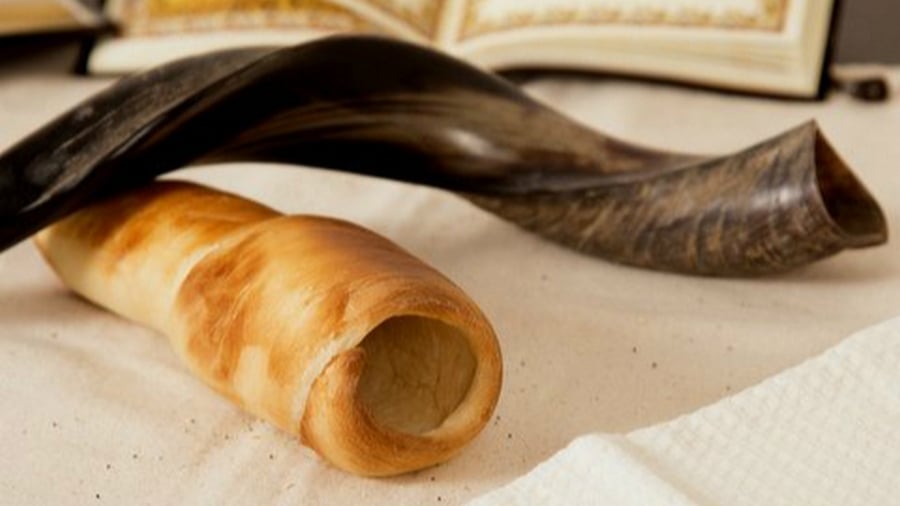
Don’t assume that Carol Ungar made the hollow, spiral Shofar Challah pictured in her book, “Jewish Soul Food, Traditional Fare and What It Means.”
“I’m not that handy,” she said. “My assistant made that one.”
And while Ungar will probably make some of the unique Rosh Hashanah-inspired challah shapes for her own family, she’s always more motivated by the history of the recipe, rather than actual experience of making it.
She first began shaping her challahs into different forms after reading a book about the mystical meaning of Jewish foods. Included in the tales were accounts about women in 18th century Ukraine, at the beginning of the Hasidic movement, when they would shape their challahs in order to teach certain concepts to their own children.
“Challah baking by definition is a meaningful activity,” said Ungar. “They were baking beliefs into breads. It creates memories and it’s so non-threatening.”
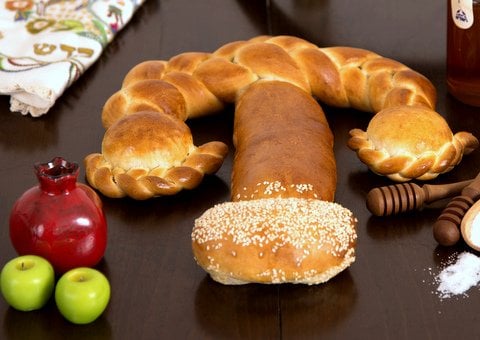
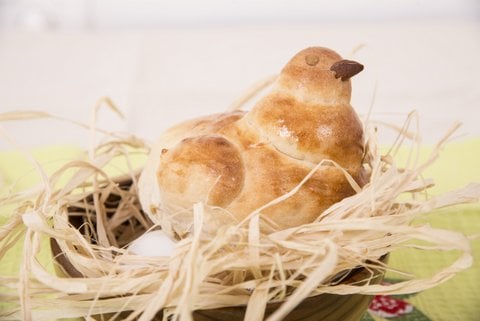
And so, Ungar began experimenting with her own challahs — she’s been baking challah for some time and had already moved on from her earlier, heavy “doorstop” ones — and began shaping the Three-Braid Challah (from her son-in-law’s mother), the Six-Braid Challah (or as Ungar introduces it, “Jewish macrame!”) and then, moving into the high holidays (the book is divided according to the Jewish calendar), the Crown Challah, Shofar Challah, Round Challah and, Scales of Justice Challah, inspired by the holiday’s weighings of human behaviors.
There are 20 other challah recipes — don’t miss the Strings of Pearls Challah or Grape-Cluster Challah — as well as bagels and Yemenite bread in “Jewish Soul Food,” which explains why Ungar first thought about doing a collection of bread and challah recipes.
The native New Yorker who lives in Telzstone, a primarily ultra Orthodox community outside Jerusalem, first thought about a book after writing a food blog that followed a food column for a local paper. Realizing she had amassed a mass of columns, she sent a selection of her blogs to Brandeis University Press. Once they expressed interest, she needed a theme.
Her plan was to collect her mother’s recipes, the traditional Jewish foods she’d always made. Cooking has always been part of Ungar’s daily life as well, having raised a large family and, as a religiously observant woman, ends up spending a lot of time in the kitchen.
And while Ungar’s husband and sons help out — “my boys know how to braid challah,” she said — “but there’s a lot of cooking time.”
She came from a family where cooking was paramount. Both of her parents were Holocaust survivors, and left without any of the people or objects of their own homes, and ended up latching onto the task of recreating the tastes and flavors of their childhood kitchens.
There was inspiration from Laurie Colwin’s “Home Cooking,” a combination cookbook/memoir, and from the late Gil Marks’ Encyclopedia of Jewish Food,” which offers a comprehensive look at nearly every kind of Jewish food from across the globe.
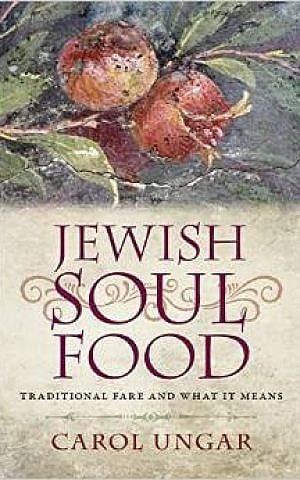
Her book, “Jewish Soul Food,” draws from the two genres. Sized in novel format and with long introductions that tell the tales, history and folklore behind many of the recipes, Ungar relishes the opportunity to look at the “whole cultural context,” she said. “Food is a great jumping off point for stories, there’s a lot of tradition and historical stuff going on.”
She also felt there was an open niche in the Jewish cookbook scene, taking a look at Jewish food organized according to Shabbat and the holidays.
It’s the overall feel and read of the cookbook that offer a unique approach. There are few photographs, and those that are included are in black-and-white, accompanied by a black-and-white line drawings that illustrate the more complicated recipes, like kreplach or hamantashen.
The format also suits the collection of historical, old-fashioned recipes gathered from Ungar’s family, friends and research. There’s her father’s sweet-and-sour cucumber salad for the third meal of Shabbat as well as her mother’s stuffed cabbage, a must-have for Sukkot, Simchat Torah and Purim.
Ungar insists she’s not a foodie, but she knows her food. There are helpful hints throughout the book, as she considers the schedule of the busy home cook recommending when a dish will freeze well (stuffed cabbage) and when it won’t (leek pancakes for Rosh Hashanah). There are other tips as well, such as the freezing cabbage for easier leaf separation when rolling Galicianer Stuffed Cabbage for Purim, or using leftover cooked rice for a Sukkah-time tomato soup.
Ungar is also honest; while she includes a recipe for a labor-intensive meat-stuffed kreplach, she recommends having someone else make it. Ditto for traditional Rosh Hashanah teiglach, honey-soaked dough balls.
“I should have warning labels on which ones are not good to attempt by yourself,” she said, “Or have someone else do it.”
Ultimately, of course, it’s the week-in, week-out, or year-in, year-out practice that results in that perfect challah, stuffed cabbage or cucumber salad. And for Ungar, it’s the personal and historical memories that she’s after, which is why she included favorites like her father’s matzah coffee, or pot roast à la Molly Goldberg.
“People connect with this stuff,” she said. “A lot of people connect with food memories. That’s a big emphasis in traditional jewish life and life is like one big dinner party on some level.”
Ungar, who will only have two of her kids home this holiday, said she’s keeping it simple for Rosh Hashanah and will be including the symbols of holiday in her menu, which will include leek pancakes, possibly beet and Swiss chard latkes, a tongue for the main course and a honey cake, made by someone else. Here she includes her recipe for Green, Green Rosh Hashanah Latkes, made with Swiss chard, or silka, the thin, white fibrous root with large leaves and stalks.
- 5 large Swiss chard or beet green leaves, shredded (about 2 cups)
- 2 large eggs
- ½ cup matzo meal
- 1 small onion, finely diced
- Salt and black pepper to taste
- Vegetable oil for frying
- In food processor using blade attachment, process all ingredients except oil quickly until a paste forms (there should still be identifiable vegetable pieces). Do only a few pulses — you don’t want to create a true puree.
- Heat oil in skillet over medium-high heat. With wet hands, form chard mixture into thin patties the size of your palm and fry patties, in batches, until golden brown on each side, about 2 minutes per side.
- Serve immediately. Does not freeze well.
Makes 2 to 2½ dozen patties
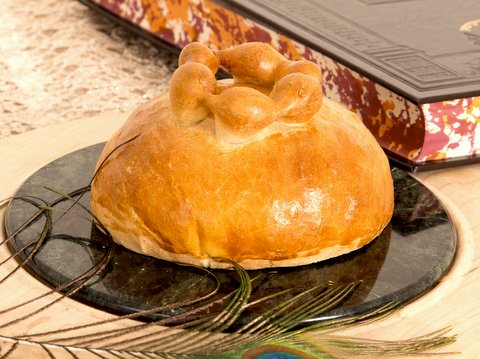
And, if you’re up for the task, Shofar Challah. First make a Single Challah recipe (see below), and then follow the Shofar Challah instructions.
Single Challah
- ½ tablespoon instant yeast
- 3 tablespoons granulated sugar
- 1 and ¼ cups tepid water (or more as needed)
- 4 tablespoons neutral tasting vegetable oil
- 2 large egg yolks (one for dough, second for the glaze)
- 3 ½ cups flour
- 1 ½ teaspoons salt
- 2 tablespoons poppy and/or sesame seeds
- In a large bowl combine yeast, sugar, water, oil and one of the egg yolks. Add flour in one cup at a time. Knead by hand or in mixer fitted with a dough hook until the dough forms a smooth and supple ball (by hand about five minutes).
- Pour one tablespoon of oil over the surface of the dough and then cover with a dampened kitchen towel and set in a warm place to rise until doubled in bulk (about two hours, depending on how warm your house is. You can also leave the dough, covered by a kitchen towel or in plastic wrap to rise overnight in the fridge).
- Punch down dough and shape or braid.
- Preheat oven to 350°F or 180°C
- Let dough rest for up to half hour.
- Glaze with egg and seeds and bake for 35 to 40 minutes or until golden brown.
Freezes well.
Shofar Challah (instructions by Shoshana Goldstein)
- 1 single challah dough recipe (see above)
- Cornet form, available in specialty baking supply stores and online
- Make single challah dough (see above).
- Roll dough into 12 inch rope. Using a metal cornet baking form, and starting at the wide end of the cornet, begin wrapping the rope around the cornet, continuing to the pointed end and just beyond curving the end of the dough past the cornet to form the crescent shape of the shofar.
- Follow Single Challah recipe instructions for second rise, glazing and baking.
Freezes well. Serves 8 to 10.










The Times of Israel Community.