

After Khamenei comments, France says long road ahead to nuke deal
Fabius says much work remains before sides truly come together, after Khamenei claims no binding agreement, wants sanctions lifted on day one
 Add ToI as a Preferred Source on Google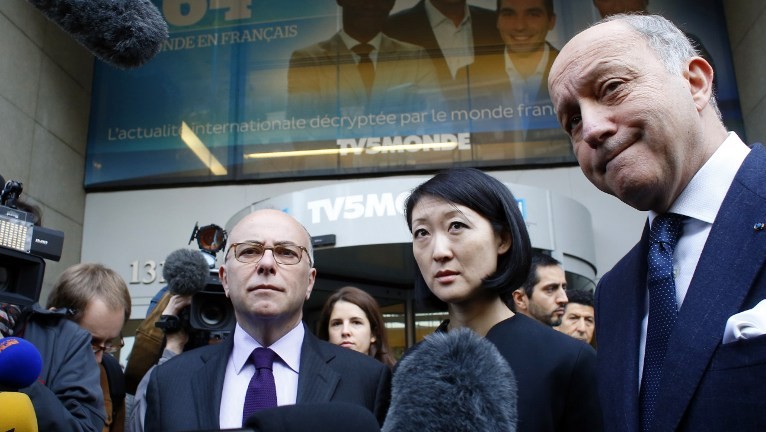
Comments made by Iran’s Ayatollah Ali Khamenei downplaying a framework agreement between Tehran and world powers show that the nuclear accord is far from a done deal, France’s foreign minister said Thursday.
Foreign Minister Laurent Fabius told lawmakers that the sides still needed to hash out a number of key issues, as top Iranian officials continued to demand that sanctions be dropped immediately.
“Subjects still remain that we aren’t agreed on, notably on economic sanctions, and the Supreme Leader has made statements that show there is still a lot of work to be done,” Fabius said according to Reuters.
Hours earlier, Khamenei said last week’s hard-won framework accord Tehran’s nuclear program was no guarantee of a final deal and that much work remained.
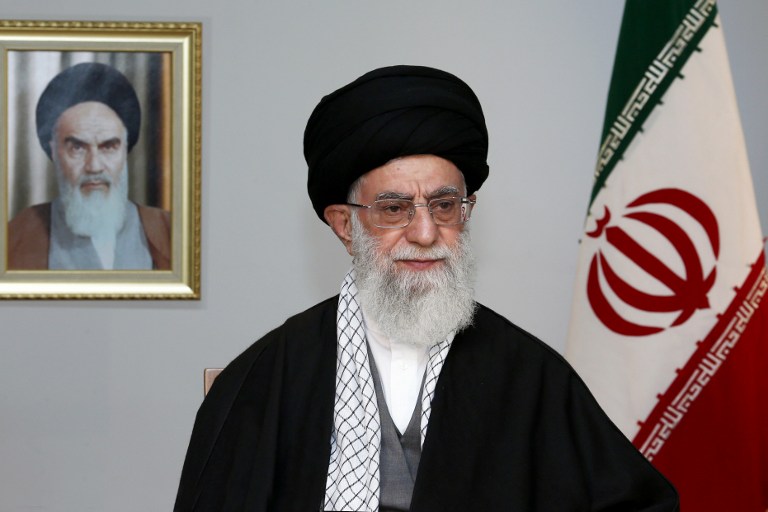
“What has been done so far does not guarantee an agreement, nor its contents, nor even that the negotiations will continue to the end,” Khamenei, who has the final word on all matters of state, said on his website.
Khamenei said that the punitive “sanctions should be lifted completely, on the very day of the deal” — something that has not been agreed upon.
He cautioned that the six world powers are “not to be trusted” and may try “to limit Iran” in further talks.
And he urged Iranian negotiators not to accept any “unconventional inspections” of Iran’s nuclear facilities, stressing that the inspection of military facilities would not be permitted.
President Hassan Rouhani said earlier that Iran would not sign any final agreement unless “all economic sanctions are totally lifted on the same day.”
On April 2, after a week of grueling 11th-hour negotiations, Tehran and the six powers agreed on a framework to be finalized by the end of June to rein in Iran’s nuclear program in exchange for lifting international sanctions. The US has spoken of phased sanctions relief.
France was seen as the most skeptical of the six powers involved in the talks.
“We are going to keep the position we have held from the beginning, which is constructive but extremely demanding,” Fabius said. “If it’s possible, we want an agreement, but it needs to ensure that nothing remains in the shadows.”
The deal has been roundly criticized by Israel, which has warned it will give Tehran a free pass to develop its nuclear program, which Jerusalem sees as an existential threat.
Ever since the framework agreement was announced last week, the various parties have set out sometimes sharply differing accounts of what has been agreed, provoking escalating controversy and criticism.
A French government fact sheet on the Iran framework deal, which has not been made public by Paris but which has been seen by The Times of Israel, provides for Iran to gradually introduce the use of advanced centrifuges to enrich uranium after 12 years, in contrast to the US official parameters, which make no such specific provision.
The use of the more advanced IR-2 and IR-4 centrifuges, as permitted according to the French fact sheet, would enable Iran to more rapidly accumulate the highly enriched uranium needed to build nuclear weapons, accelerating its breakout time to the bomb.
The French fact sheet also specifies that Iran will be allowed to continue R&D work on the advanced IR-4, IR-5, IR-6 and IR-8 centrifuges, the last of which can enrich uranium at 20-times the speed of Iran’s current IR-1 centrifuges, whereas the American parameters are less specific.
Differences between the texts issued by Paris and Washington also extend to the question of inspection and supervision of Iran’s activities, with the French document indicating that the IAEA, the International Atomic Energy Agency, will be able to visit any suspect site in Iran — so-called “anywhere, anytime” access — whereas the US document is less far-reaching.
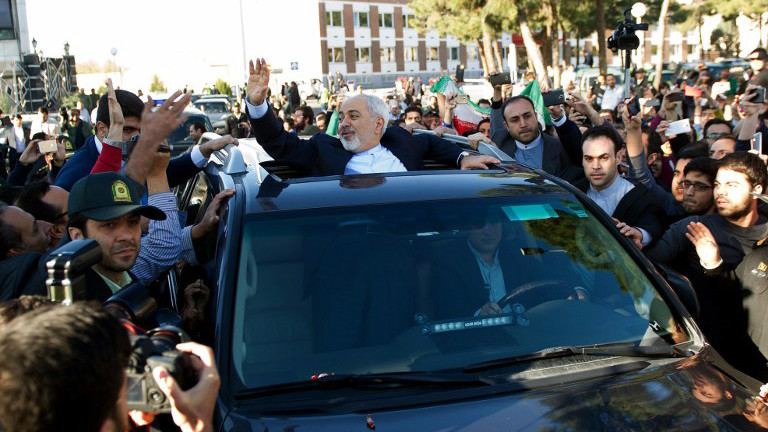
Despite alarm bells in Jerusalem and jubilant celebrations in Tehran, officials on both sides have indicated they still have a long road ahead of them to reach a full accord by the end of June.
“Everything is in the detail; it may be that the other side, which is unfair, wants to limit our country in the details,” Khamenei said in his first comments on the deal Thursday.
Playing down expectations of a final deal after the interim accord, Khamenei said he had not taken any position until now as “there is nothing to take a stance on.”
“Officials say that nothing has been done yet and there is nothing binding. I am neither for nor against,” he said, dampening the optimism that followed the marathon negotiations in the Swiss city of Lausanne.
Khamenei’s first assessment followed positive comments from several Iranian officials as well as allies Syria and Russia.
Under the outline agreed with Britain, China, France, Germany, Russia and the United States — Iran must significantly reduce its number of centrifuges in exchange for a suspension of sanctions.
The centrifuges are used to enrich uranium, which can produce fuel for nuclear power plants or the fissile core of a nuclear bomb at greater levels of purity.
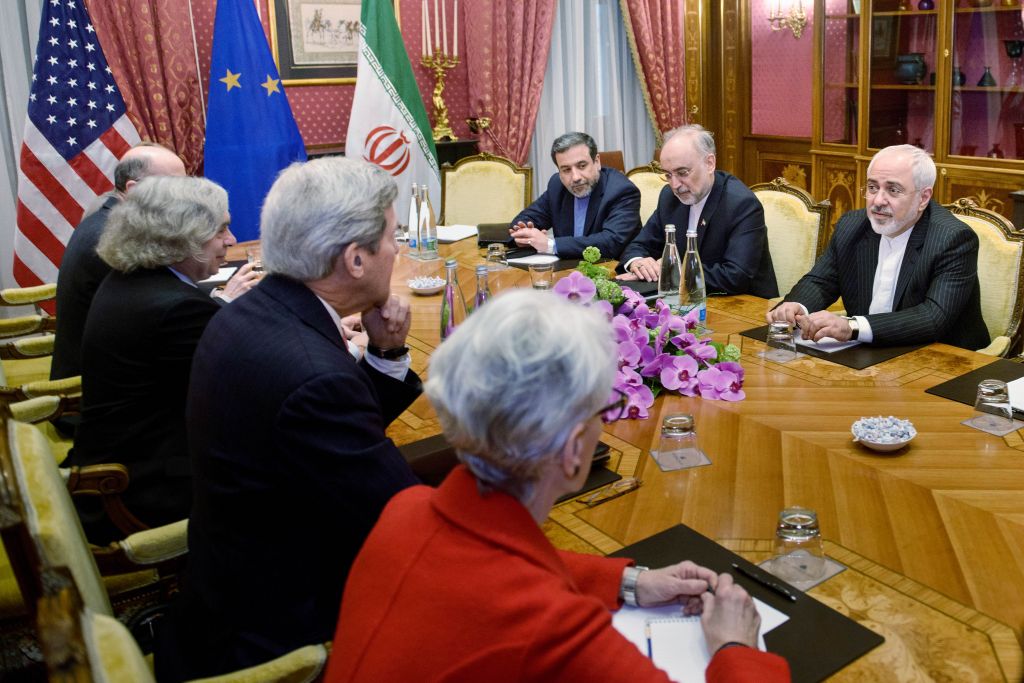
The outline was a major breakthrough in a 12-year international crisis over Iran’s nuclear program and raised hopes among ordinary Iranians of a lifting of sanctions which have stifled the economy.
“I have always supported and still support the Iranian negotiating team,” Khamenei said.
“I welcome any agreement that protects the interests and greatness of the nation, but having no agreement is more honourable than an agreement in which the interests and greatness of the nation is damaged.”
He said that retaining a civil nuclear industry in any agreement was vital for Iran’s future development.
“The nuclear industry is a necessity, for energy production, for desalination, and in the fields of medicine, agriculture and other sectors,” he said.
In a potential obstacle to any final deal, President Rouhani said his country wanted sanctions lifted on the day of the implementation of any agreement.
“We will not sign any agreements unless on the first day of the implementation of the deal all economic sanctions are totally lifted on the same day,” he said.
The pace at which the sanctions will be lifted is one of the issues that still has to be agreed.
Western governments, which have imposed their own sanctions over and above those adopted by the United Nations, have been pushing for that to happen only gradually.
“In return for Iran’s future cooperation, we and our international partners will provide relief in phases from the sanctions that have impacted Iran’s economy,” US Secretary of State John Kerry said last week.
Rouhani, who was speaking on Iran’s National Nuclear Technology Day, reiterated that his government remained determined to develop its civil nuclear program.





The Times of Israel Community.